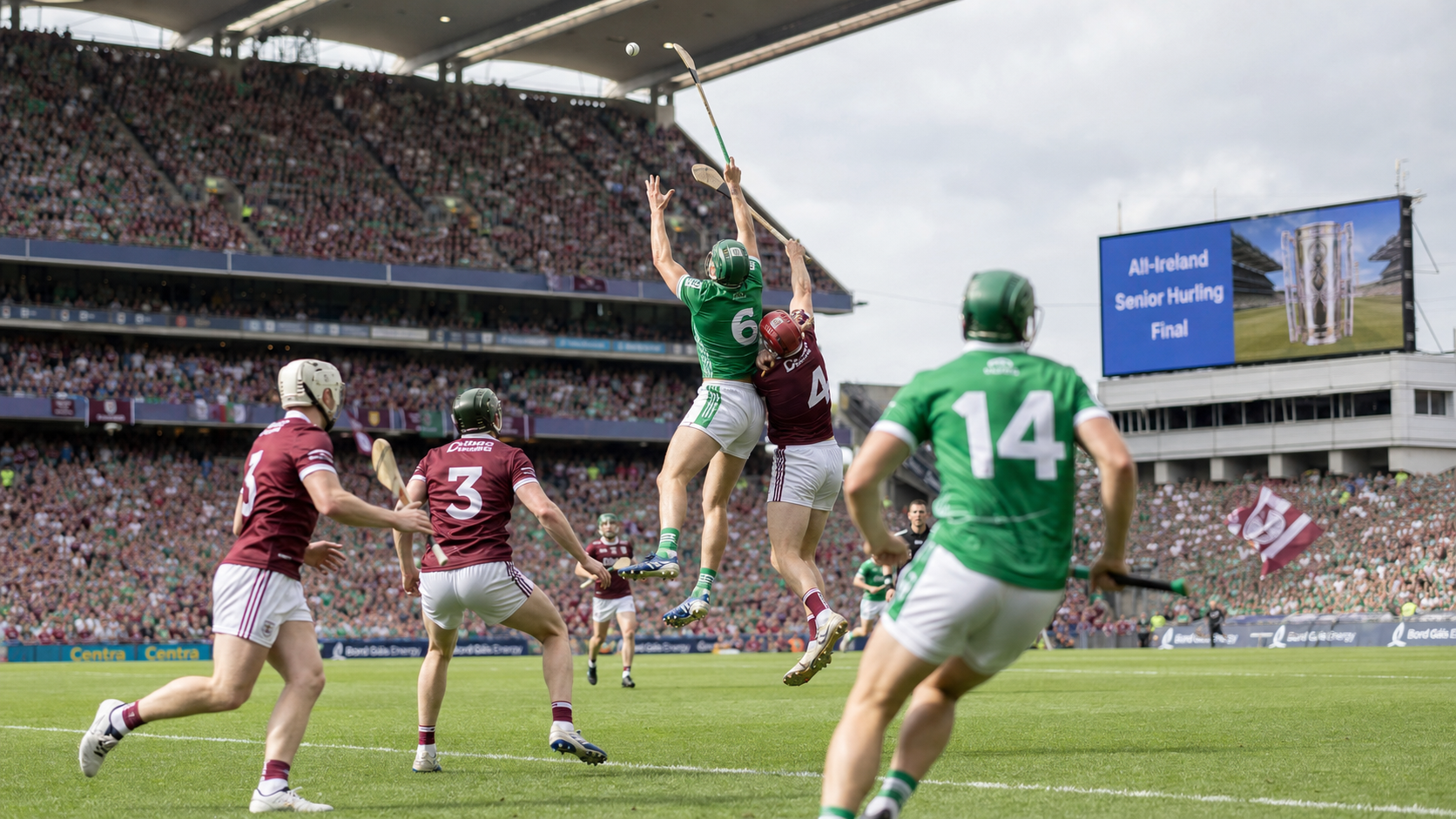
All-Ireland Hurling Final Preview: Limerick Seek Sixth Title Under Kiely as Galway's Attack Poses Greatest Test
The 2026 All-Ireland Senior Hurling Championship final takes place at a sold-out Croke Park on Sunday afternoon, with reigning champions Limerick seeking a sixth title under the transformative management of John Kiely against a Galway side that has been the most prolific attacking team in this year's championship — scoring 17 goals in seven matches — and is aiming for its first All-Ireland triumph since 2017.
Background
The All-Ireland Senior Hurling Championship final is the pinnacle of the GAA calendar and one of the great sporting occasions in Irish life. Croke Park, with its capacity of over 82,000, will be filled to capacity on Sunday, with supporters from Limerick and Galway travelling from across Ireland and the diaspora to witness what promises to be one of the most compelling finals in recent memory. The match will be broadcast live on RTÉ and BBC, with large-scale public screenings planned in both counties — including at Galway's Heineken Big Top, where the Galway International Arts Festival is in full swing.
Limerick's dominance of hurling in the modern era is without precedent. Under John Kiely, who took over as manager in 2016, the county has won five All-Ireland titles — in 2018, 2020, 2021, 2022, and 2023 — transforming a county that had won only two All-Irelands in the previous century into the most successful hurling county of the modern era. The team's achievements have been built on a combination of exceptional individual talent, a ferocious collective work ethic, and a tactical sophistication that has consistently outmanoeuvred opponents.
Galway, managed by Micheál Donoghue in his second spell in charge, are the Leinster champions and have been the most exciting attacking team in this year's championship. Their path to the final has been characterised by high-scoring performances, with 17 goals in seven matches representing a remarkable return. The county's last All-Ireland triumph came in 2017, also under Donoghue, and the manager has spoken of his desire to recapture that success with a new generation of players.
Key Developments
Limerick's route to the final was more arduous than their recent dominance might suggest. An unexpected defeat in the Munster championship early in the season raised questions about whether the team's remarkable run was finally coming to an end. However, Kiely's side responded with characteristic resilience, fighting their way through the qualifiers and producing a gripping two-point semi-final victory over Clare — a match that showcased both the team's quality and their ability to perform under pressure when it matters most.
Galway's semi-final was a more comfortable affair, with an 11-point victory over Cork demonstrating the potency of their attack and the solidity of their defensive structure. Key to Galway's campaign has been the form of Aaron Niland, the county's top scorer, whose ability to score from play and placed balls has been a constant threat to opposition defences. Donoghue has also been able to call on a deep squad, with several players stepping up to fill key roles when injuries have disrupted his preferred selection.
The historical record between the counties in recent championship encounters favours Limerick, who have beaten Galway in the 2020, 2022, and 2023 semi-finals and edged a one-point victory in the 2018 final. However, Galway's management and players have been at pains to point out that this is a new team and a new final, and that historical records count for nothing once the ball is thrown in at Croke Park.
Why It Matters
The All-Ireland Hurling Final matters in ways that transcend sport. It is one of the great expressions of Irish cultural identity, a celebration of a game that is unique to Ireland and that connects communities across the country in a shared experience of passion, skill, and belonging. For Limerick, a sixth title under Kiely would cement the county's place in the pantheon of hurling greatness and provide a fitting culmination to what has been one of the most remarkable periods of sustained excellence in the history of any team sport in Ireland. For Galway, victory would end a nine-year wait for All-Ireland glory and vindicate Donoghue's decision to return for a second stint as manager. For the neutral observer, the match offers the prospect of a genuine contest between two outstanding teams, played at the highest level of skill and intensity.
Local Impact
The final has transformed both Limerick and Galway cities in the days leading up to Sunday's match. In Limerick, the Treaty City is draped in green and white, with businesses, schools, and community organisations all joining in the celebrations. The city's Thomond Park and the Hunt Museum have been focal points for pre-match events, with supporters gathering to share the anticipation. In Galway, the final coincides with the Galway International Arts Festival, creating a unique cultural double-bill that has drawn visitors from across Ireland and beyond. The economic impact of the final on both cities — and on Dublin, which will host tens of thousands of supporters — is estimated to run to tens of millions of euro, providing a significant boost to the hospitality and retail sectors.
What's Next
The final throws in at 3:30pm on Sunday at Croke Park, with RTÉ's coverage beginning at 2:00pm. The winning county will receive the Liam MacCarthy Cup from GAA President Jarlath Burns, with the traditional homecoming celebrations expected to take place on Monday evening. For the losing county, the focus will quickly shift to the autumn club championship and the planning for the 2027 season. John Kiely has indicated he intends to continue as Limerick manager regardless of Sunday's result, while Donoghue's future will depend in part on the outcome of the final.