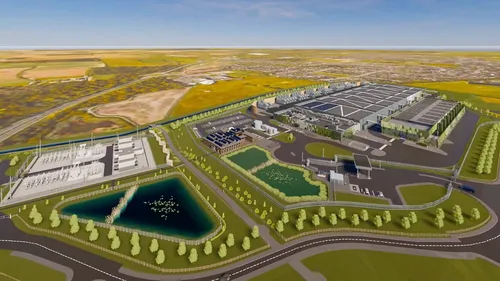
AI Boom Drives Surge in UK and Ireland Data Centre Demand as Government Designates Sector Critical Infrastructure
The artificial intelligence boom is driving unprecedented demand for data centre infrastructure across the UK and Ireland, with power availability now the critical constraint on expansion, as the UK government designates data centres as critical national infrastructure and announces new AI Growth Zones to accelerate development.
Background
The rapid proliferation of large language models, generative AI applications, and cloud computing services has created an insatiable demand for data centre capacity across the United Kingdom and Ireland. The two countries have emerged as among the most attractive locations in Europe for data centre investment, owing to their stable regulatory environments, skilled workforces, and — in Ireland's case — favourable corporate tax arrangements that have drawn major technology companies to establish European headquarters in Dublin and its surrounding counties.
Data centres are the physical backbone of the digital economy, housing the servers and networking equipment that power everything from streaming services and online banking to the AI systems that are increasingly embedded in business processes and consumer products. The scale of investment required to build and operate modern hyperscale data centres — facilities that can house tens of thousands of servers and consume as much electricity as a small town — means that the sector has become a significant economic force in its own right, generating construction jobs, engineering roles, and ongoing operational employment.
The UK government's decision to designate data centres as critical national infrastructure reflects the sector's growing strategic importance. The designation places data centres alongside energy networks, water systems, and transport infrastructure in terms of their significance to national security and economic resilience. It was accompanied by the announcement of new AI Growth Zones — designated areas where planning and grid connection processes will be accelerated to enable faster deployment of data centre capacity, as outlined in the government's AI Growth Zones policy document.
Key Developments
Power availability has emerged as the single most significant constraint on data centre expansion across the UK and Ireland. The electricity demands of modern AI workloads — which require vast amounts of computing power for both training and inference — are placing significant strain on national grids that were not designed with this level of concentrated demand in mind. Grid connection queues in some parts of the country stretch to several years, forcing developers to explore alternative solutions including on-site generation, battery storage, and direct power purchase agreements with renewable energy providers.
Ireland has been particularly affected by the power constraint, with the national grid operator EirGrid having previously imposed a moratorium on new data centre connections in the Dublin area due to capacity concerns. The situation has prompted a broader debate about the balance between attracting technology investment and ensuring that the electricity system can meet the needs of residential and other commercial users. According to Data Centre News, the AI surge is reshaping global data centre growth patterns, with the UK and Ireland among the markets experiencing the most acute capacity pressures.
Why It Matters
The data centre boom matters because it sits at the intersection of two of the most consequential trends shaping the modern economy: the rise of artificial intelligence and the transition to a digital-first world. The UK and Ireland's ability to attract and retain data centre investment will have significant implications for their competitiveness as technology hubs, their ability to develop and deploy AI capabilities, and the resilience of their digital infrastructure. The government's critical infrastructure designation signals a recognition that data centres are no longer simply commercial real estate but strategic national assets whose availability and security are matters of public interest.
Local Impact
For Northern Ireland and the wider UK, the data centre boom presents both opportunities and challenges. The designation of AI Growth Zones creates the potential for new investment in regions that have historically struggled to attract technology sector employment, and the construction and operation of large-scale facilities could generate significant economic activity in areas where it is most needed. However, the power constraint is a genuine challenge that will require coordinated action between government, grid operators, and the private sector to resolve, and communities near proposed data centre sites will need to be engaged meaningfully about the implications for local infrastructure and the environment.
What's Next
The government's AI Growth Zones policy is expected to move into implementation in the coming months, with specific sites being identified and planning processes being streamlined. The sector will be watching closely to see whether the promised acceleration in grid connections materialises, as this remains the most significant bottleneck to expansion. Meanwhile, the broader question of how the UK and Ireland balance the economic benefits of data centre investment against the demands it places on energy systems and local communities will continue to shape the policy debate around the sector's future.