UK Government Launches £500 Million AI Fund as Liz Kendall Urges Public to Embrace Artificial Intelligence
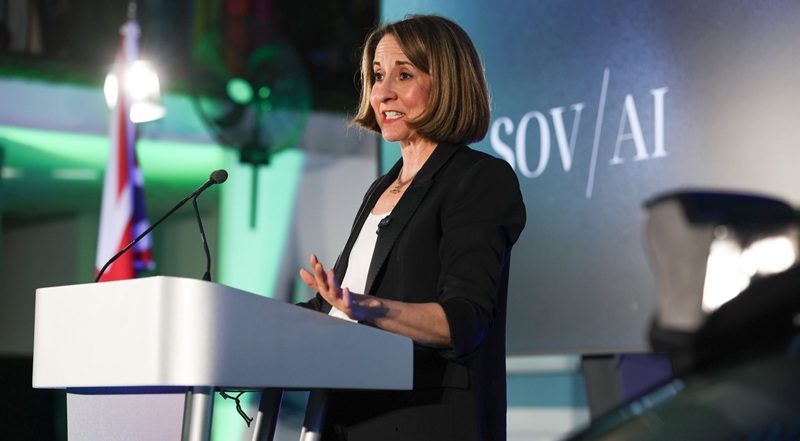
The UK government has made its first £500 million fund investment as part of its AI Opportunities Action Plan, with Technology Secretary Liz Kendall urging the British public to embrace artificial intelligence and playing down concerns about job displacement and cybersecurity risks.
Background
The UK's AI Opportunities Action Plan, published in January 2026, set out the government's ambition to make Britain a global leader in artificial intelligence. The plan outlined progress in areas including compute planning, AI Growth Zone designation, skills programmes, and the establishment of a new Sovereign AI Unit. The one-year update to the plan, published on 29 January 2026, signalled a shift from establishing foundational initiatives to practical delivery and widespread adoption.
Key Developments
The £500 million fund represents the government's first major direct investment under the plan. Kendall, speaking to encourage public engagement with AI, acknowledged concerns about job displacement and cybersecurity but argued that the benefits of AI adoption — in productivity, public services, and economic growth — outweigh the risks. The government is also driving AI adoption in the public sector, with the Ministry of Justice testing AI for court transcriptions and a bidding process launched for an AI Tutoring Pioneer Group to test AI educational products with secondary school students from summer 2026.
The UK tech trade association techUK welcomed the investment but emphasised that 2026 is a critical year for ensuring commitments translate into operational delivery and tangible impact. The organisation highlighted that while foundational elements are in place, the real-world impact — including scaling AI pilots, embedding AI in public services, and supporting SMEs in AI adoption — is still progressing and requires sustained effort. techUK is also involved in the AI Skills Partnership, which aims to upskill 10 million workers with AI skills by 2030.
However, the rapid proliferation of AI is accompanied by significant concerns. The International AI Safety Report 2026, led by Turing Award winner Yoshua Bengio and authored by over 100 international experts, documented a rise in deepfake-related incidents, escalating biological misuse concerns, and growing cybersecurity threats from AI-enabled attacks. Experts have warned that UK firms face a "perfect storm" of cyber threats.
Why It Matters
The UK's AI investment comes as global competition in the sector intensifies, with the US, China, and EU all making major commitments. The government's ability to translate its Action Plan into tangible economic benefits will be closely watched, particularly as the UK faces recession risks and rising unemployment. The future of Palantir's £330 million NHS contract also remains uncertain, highlighting the complex relationship between AI adoption and public sector accountability.
What's Next
The government is expected to publish further details of the AI Growth Zones and Sovereign AI Unit in the coming months. A parliamentary inquiry into emerging chip designs to curb the rising energy consumption of AI systems is also under way.
Sources: techUK; The Guardian; WIRED