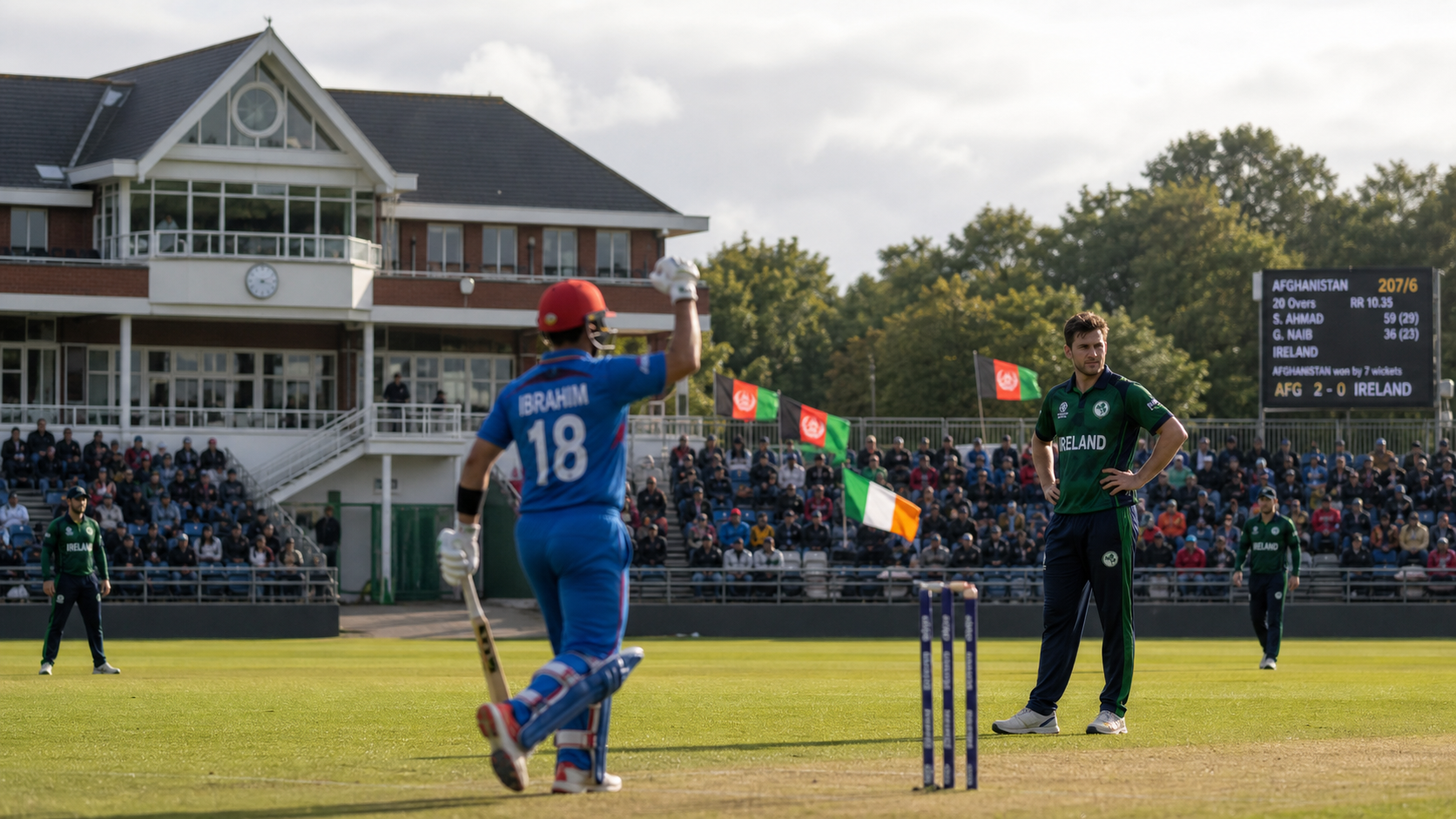
Afghanistan Extend Series Lead to 2-0 as Ireland Face Must-Win Fourth ODI in Belfast
Afghanistan extended their lead in the five-match ODI series against Ireland to 2-0 after winning the third match in Belfast on 10 August, successfully chasing a target of 207 runs by three wickets in a performance that underlined the gulf in experience between the two sides at this stage of their respective development — leaving Ireland needing to win the fourth ODI on 12 August to keep the series alive and avoid a comprehensive defeat on home soil.
Background
The Afghanistan tour of Ireland in August 2026 is one of the most significant series in the Irish cricket calendar, providing the home side with an opportunity to test themselves against a team that has risen rapidly through the ranks of international cricket to become one of the most competitive sides in the world. Afghanistan's journey from a country with no cricketing infrastructure to a Test-playing nation capable of defeating major cricketing powers is one of the most remarkable stories in the sport's recent history, and their presence in Ireland for a five-match ODI series is a measure of how far Irish cricket has come in attracting high-quality opposition.
The series began on 5 August at Bready in County Tyrone, where the first ODI was abandoned without a ball bowled due to rain — a reminder of the challenges that Irish weather poses for international cricket. The second ODI, held on 7 August, resulted in a 92-run victory for Afghanistan, with Rashid Khan's leg-spin proving too much for the Irish batting order. The third match, played at Stormont in Belfast on 10 August, followed a similar pattern, with Afghanistan successfully chasing Ireland's total of 206 runs to win by three wickets.
Ireland's batting has been the primary concern throughout the series. The top order has struggled to build partnerships against Afghanistan's varied and high-quality bowling attack, and the middle order has been unable to consistently rescue innings that have got off to difficult starts. The bowling, by contrast, has been more competitive, with Ireland's seamers and spinners making Afghanistan work hard for their runs in both completed matches.
Key Developments
In the third ODI at Stormont, Ireland posted a total of 206 runs — a competitive score on a pitch that offered some assistance to the bowlers, but one that proved insufficient against an Afghanistan batting line-up that has the depth and quality to chase down most totals. Afghanistan's chase was not without difficulty: Ireland's bowlers created chances and took wickets at regular intervals, but the Afghan middle order showed the composure and experience to see the chase through, winning by three wickets with a few overs to spare.
The result leaves Ireland in a difficult position in the series. With two matches remaining and a 2-0 deficit to overcome, the home side must win both the fourth and fifth ODIs to level the series — a task that will require a significant improvement in batting performance. Ireland captain Andrew Balbirnie acknowledged the challenge after the third match, saying that the team needed to "find a way to put a bigger total on the board" and that the batting unit had to "take more responsibility" in the remaining matches.
The fourth ODI is scheduled for 12 August at Stormont in Belfast, with the fifth and final match to follow on 14 August. Ireland will be hoping that the home conditions — and the experience of the first three matches — will give them the edge they need to turn the series around.
Why It Matters
The Afghanistan series is an important test for Irish cricket at a time when the sport is working to establish itself as a genuine force in international cricket. Ireland's elevation to Test status in 2017 was a landmark moment, but the challenge of competing consistently at the highest level of the game has proved demanding, and the results in this series reflect the gap that still exists between Ireland and the more established cricketing nations. Afghanistan, who have themselves made rapid progress in recent years, are a useful benchmark for where Ireland needs to get to if it is to fulfil its potential as a cricketing nation.
The series also has implications for Ireland's ICC rankings and its qualification prospects for future major tournaments. A series defeat at home to Afghanistan would be a setback, but the manner of the defeats — and the lessons learned from them — will be as important as the results themselves in shaping Ireland's development over the coming years. Cricket Ireland has been investing heavily in the development of the game at all levels, and the performances of the national team in high-profile series like this one are a key part of the case for continued investment.
Local Impact
The series has been played primarily at Stormont in Belfast and at Bready in County Tyrone, giving cricket fans in Northern Ireland the opportunity to watch international cricket at close quarters. The Stormont ground, with its distinctive backdrop of the Parliament Buildings, is one of the most picturesque venues in international cricket, and the matches have attracted good crowds despite the mixed results for the home side. Cricket Ulster has used the series as an opportunity to promote the game at grassroots level, with coaching clinics and school visits organised around the match days. The fourth ODI on 12 August is expected to attract a strong crowd, with Irish supporters hoping to see their team produce a performance that keeps the series alive.
What's Next
The fourth ODI takes place at Stormont in Belfast on 12 August, with the fifth and final match scheduled for 14 August at the same venue. Ireland must win both remaining matches to level the series, a task that will require a significant improvement in batting performance. Cricket Ireland has indicated that the squad will undergo a detailed review of the batting approach before the fourth match, with changes to the batting order possible. Afghanistan, who are in strong form and have the series in their grasp, will be looking to close out the series with a win in the fourth match and avoid the need for a fifth.