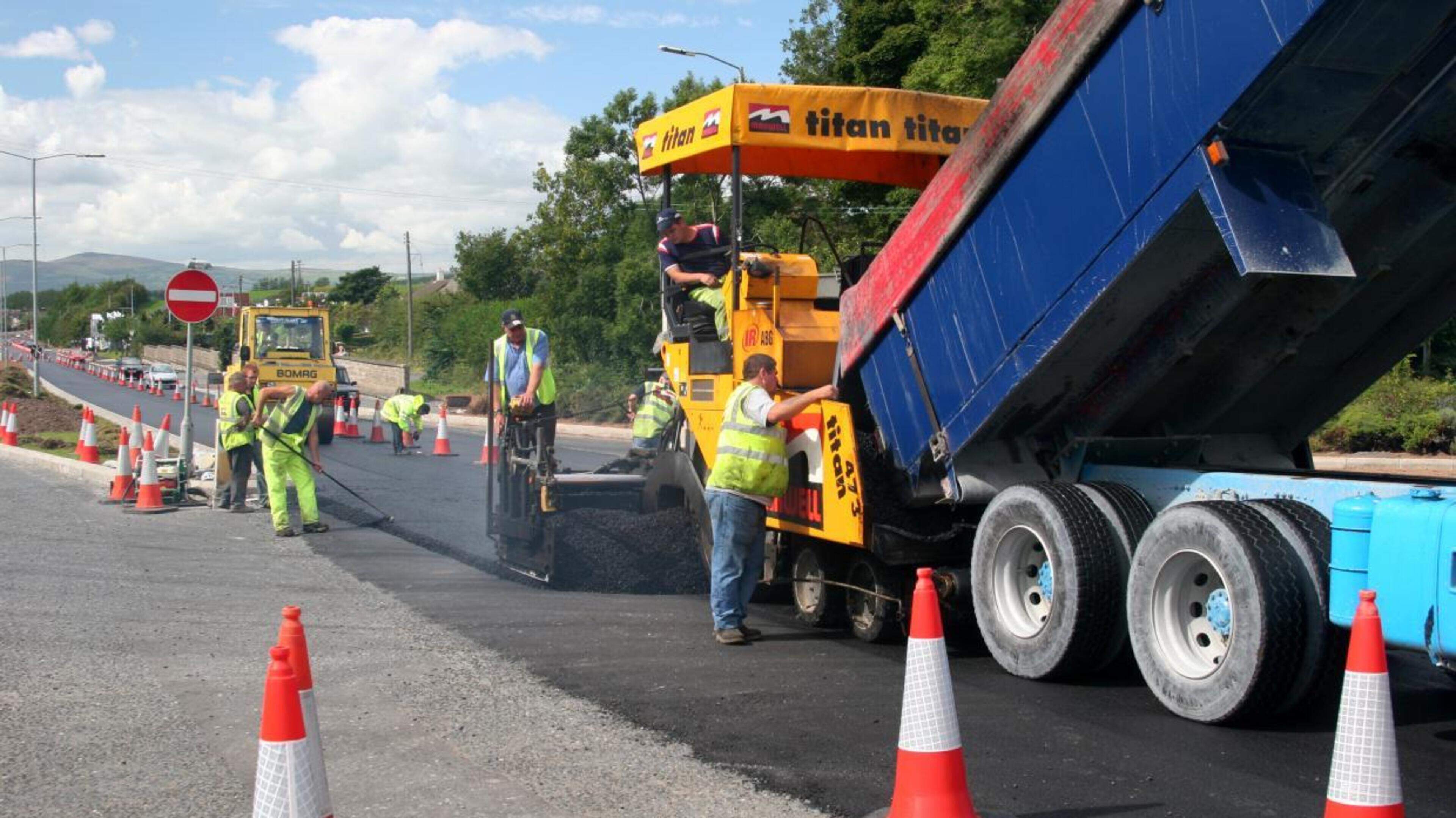
£1.5 Million M2 Motorway Resurfacing Scheme Causes Belfast Commuter Disruption as Infrastructure Investment Continues
A £1.5 million resurfacing scheme on the M2 motorway between Sandyknowes Junction 4 and Templepatrick Junction 5 is causing significant disruption for commuters travelling between Belfast and the north-west, with a contraflow system and a 50 miles per hour speed limit in place since 18 July and the northbound on-slip at Junction 4 closed to traffic with diversions in operation.
Background
The M2 motorway is one of the most important arterial routes in Northern Ireland, connecting Belfast to Antrim, Ballymena, and the north-west of the province. The section between Sandyknowes and Templepatrick carries a high volume of commuter, commercial, and tourist traffic, and its condition has a direct impact on the economic connectivity of the greater Belfast area and the communities along the route. The motorway was originally constructed in the 1960s and has been subject to periodic maintenance and improvement works over the decades, but the pace of investment has not always kept pace with the growth in traffic volumes.
The Department for Infrastructure in Northern Ireland is responsible for the maintenance and improvement of the strategic road network, including the motorway system. The department operates within a budget that has been subject to significant pressure in recent years, as the Stormont Executive has struggled to agree on spending priorities and the overall level of public investment in infrastructure has fallen short of what engineers and transport planners say is needed to maintain the network in good condition.
The £1.5 million resurfacing scheme on the M2 is part of a broader programme of road maintenance works that the department is carrying out across Northern Ireland during the summer months, when traffic volumes are generally lower and the weather conditions are more favourable for road construction. The programme includes resurfacing works on a number of other major routes, as well as bridge maintenance, drainage improvements, and safety upgrades at key junctions.
Key Developments
The M2 resurfacing scheme began on 18 July, with a contraflow system implemented on the section between Sandyknowes and Templepatrick to allow the works to proceed while maintaining traffic flow in both directions. The contraflow reduces the carriageway to a single lane in each direction, with a 50 miles per hour speed limit in place to ensure the safety of both road workers and motorists. The northbound on-slip at Sandyknowes Junction 4 has been closed for the duration of the works, with diversions in place directing traffic to alternative access points.
The works are expected to take several weeks to complete, with the department indicating that it will endeavour to minimise disruption to commuters and businesses by scheduling the most intensive phases of the work during off-peak hours where possible. Motorists are advised to allow additional time for their journeys and to consider alternative routes where available. Translink has confirmed that its bus services on the affected corridor are operating normally, though journey times may be extended due to the traffic disruption.
The resurfacing scheme will replace the existing road surface, which has deteriorated significantly due to the volume of traffic and the effects of weather over many years. The new surface will improve ride quality, reduce noise levels for nearby residents, and extend the life of the carriageway by a further 15 to 20 years. The works will also include improvements to road markings and drainage, addressing issues that have been identified as contributing to the deterioration of the existing surface.
Why It Matters
The M2 resurfacing scheme is a relatively modest investment in the context of Northern Ireland's overall infrastructure needs, but it is a visible and tangible example of the kind of maintenance investment that is essential to keeping the road network in serviceable condition. The M2 carries approximately 60,000 vehicles per day on the section being resurfaced, and the deterioration of the road surface has been a source of concern for motorists, hauliers, and transport planners for some time.
The broader context of infrastructure investment in Northern Ireland is one of significant underinvestment relative to need. The Stormont Executive's inability to agree on a budget for the current financial year has created uncertainty about the level of capital investment that will be available for infrastructure projects in the months ahead, and there are concerns that the maintenance backlog on the road network — which has been growing for several years — will continue to worsen if investment is not sustained.
For businesses that depend on the M2 corridor — including logistics companies, manufacturers, and retailers in the Antrim and north Belfast areas — the disruption caused by the resurfacing works is a short-term inconvenience that is outweighed by the long-term benefit of a well-maintained road network. The alternative — allowing the road surface to deteriorate to the point where emergency repairs are required — would cause far greater disruption and would ultimately cost more than the planned maintenance programme.
Local Impact
The immediate impact of the M2 works is being felt most acutely by commuters who use the motorway to travel between Belfast and the towns and villages of County Antrim. The closure of the northbound on-slip at Sandyknowes has added to journey times for drivers coming from the Newtownabbey and north Belfast areas, and the contraflow system has created queuing at peak times that is extending back towards the Fortwilliam interchange. Translink's Metro bus services on the corridor are providing an alternative for commuters who are willing to leave their cars at home, and the department has encouraged motorists to consider public transport for the duration of the works.
For residents in the communities adjacent to the M2 — including Templepatrick, Ballyclare, and the villages along the Antrim Road — the resurfacing works will bring a welcome reduction in road noise once the new surface is in place. The existing surface has become increasingly rough and noisy over the years, and the improvement in ride quality will be appreciated by both motorists and residents alike. The works are also expected to reduce the frequency of pothole formation on the affected section, which has been a persistent problem in recent years.
What's Next
The Department for Infrastructure has indicated that the M2 resurfacing scheme is expected to be completed within the next four to six weeks, subject to weather conditions. Once the works are complete, the contraflow system will be removed and the motorway will return to its normal configuration. The department will publish a schedule of forthcoming road maintenance works on its website, allowing motorists and businesses to plan ahead for any disruption. The broader programme of road maintenance works across Northern Ireland is expected to continue throughout the summer and autumn, with further schemes planned on a number of other major routes.