Young Journalist of the Year Charlotte Anderson Celebrated as CIoJ Hails Future of the Profession
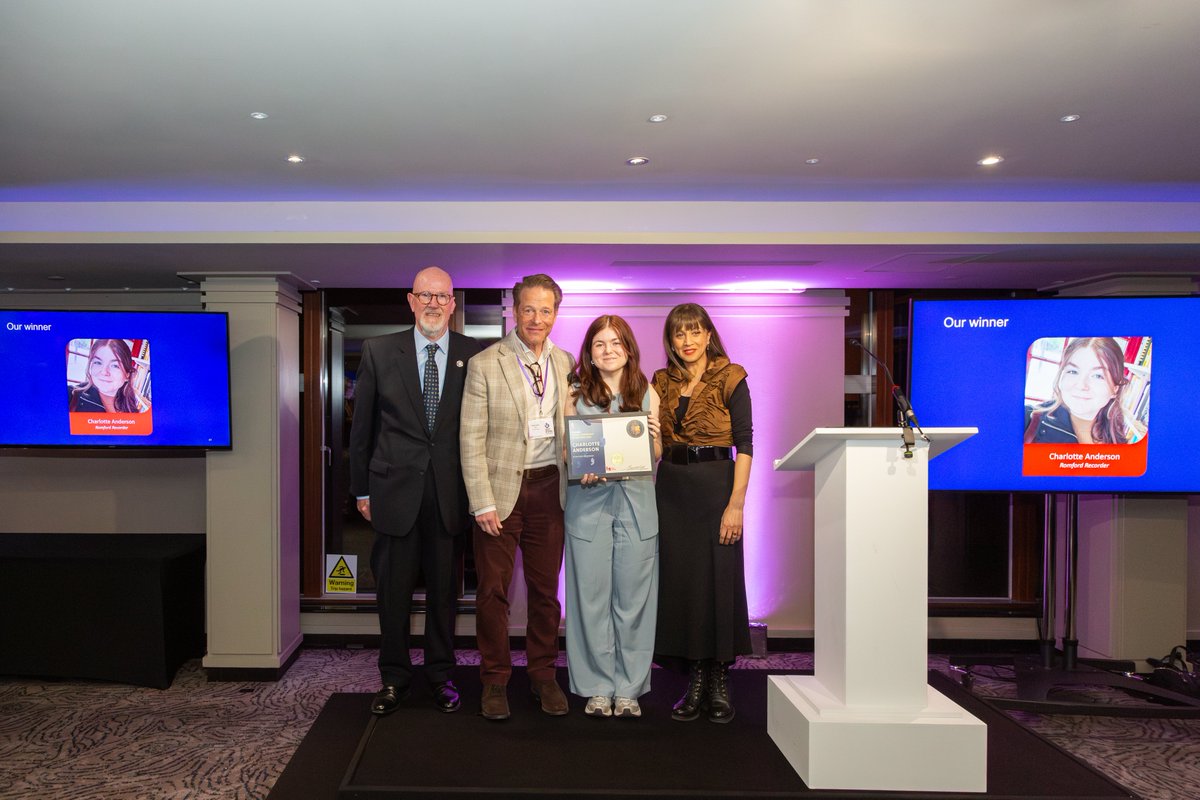
Charlotte Anderson of the Romford Recorder and Local London has been named the overall Young Journalist of the Year at the Chartered Institute of Journalists' 2026 awards — with presenter Nick Ferrari declaring that despite the challenges of fake news and artificial intelligence, the future of journalism is in "great hands."
The awards ceremony, held in April 2026, celebrated the achievements of young journalists from across the UK, with winners drawn from outlets including the Financial Times, The Daily Telegraph, and CNN Digital Sports. Anderson's win was a double triumph: she also claimed the Campaigning Journalist of the Year award for her series of articles on the crisis in Romford's accident and emergency services.
Background
The Chartered Institute of Journalists is the world's oldest professional journalism organisation, founded in 1884. Its Young Journalist of the Year Awards recognise outstanding work by journalists at the early stages of their careers, spanning a range of categories and media formats that reflect the diversity of modern journalism. The awards have long served as a barometer of emerging talent in British media.
The context in which this year's awards took place is a challenging one for the industry. At least 293 local newspapers have closed since 2005, and an estimated 4.4 million people in the UK now lack a dedicated local news source — what campaigners call "news deserts." The government's "Amplify: The Local Media Action Plan" has acknowledged the crisis, outlining a strategy to support the industry's transition to a digital-first future and establishing a £6 million Local News Fund to foster innovation. The rise of social media and personality-led news has further disrupted traditional audience habits, while the economic pressures of declining advertising revenue continue to squeeze newsrooms.
Key Developments
Charlotte Anderson's win as overall Young Journalist of the Year was celebrated by colleagues and industry figures alike. Her award-winning work — a series of investigative articles on the crisis in Romford's accident and emergency services — exemplifies the kind of public interest journalism that local reporters do every day, often without the resources or recognition afforded to their national counterparts. The Romford Recorder and Local London, where Anderson works, serves communities in east London and Essex, a reminder that local journalism remains a vital training ground for the next generation of reporters.
Presenter Nick Ferrari praised all of the winners, noting that despite the significant challenges facing the industry — including the spread of misinformation and the disruptive impact of artificial intelligence on newsrooms — the quality of young journalists entering the profession gives cause for optimism. CIoJ President Gerald Bowey and BBC London's Riz Latif were among those paying tribute to the winners. The Reuters Institute for the Study of Journalism has noted that young journalists face particular pressure from AI, which has the potential to automate tasks traditionally performed by junior reporters, making the human skills of investigation, source-building, and storytelling more important than ever.
Why It Matters
At a time when trust in media is under pressure and the economics of journalism are challenging, the CIoJ awards serve as an important reminder of the talent and dedication that sustains the profession. Charlotte Anderson's recognition is a source of pride for local journalism in particular, which plays an irreplaceable role in holding communities and institutions to account. Her investigative work on Romford's A&E crisis is precisely the kind of reporting that makes a tangible difference to people's lives — and that no algorithm can replicate.
Local Impact
For Northern Ireland, the health of local journalism is a matter of particular concern. The Belfast Telegraph, the Irish News, and the News Letter are among the titles that have navigated the digital transition, but community newspapers and hyperlocal outlets across the province face the same structural pressures as their counterparts in England. The CIoJ awards are a reminder that investing in young journalists — through training, mentorship, and fair pay — is not just good for the profession but essential for the communities they serve. Organisations like the National Council for the Training of Journalists (NCTJ) and the Belfast-based journalism programmes at Ulster University play a vital role in developing the next generation of reporters in Northern Ireland.
What's Next
The winners will go on to build careers that will shape British journalism for decades to come. The government's Local Media Action Plan and the £6 million Local News Fund represent a recognition that local journalism requires structural support, not just goodwill. Full details of the awards are available from Hold the Front Page, and the government's Local Media Action Plan is published at gov.uk.
\