West Belfast's Féile an Phobail Secures 13% Funding Boost as Ireland's Largest Community Arts Festival Prepares for August
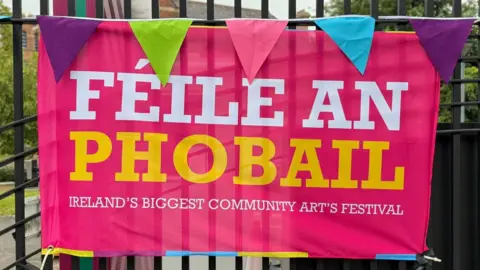
Ireland's largest community arts festival, Féile an Phobail, has secured a 13% increase in funding from Tourism Northern Ireland ahead of its 2026 edition, which runs from 25 July to 9 August in West Belfast — a vote of confidence in an event that has grown from a community response to political violence into one of the most significant cultural gatherings on the island.
Background
Féile an Phobail — the Festival of the People — was born in 1988 in circumstances that could hardly have been more difficult. West Belfast was at the height of the Troubles, a community under enormous pressure from violence, poverty, and political marginalisation. The festival was conceived as a direct response to that pressure: a way of asserting cultural identity, building community cohesion, and demonstrating that life in West Belfast was about far more than the conflict that dominated the headlines.
In the nearly four decades since, Féile has grown into something that its founders could scarcely have imagined. What began as a handful of events in community halls and on street corners has expanded into a two-week programme spanning music, comedy, theatre, sport, debates, film, and family entertainment. The festival now attracts performers and speakers of international standing, and its debates — which have featured politicians, academics, and public figures from across the political spectrum — have become a significant forum for discussion of Irish and British politics.
The festival's growth has been matched by its funding base. It receives support from Belfast City Council, the Arts Council of Northern Ireland, and Tourism Northern Ireland, as well as from commercial sponsors and ticket sales. The £244,000 annual contribution from Belfast City Council reflects the festival's status as a major civic asset, while the Tourism NI funding acknowledges its role in attracting visitors to the city.
Key Developments
The 13% increase in Tourism Northern Ireland funding for 2026 represents a meaningful uplift for an organisation that, like all arts bodies, has faced significant financial pressures in recent years. The additional resources will allow organisers to expand the programme and invest in production values that can compete with festivals of comparable scale elsewhere in Ireland and Britain.
This year's festival is expected to host more than 500 events across the two-week period, with an anticipated attendance of over 120,000 visitors. The programme will span the full range of Féile's traditional strengths — live music across multiple venues, stand-up comedy, political debates, children's events, and sports competitions — as well as new commissions and international collaborations that reflect the festival's growing ambition.
The timing of the 2026 festival is particularly significant. Belfast is hosting the Fleadh Cheoil na hÉireann from 2 to 9 August, meaning that the city will be in the midst of two major cultural events simultaneously for the first week of August. Féile organisers have been working with Fleadh organisers to ensure that the two events complement rather than compete with each other, and there is genuine excitement about the cultural energy that the combination will generate in the city.
The funding announcement has been welcomed by community leaders in West Belfast, who see it as recognition of the festival's broader contribution to the city's cultural economy and its role in promoting a positive image of a community that has historically been defined in the public mind by conflict rather than creativity.
Why It Matters
The significance of Féile an Phobail extends well beyond its programme of events. The festival is, in a very real sense, a measure of how far West Belfast has travelled since the darkest years of the Troubles. The community that created Féile in 1988 was one that had been largely excluded from the mainstream cultural and economic life of the city. The festival was an act of self-determination — a declaration that this community had its own culture, its own stories, and its own right to celebrate them.
That the festival now receives substantial public funding from bodies like Tourism Northern Ireland and Belfast City Council is a reflection of how much has changed. It is also a recognition of the economic reality: Féile generates significant visitor spend in West Belfast and the wider city, and the return on public investment is demonstrably positive.
The 13% funding increase is also significant in the context of the broader arts funding landscape in Northern Ireland, where many organisations have faced cuts or standstill budgets in recent years. The decision to increase Féile's allocation sends a signal about the value that public bodies place on community-rooted cultural events of this kind.
Local Impact
For the residents of West Belfast — from the Falls Road to Andersonstown, from Ballymurphy to Turf Lodge — Féile is a source of genuine pride and a fixture of the summer calendar. Local businesses, from cafés and restaurants to accommodation providers, report significantly increased trade during the festival period. The event also provides employment and volunteering opportunities for local people, many of whom have been involved with Féile for years and regard it as a central part of their community identity.
The festival's debates, which take place in venues across the area, draw audiences that include people from across Belfast and beyond, creating a rare space for cross-community dialogue in a city that still has significant social divisions. This aspect of Féile's work is perhaps its least visible but most important contribution to the life of the city.
What's Next
The full programme for Féile an Phobail 2026 will be announced in the coming weeks, with ticket sales for headline events expected to open shortly. The festival runs from 25 July to 9 August, overlapping with the Fleadh Cheoil na hÉireann from 2 August. Organisers are planning a series of joint events that will allow visitors to experience both festivals during the first week of August, and Belfast City Council is coordinating transport and logistics to manage the increased footfall in the city centre and West Belfast during that period.