West Belfast Community Leaders Demand Reset After Colin Area Disorder as PSNI Charges First Suspect
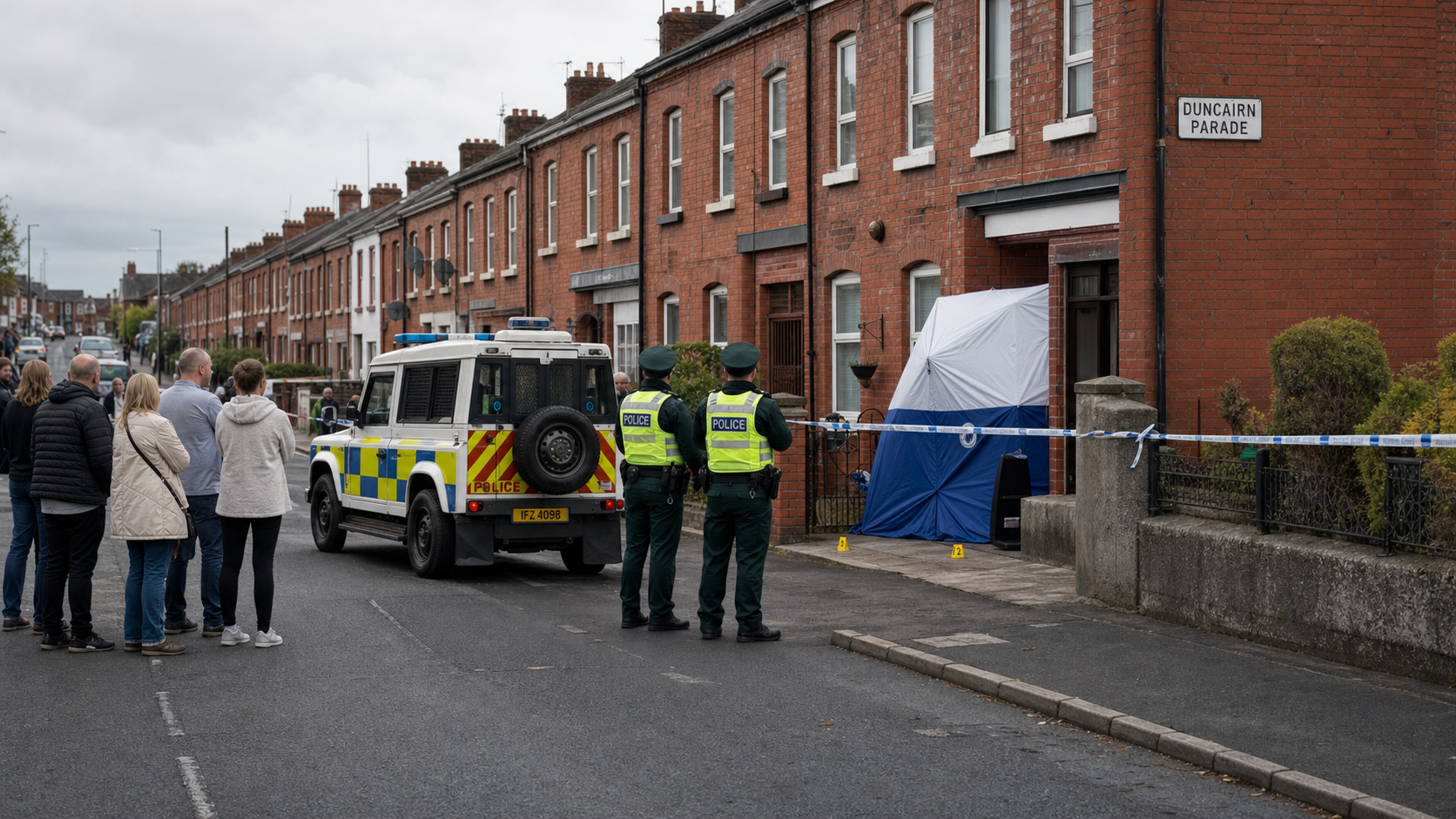
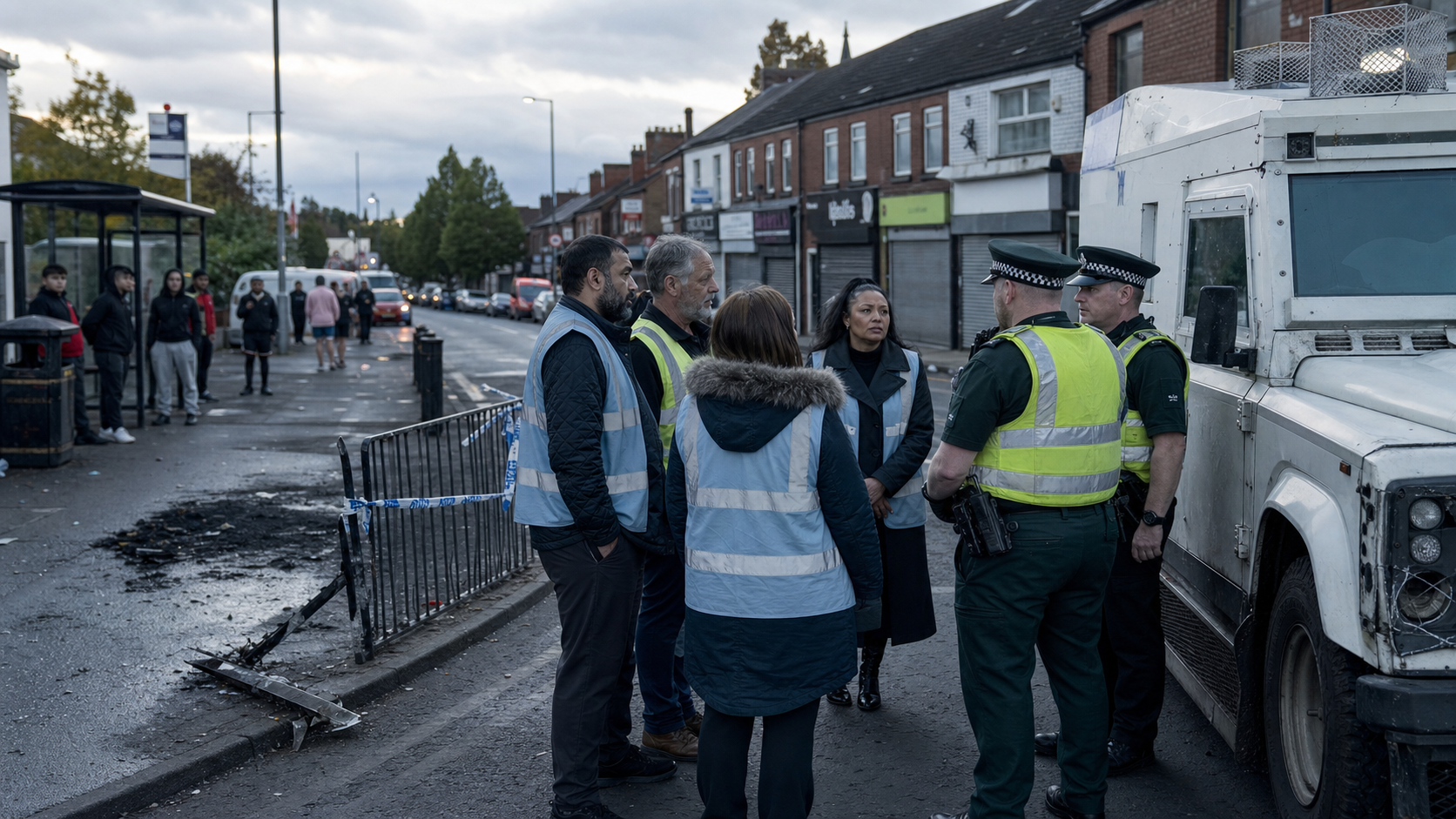
A coalition of youth, community, and sports organisations from West Belfast has issued a joint statement demanding a fundamental reset in how the Colin area addresses escalating anti-social behaviour, following a night of serious disorder on the Stewartstown Road on July 18 that saw approximately 100 people — many of them teenagers — attack police, damage 11 PSNI vehicles, assault an officer, and attack a man with iron bars, with community leaders warning that criminal elements are deliberately exploiting young people to target police.
Background
The Colin area of West Belfast — which encompasses the Stewartstown Road corridor and surrounding estates — has experienced a pattern of escalating anti-social behaviour over several months. The July 18 disorder was not an isolated incident but the most serious manifestation of tensions that had been building since at least May 2026, when disruptions occurred during a memorial event in the area. Community workers had been raising concerns about the dangerous use of scrambler bikes and e-bikes along the Stewartstown Road for weeks before the violence erupted.
The PSNI had initiated a planned operation earlier on July 18 to address reckless driving on scrambler-type bikes, which had been a source of significant community complaint. It was during this operation that the disorder began, with a crowd gathering rapidly and the situation deteriorating into sustained violence. The main thoroughfare was effectively shut down, businesses were forced to close, and residents reported feeling unsafe in their own neighbourhood.
The organisations that issued the joint statement — including the Lagmore Youth Project, Féile an Phobail, and Colin Gaels — represent the backbone of community life in the area. Their decision to speak out collectively reflects the depth of concern about what is happening and the recognition that the disorder cannot be addressed by any single organisation or agency acting alone.
Key Developments
The PSNI has confirmed that a 27-year-old man was charged with disorderly behaviour following the July 18 disorder and is scheduled to appear in court on August 14. A 14-year-old boy was arrested on suspicion of riot and disorderly behaviour and released pending a report to the Public Prosecution Service. A 22-year-old man arrested in connection with the iron bar attack was released on police bail pending further enquiries. The PSNI has established a public portal for the submission of CCTV and mobile footage and is appealing for witnesses to come forward.
Sinn Féin MLA Danny Baker, who represents the area at Stormont, condemned the violence and expressed particular concern about the involvement of children as young as nine in the disorder. He and other community leaders have stated that criminal elements are actively exploiting young people — luring them out and using them to attack police — and that this pattern requires a coordinated response from statutory agencies, community organisations, and families.
The joint community statement called for a "reset" in approach, advocating for a social welfare-led response rather than one that relies solely on criminal justice. Community leaders urged parents to take greater responsibility for their children's whereabouts and called on statutory agencies to increase investment in youth provision in the Colin area.
Why It Matters
The disorder in Colin is symptomatic of a broader challenge facing several communities in West Belfast and across Northern Ireland: the intersection of youth disengagement, criminal exploitation, and inadequate statutory provision. The area has seen significant investment in community infrastructure over the past decade, but youth services remain chronically underfunded relative to need, and the gap between what is available and what is required has widened as the cost-of-living crisis has squeezed family budgets and community organisation funding.
The involvement of children as young as nine in serious disorder is particularly alarming. It suggests that the pipeline of exploitation — where older criminal figures recruit and use younger people as a buffer against prosecution — is operating at an earlier age than previously documented. This is not unique to West Belfast; similar patterns have been observed in parts of Derry and in some interface areas of North Belfast. But the scale of the July 18 disorder, and the damage to police vehicles and personnel, has brought the issue to a level of public attention that demands a substantive response.
Local Impact
The Stewartstown Road is a major arterial route through West Belfast, connecting the Colin area to the city centre and to the M1 motorway. Its closure during the disorder caused significant disruption to residents and businesses, and the damage to 11 PSNI vehicles represents a substantial cost to the public purse. Local businesses on the road reported losses during the period of closure, and several have expressed concern about the impact on footfall in the weeks since. The Colin Neighbourhood Partnership, which coordinates community development in the area, has called an emergency meeting to discuss the response and will be engaging with the Department for Communities and the Belfast City Council about additional resources.
What's Next
The PSNI investigation into the July 18 disorder is ongoing, with detectives reviewing CCTV and mobile footage submitted through the public portal. Further arrests are possible. The 27-year-old charged with disorderly behaviour will appear in court on August 14. Community organisations in the Colin area are planning a series of engagement events over the summer to provide alternative activities for young people and to rebuild trust between residents and statutory agencies. Stormont's Department for Communities has been asked to convene a multi-agency meeting to address the underlying issues, and that meeting is expected to take place before the end of July.