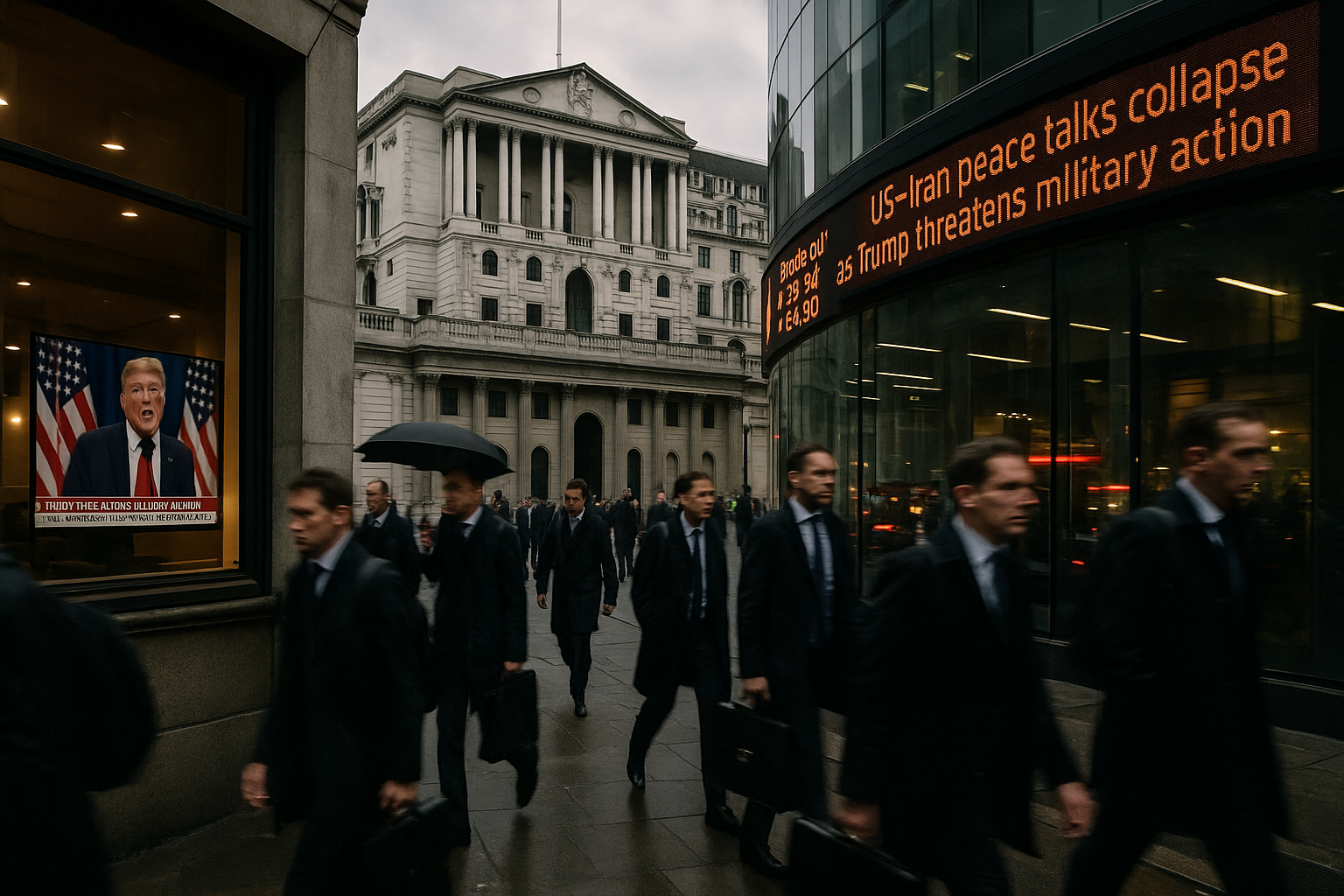
US-Iran Peace Talks Collapse as Trump Threatens Military Action
Hopes for a diplomatic resolution to the escalating conflict in the Middle East have been shattered after high-stakes peace negotiations between the United States and Iran collapsed dramatically. In a fiery statement, US President Donald Trump threatened to "blast them to hell" if a deal was not reached, accusing the Iranian delegation of making unacceptable demands and plunging the region into a new phase of dangerous uncertainty.
Background
The recent talks were seen as a critical, albeit fragile, opportunity to de-escalate a conflict that has been steadily worsening for months. Tensions between the US and Iran, which have been simmering for years over Iran's nuclear programme and its regional influence, have recently boiled over into direct military exchanges. This has created widespread instability across the Middle East, disrupting global trade and causing a significant spike in global energy prices. The international community had placed immense pressure on both sides to find a diplomatic off-ramp and avoid a full-scale war, which would have catastrophic consequences for the region and the world economy.
The negotiations, held at a neutral venue, were aimed at establishing a framework for de-escalation, potentially involving a return to some form of nuclear agreement and a commitment to cease hostilities. President Trump, who has often oscillated between isolationist rhetoric and aggressive military posturing, had agreed to the talks, leading to cautious optimism that a deal might be possible. However, the deep-seated mistrust between the two nations, coupled with hardline factions on both sides opposed to any compromise, meant the negotiations were fraught with difficulty from the outset.
Key Developments
The breakdown of the talks was announced abruptly. President Trump, in a statement to the press, declared the negotiations over. He claimed that the Iranian side was asking for things that he could not agree to, without specifying what those demands were. His rhetoric took a sharp and aggressive turn as he warned of severe consequences, threatening to blast Iran to hell if they did not straighten up and fly right. This belligerent language has effectively slammed the door on further diplomacy for the time being.
The collapse of the peace process casts a dark shadow over the prospects for stability in the Middle East and has sent ripples of uncertainty through global markets. The ongoing war is already a primary driver of the surge in global energy prices, which is now expected to worsen, as reported by international news agencies like ABC News. The conflict is not contained between the US and Iran. In a related development, Lebanon has reported 13 fatalities from recent Israeli strikes in the south of the country, highlighting the risk of the conflict spreading and engulfing other regional actors. Furthermore, the Global Sumud Flotilla, an international convoy of ships carrying humanitarian aid and activists, was intercepted by Israeli forces as it headed towards the blockaded Gaza Strip, with reports of injuries during the interception. The Inquisitr has also reported on the wider diplomatic fallout, as seen in their coverage.
Why It Matters
The collapse of these talks is a profound failure of diplomacy that significantly increases the likelihood of a wider, more devastating war in the Middle East. President Trump's immediate pivot to threats of overwhelming military force suggests that the US administration may now favour a military solution over a negotiated one. A full-scale conflict between the United States and Iran would be catastrophic, leading to immense loss of life, creating a massive refugee crisis, and causing unprecedented disruption to the global economy.
Comparatively, while past conflicts in Iraq and Afghanistan were long and costly, a war with Iran, a larger and more powerful state, would be on a completely different scale. It would destabilise the entire global order, with unpredictable consequences for international security, trade, and energy supplies. The failure to find a peaceful path forward represents a perilous moment for the entire world. For European nations, including the UK, the prospect of a wider war raises urgent questions about energy security, refugee flows, and the extent of their obligations as US allies.
Local Impact
For the UK and Ireland, the immediate impact is being felt through the cost of energy. The surge in oil and gas prices resulting from the conflict is the direct cause of the new wave of price hikes facing households and businesses. A further escalation of the war would undoubtedly push these prices even higher, deepening the cost-of-living crisis. There are also significant security implications. As a key ally of the United States, the UK could be drawn into any military conflict, a prospect that would be deeply unpopular and politically divisive. The instability also poses a threat to British and Irish citizens living and working in the Gulf region, and could lead to disruptions in major shipping lanes, affecting trade.
What's Next
The world now watches and waits for the next move. The immediate future is likely to be characterised by heightened military posturing from both the US and Iran in the Persian Gulf. Allied nations, including the UK and other European powers, will likely make urgent diplomatic efforts to try and pull both sides back from the brink, though their influence may be limited. Global markets will remain on edge, reacting to every statement and military movement in the region. The risk of a miscalculation by either side leading to an unintended, all-out war is now dangerously high.