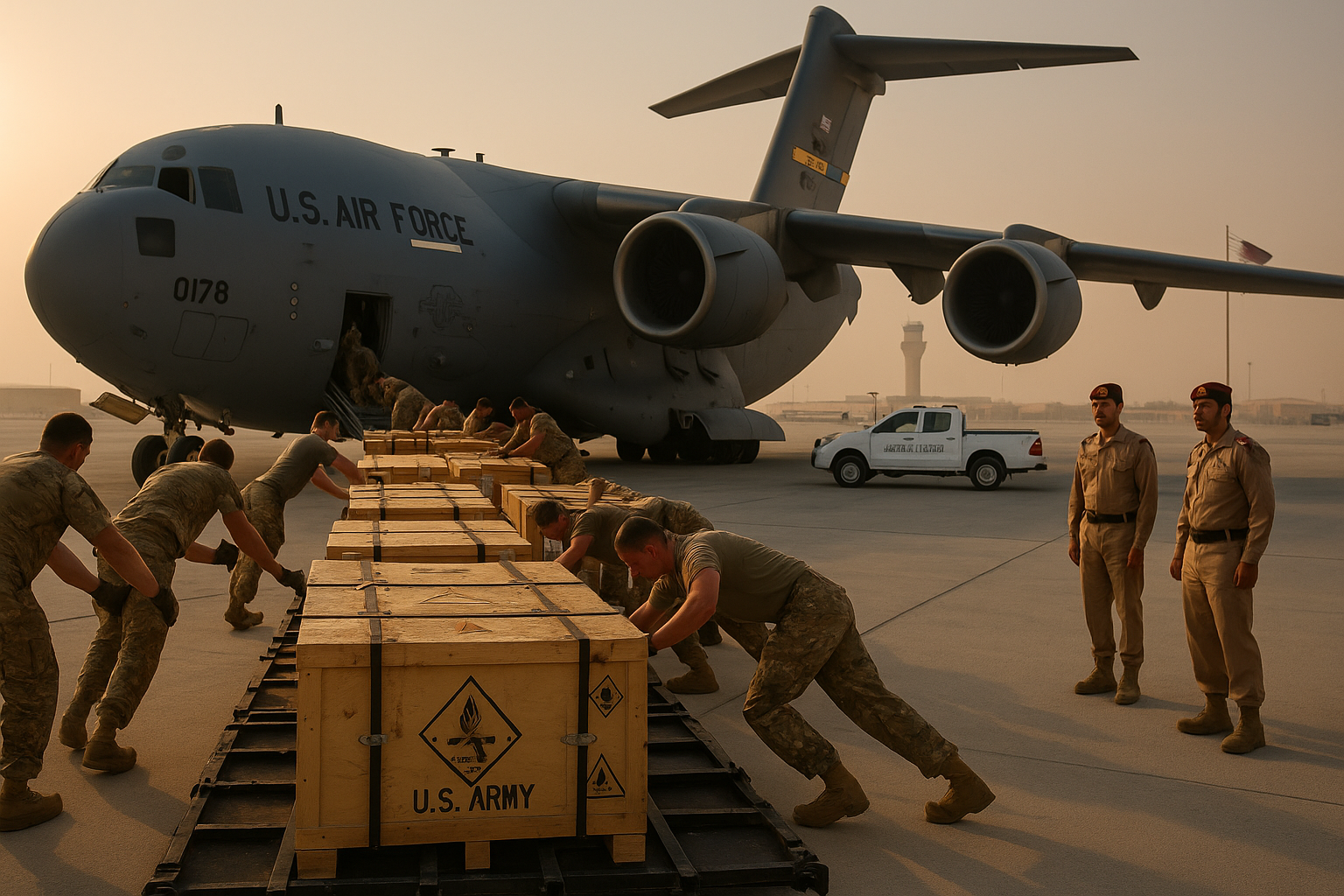
US Fast-Tracks $8 Billion Arms Sales to Middle East Allies as Iran Conflict Intensifies
The Trump administration has fast-tracked approximately $8.6 billion in military sales to its key Middle East allies — Israel, Qatar, the United Arab Emirates, and Kuwait — as the conflict with Iran enters its third month with no diplomatic resolution in sight. The arms sales, approved under emergency procedures that bypass the normal congressional notification period, are intended to bolster the defensive capabilities of US partners in the region. Simultaneously, Washington has imposed new sanctions targeting Chinese entities accused of facilitating Iranian oil exports, drawing a sharp rebuke from Beijing.Background
The United States has maintained a network of military partnerships across the Middle East for decades, providing arms, training, and intelligence to a range of governments in the region. These relationships have been a cornerstone of US foreign policy since the 1970s, driven by a combination of strategic interests — access to oil, containment of adversaries, protection of Israel — and commercial considerations, as the US defence industry is a major beneficiary of arms sales to the region.
The current conflict with Iran has accelerated the pace of US military engagement in the region. The naval blockade of Iranian oil exports, which has been in place since early March, requires a significant US military presence in the Persian Gulf and the surrounding waters. The administration has also been working to ensure that its regional partners have the capabilities they need to defend themselves against potential Iranian retaliation, including missile attacks and drone strikes.
The use of emergency procedures to fast-track arms sales is a controversial but not unprecedented step. The Trump administration used similar procedures during its first term to approve arms sales to Saudi Arabia and the UAE, bypassing congressional oversight in the name of national security. Critics argue that such procedures undermine democratic accountability and risk enabling human rights abuses; supporters contend that they are necessary to respond rapidly to evolving security situations.
Key Developments
The $8.6 billion in arms sales approved by the administration covers a range of military equipment, including air defence systems, precision-guided munitions, and naval vessels. Israel, which has been conducting strikes against Hezbollah in Lebanon in parallel with the US-Iran conflict, is among the primary recipients. Qatar and the UAE, which host major US military bases, are also receiving significant quantities of equipment. Kuwait, which has been a consistent US partner in the region, rounds out the list of recipients.
The US State Department has simultaneously targeted Qingdao Haiye Oil Terminal in China and other entities for facilitating Iranian oil exports in violation of US sanctions. Beijing condemned the move as "unlawful" and warned of retaliatory measures. The US Treasury has also imposed fresh sanctions on Iranian currency exchange firms, targeting the financial infrastructure that the regime uses to manage the economic impact of the blockade.
Iran's parliament is reportedly preparing legislation that would place restrictions on vessel passage through the Strait of Hormuz, potentially banning Israeli ships and levying fees on vessels from "hostile countries." The Strait of Hormuz is one of the world's most critical maritime chokepoints, through which approximately 20% of global oil supplies pass. Any restriction on passage through the Strait would have severe consequences for global energy markets.
Why It Matters
The fast-tracking of arms sales to Middle East allies reflects the administration's assessment that the conflict with Iran is likely to be prolonged, and that its regional partners need to be equipped for an extended period of heightened tension. The scale of the sales — $8.6 billion in a single tranche — is extraordinary and reflects the urgency with which the administration views the situation. For the UK, which has its own defence relationships with several of the recipient countries, the US arms sales create both opportunities and complications: British defence companies may benefit from associated contracts, but the UK government must also navigate the diplomatic implications of being seen to support a US military posture that is controversial internationally.
The targeting of Chinese entities for sanctions is a significant escalation in the economic dimension of the conflict. China has been Iran's most important trading partner and has continued to purchase Iranian oil despite US sanctions, providing Tehran with a crucial economic lifeline. By sanctioning Chinese companies, the US is signalling its willingness to impose costs on third parties that facilitate Iranian oil exports — a move that risks further straining the already tense US-China relationship.
Local Impact
The economic consequences of the US-Iran conflict are being felt across the UK and Ireland. Elevated oil prices — Brent crude at around $111 per barrel — are contributing to higher fuel costs for consumers and businesses, adding to the inflationary pressures that are already weighing on the economy. The UK government has been working with international partners to explore options for stabilising energy markets, including discussions with OPEC+ members about increasing production. For Irish businesses, which are heavily dependent on imported energy, the conflict has added to the cost pressures that are already driving record levels of business distress. The government in Dublin has been working through EU channels to support diplomatic efforts to resolve the conflict and reduce its economic impact.
What's Next
The US Congress is expected to review the emergency arms sales procedures in the coming weeks, with some members of both parties expressing concern about the lack of oversight. The UN Security Council is scheduled to meet this week to discuss the situation in Lebanon and the broader regional conflict. Iran's parliament is expected to vote on the Strait of Hormuz legislation within the next two weeks. The next round of diplomatic contacts between the US and Iran, potentially via Pakistani or European mediators, is expected before the end of May.
Sources: Al Jazeera | Institute for the Study of War