UK's Alan Turing Institute Told to Make 'Significant' Changes After Underperformance Review
The United Kingdom's leading artificial intelligence research institute, the Alan Turing Institute, has been instructed by its main government funder to make "significant" changes after a review found it was underperforming on strategy and value for money.
UK Research and Innovation (UKRI), which awarded the institute a five-year, £100 million funding package in 2024, delivered the stark assessment this week, triggering a leadership overhaul at one of Britain's most prominent scientific institutions.
Background
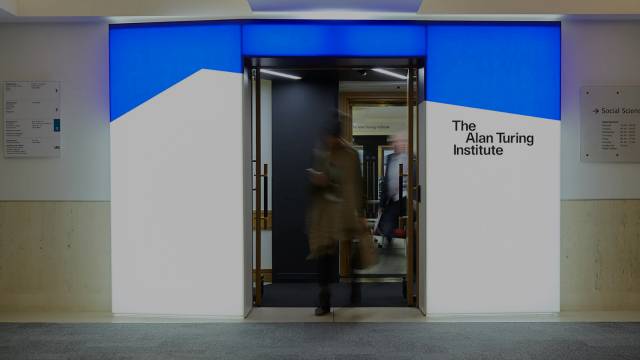
The Alan Turing Institute, based at the British Library in London, was established in 2015 as the national institute for data science and artificial intelligence. Named after the pioneering mathematician and computer scientist Alan Turing, it was intended to position the UK at the forefront of global AI research and to translate academic breakthroughs into real-world applications.
Despite being described as having "strong foundations and scientific excellence," the UKRI review concluded that the institute had failed to deliver sufficiently on its strategic mission and had not demonstrated adequate value for money from its substantial public funding.
Key Developments
Following the review's findings, the institute has undergone significant leadership changes. Its chief executive stepped down, and its chair also resigned. A new chief executive, George Williamson, who has a background in national security, has been appointed to lead the restructured organisation.
The government has directed the Alan Turing Institute to prioritise defence and national security in its research agenda, representing a notable shift away from its previous focus areas of health and environment. This reorientation reflects the broader government strategy of aligning scientific investment with national security priorities amid a volatile global environment.
The changes come as the UK government has also announced a £500 million Local Innovation Partnerships Fund through UKRI, aimed at decentralising tech growth beyond London and the so-called Golden Triangle of London, Oxford, and Cambridge. Regions including Greater Lincolnshire, South West Wales, and the Tay Cities in Scotland are set to benefit from the initiative.
Why It Matters
The Alan Turing Institute's difficulties highlight the challenges facing the UK's ambition to become a global AI superpower. With the UK tech sector valued at £200 billion and employing over 1.7 million people, the performance of flagship institutions like the Turing Institute is seen as critical to maintaining the country's competitive edge in artificial intelligence.
The decision to redirect the institute's focus towards defence and national security also reflects the changing geopolitical landscape, with the ongoing Iran war and broader global instability prompting governments across the Western world to align scientific research more closely with security objectives.
What's Next
The new leadership team at the Alan Turing Institute is expected to set out a revised strategic plan in the coming months. UKRI has made clear that continued funding is contingent on demonstrable improvements in delivery and a clearer strategic focus. The institute's ability to attract and retain top AI researchers during this period of uncertainty will be closely watched by the wider UK tech community.
Full details of the review's findings are available via The Guardian's report.