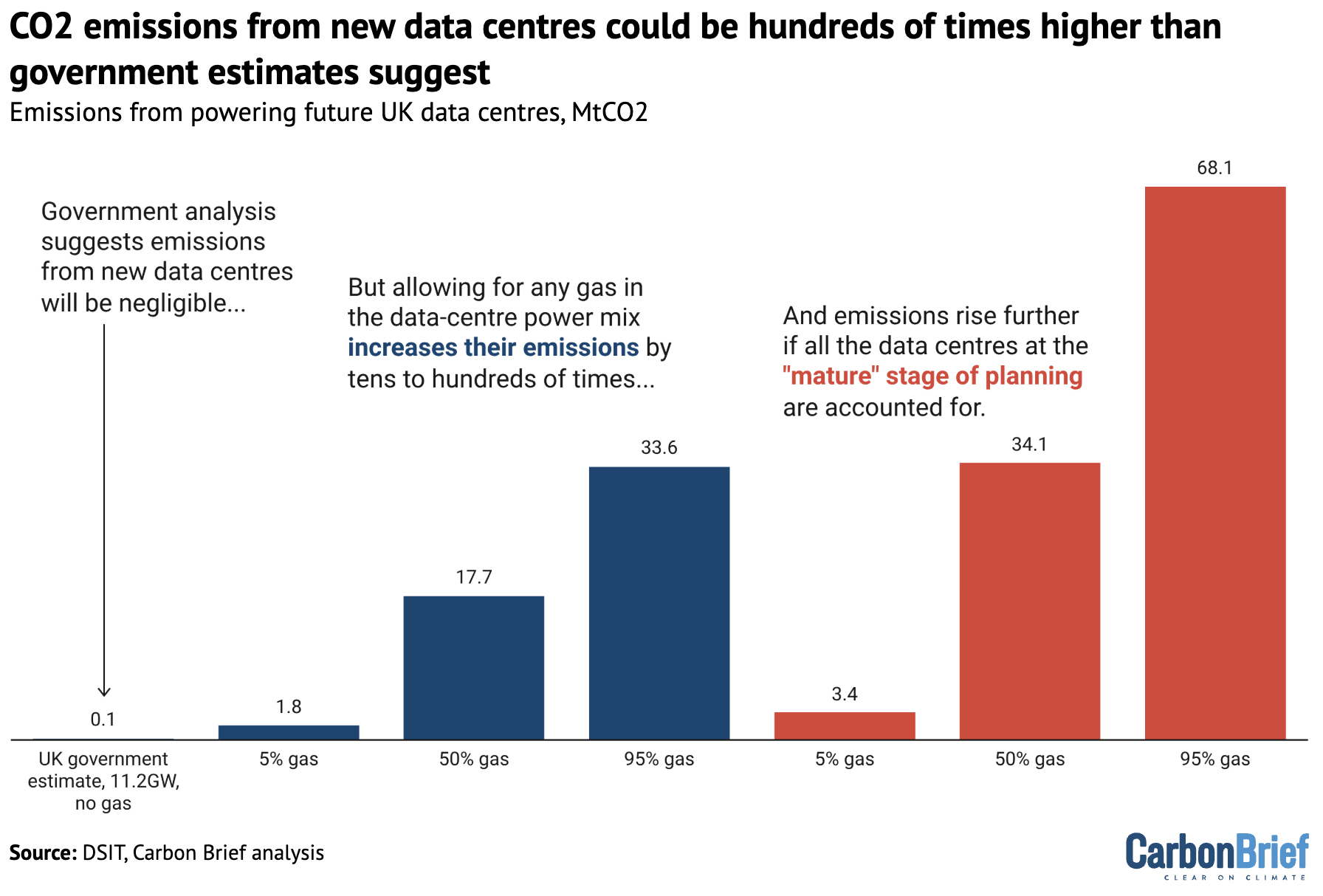
UK Government Admits AI Data Centre Carbon Emissions Were Underestimated by More Than 100-Fold
The UK government has dramatically revised its estimates for carbon emissions from artificial intelligence data centres, with new figures suggesting the impact could be more than 100 times higher than previously calculated — raising serious questions about the country's ability to meet its net-zero commitments while pursuing its ambition to become an "AI superpower."
Background
The Department for Science, Innovation and Technology (DSIT) published revised figures this week as part of an update to the UK's "compute roadmap," which outlines the government's strategy for building a world-class AI computing ecosystem. The original estimates had suggested negligible carbon emissions from AI data centres — a figure that critics had already described as "laughably inaccurate."
Key Developments
The revised projections estimate that energy use by AI data centres in the UK could generate between 34 million and 123 million tonnes of carbon dioxide over the next decade (2025–2035). This represents approximately 0.9% to 3.4% of the UK's projected total emissions over that period. The higher end of the estimate — 123 million tonnes — is comparable to the carbon emissions generated by 2.7 million people over the same period.
The National Energy System Operator has estimated that electricity consumption from data centres could quadruple by 2030, with Ofgem indicating that 71 new data centres with financial commitment could require around 20 gigawatts of electricity — compared to the UK's average demand of 37 gigawatts in 2025. AI data centres also place heavy demands on water, primarily for cooling, with projected annual water consumption potentially reaching between 0.1 and 0.5 trillion cubic metres by 2035.
The Financial Conduct Authority has separately expanded its AI Live testing programme to include eight new financial services firms, reflecting the rapid pace of AI adoption across the UK economy.
Why It Matters
Environmental groups including Global Witness, Foxglove, and Global Justice Now have expressed alarm, warning that the vastly increased emissions threaten the UK's legally binding commitment to reach net-zero by 2050 and could force new fossil fuel use. MPs including Chi Onwurah and Toby Perkins have launched inquiries into the environmental impact of data centres and AI. The government's plan aims for clean sources to produce at least 95% of Great Britain's electricity generation by 2030, but critics note that market-based renewable energy procurement does not always equate to physical operation on zero-carbon electricity every hour.
What's Next
The government has acknowledged the need to balance its AI ambitions with climate obligations. Parliamentary scrutiny of the revised figures is expected in the coming weeks, and the data centre industry is exploring solutions including liquid immersion cooling, direct renewable energy deals, and small modular reactors. The revised compute roadmap is available on the government's website.