TUV Blasts Michelle O'Neill Over 'Weapons of War' Comments
TUV leader Jim Allister has launched a scathing attack on Northern Ireland's First Minister Michelle O'Neill after she boycotted the launch of a £50 million UK defence investment package, denouncing it as a "militarisation agenda" that prioritises "weapons of war over people." The controversy has exposed the deep-seated divisions at the heart of Stormont's power-sharing executive and drawn accusations of hypocrisy from unionist leaders across the political spectrum.
Background
The controversy erupted over the launch of the Defence Growth Deal, a UK government initiative designed to boost Northern Ireland's defence sector by making it easier for small and medium-sized enterprises to enter the defence supply chain. The government stated the deal would support hundreds of well-paid jobs in a sector that already employs around 9,000 people and generates over £2 billion in business annually for the Northern Ireland economy — a significant contribution to a region that has historically struggled with economic underperformance relative to the rest of the UK.
Northern Ireland has a long and distinguished history in defence manufacturing, with companies across the region supplying components and systems to the UK armed forces and allied nations. The Defence Growth Deal was presented by the UK government as a recognition of this industrial heritage and an investment in its future, with the potential to create hundreds of additional skilled jobs in engineering, manufacturing, and technology.
Key Developments
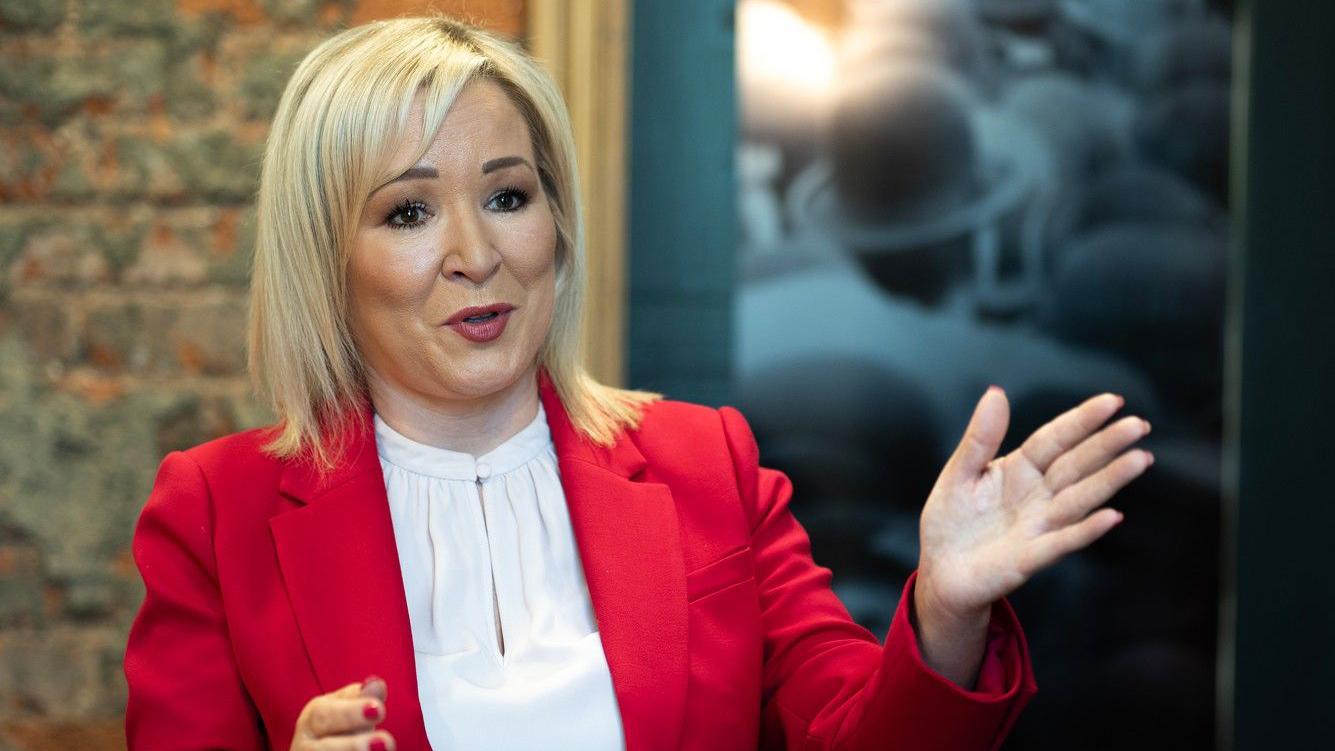
Michelle O'Neill was conspicuously absent from the Belfast launch event. She justified her decision by stating: "I chose not to be there because I don't agree with this as a policy choice... a very clear political decision to prioritise a militarisation agenda, weapons of war over people is how I feel about it." She argued that if she had £50 million at her disposal, she would "much prefer" to spend it on public services, the cost-of-living crisis, or healthcare.
TUV leader Jim Allister branded the boycott as part of Sinn Féin's "narrow anti-British agenda" and a reminder that this agenda "always comes through whenever one bothers to scratch the surface." He directly challenged O'Neill's moral framing, drawing a sharp contrast between her opposition to the defence deal and her party's historical association with republican paramilitarism. In a statement on his party's website, he highlighted the perceived hypocrisy: "O'Neill feigns concern for money which she alleges should be spent on public services while defending an IRA campaign which cost the health service alone countless millions."
The DUP echoed this criticism, accusing Sinn Féin of "riding two horses." The party's economy committee chair, Phillip Brett, pointed out that while Sinn Féin's Economy Minister, Caoimhe Archibald, also snubbed the event, her department sent senior officials and the investment agency Invest NI was also in attendance. DUP leader Gavin Robinson described Sinn Féin's opposition as "puerile," arguing that the First Minister and Economy Minister "ought to be championing investment in Northern Ireland" instead of engaging in "ideological grandstanding."
Why It Matters
The dispute lays bare the fundamentally different worldviews at the heart of Northern Ireland's power-sharing government. For Sinn Féin, the investment represents a moral and political choice to prioritise military spending over social welfare — a stance consistent with its Irish republican and left-wing ideology. For unionists, it is a welcome economic opportunity, a validation of Northern Ireland's industrial capabilities, and a reaffirmation of its integral role within the UK's national and economic framework. The clash over the "weapons of war" demonstrates that even as the Executive attempts to focus on bread-and-butter issues, the foundational constitutional and ideological questions are never far from the surface.
Local Impact
For businesses and workers in Northern Ireland's defence supply chain, O'Neill's comments were a source of frustration and concern. The sector employs thousands of people in skilled, well-paid jobs across the region, and the Defence Growth Deal represented a tangible opportunity to expand that employment base. Jim Allister welcomed the deal as a move that "strengthens our industrial base and creates employment," and proudly noted that "Northern Ireland has already been at the forefront of producing weapons which have been deployed in the fight for freedom in Ukraine." For unionist leaders, the investment represents a concrete benefit of Northern Ireland's position within the United Kingdom — and O'Neill's boycott a reminder of the ideological fault lines that continue to define life at Stormont.
What's Next
The Defence Growth Deal will proceed regardless of O'Neill's objections, with the UK government committed to its implementation. The political fallout from the "weapons of war" controversy is likely to reverberate at Stormont for some time, with unionist parties expected to press the First Minister on her position at the next Assembly session. The episode will also feature in the ongoing debate about the functioning of the power-sharing executive and whether the mandatory coalition model can deliver effective government when the two largest parties hold such fundamentally different views on Northern Ireland's constitutional future.
Sources: Belfast Newsletter; TUV.org.uk