Tributes Paid to First Victim of 1971 Ballymurphy Massacre at West Belfast Memorial
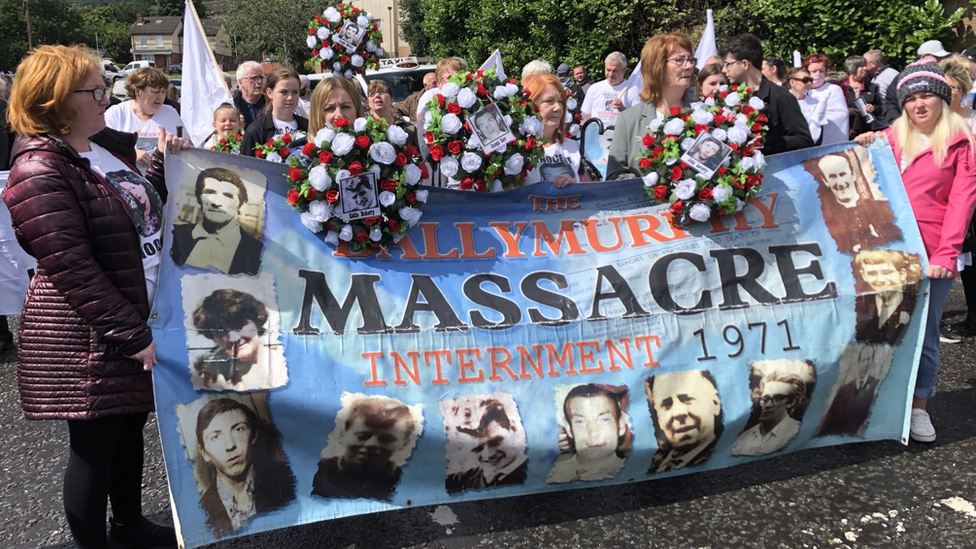
Tributes were paid at a West Belfast memorial on Sunday to the first victim of the 1971 Ballymurphy massacre, with speakers remembering the individual as "unbowed, dignified, and deeply compassionate" as families continue their decades-long quest for justice. The commemoration underscored the ongoing pursuit of accountability for the deaths of ten civilians formally found innocent by a landmark 2021 coroner's inquest.
Background
The Ballymurphy massacre unfolded over three days — 9 to 11 August 1971 — at the start of Operation Demetrius, the British Army's large-scale internment sweep across Northern Ireland. As soldiers from the 1st Battalion of the Parachute Regiment were deployed to the Ballymurphy area of West Belfast, eleven civilians were killed and many more wounded. The official army account at the time claimed soldiers were responding to republican gunfire. That narrative went largely unchallenged for decades, leaving the families of the dead to carry both grief and the injustice of having their loved ones falsely labelled as aggressors.
The first person shot on 9 August was Bobby Clarke, a civilian helping families — including children — evacuate Springfield Park as loyalist crowds attacked. As Clarke crossed open waste ground, he was shot in the back by a paratrooper. Father Hugh Mullan, a local Catholic priest aged 38, heard the gunfire and entered the field waving a white cloth, reportedly after calling army commanders to plead for a ceasefire. As he administered last rites to Clarke, whom he believed to be dying, Father Mullan was shot and killed. Nineteen-year-old Francis Quinn ran to help the priest and was shot dead moments later. Bobby Clarke survived, crawling to safety after dark. Father Mullan and Francis Quinn were the first fatalities of what became known as Belfast's Bloody Sunday.
The ten victims covered by the 2021 inquest included a mother of eight, a father of fourteen shot twelve times, and a former soldier. An eleventh civilian, Paddy McCarthy, died of a heart attack during the events and was not within the inquest's scope. For fifty years, the families fought to clear their loved ones' names through legal challenges, public advocacy, and annual commemorations that kept the story alive when official channels were closed to them.
Key Developments
The landmark moment came in May 2021, when Coroner Mrs Justice Keegan delivered the findings of a new inquest that had begun in November 2018 and heard evidence from over 100 witnesses, including more than 60 former soldiers. Her conclusions were unequivocal: all ten victims were "entirely innocent of wrongdoing on the day in question." For nine of the ten deaths, the use of force by the British Army was found to be disproportionate and unjustified. Soldiers had fired into the area with a "basic inhumanity." Father Mullan was described as a peacemaker shot twice in the back. Joan Connolly, Daniel Teggart, Noel Phillips, and Joseph Murphy were found to be unarmed and posing no risk when killed outside an army barracks.
Following the inquest, then-Prime Minister Boris Johnson issued an apology "unreservedly on behalf of the state" in the House of Commons — though some families criticised the manner of its delivery. In June 2022, the Ministry of Defence agreed to pay significant undisclosed damages to relatives of nine victims. In 2023, two survivors, including Bobby Clarke, were awarded damages in civil cases against the MoD. Despite these milestones, the families remain opposed to UK government legacy legislation that would grant conditional immunity from prosecution for Troubles-era crimes, arguing it would close off the remaining avenues for criminal accountability.
Why It Matters
The Ballymurphy massacre matters because it represents one of the starkest examples of state violence during the Troubles and the prolonged struggle that follows when truth is suppressed. The families' fifty-year campaign — conducted without the resources of the state, against an official narrative backed by institutional authority — ultimately succeeded in securing a formal declaration of innocence for every one of the ten victims. That achievement is remarkable. But the inquest was a fact-finding proceeding, not a criminal one, and no soldier has faced prosecution for the killings. The families' continuing resistance to legacy legislation reflects a principled insistence that truth without accountability is incomplete justice. Annual commemorations are not merely acts of remembrance; they are political statements, assertions that the community's memory of what happened will not be erased or rewritten.
Local Impact
For West Belfast and the broader nationalist community, the Ballymurphy massacre and the families' campaign have a significance that extends well beyond the events of August 1971. The area's murals, memorials, and annual commemorations form part of a living landscape of memory that shapes how the community understands its own history and its relationship with the state. The 2021 inquest vindication was felt across the city as a collective moment of recognition — not just for the Ballymurphy families but for all those who had experienced the denial of truth during the Troubles. The ongoing fight against immunity legislation connects Ballymurphy to a wider network of victims' families across Northern Ireland who share the same fundamental demand: that the pursuit of justice should not be legislated away.
What's Next
The families' campaign continues on two fronts: resisting any legislative amnesty for Troubles-era killings, and keeping pressure on the Police Service of Northern Ireland and the Public Prosecution Service to pursue criminal accountability where the evidence supports it. Annual commemorations will remain central to that effort, ensuring that the names and stories of Father Hugh Mullan, Francis Quinn, Joan Connolly, Daniel Teggart, and the other victims are not forgotten. The memorial on Sunday was a reminder that for these families, the quest for justice is not a historical exercise — it is an ongoing obligation to the dead. Sources: BBC News NI — Ballymurphy inquest findings; The Guardian — Ballymurphy inquest.