Danielle Hill Brings Commonwealth Games Medals Home to Larne in Moment of Pure Inspiration
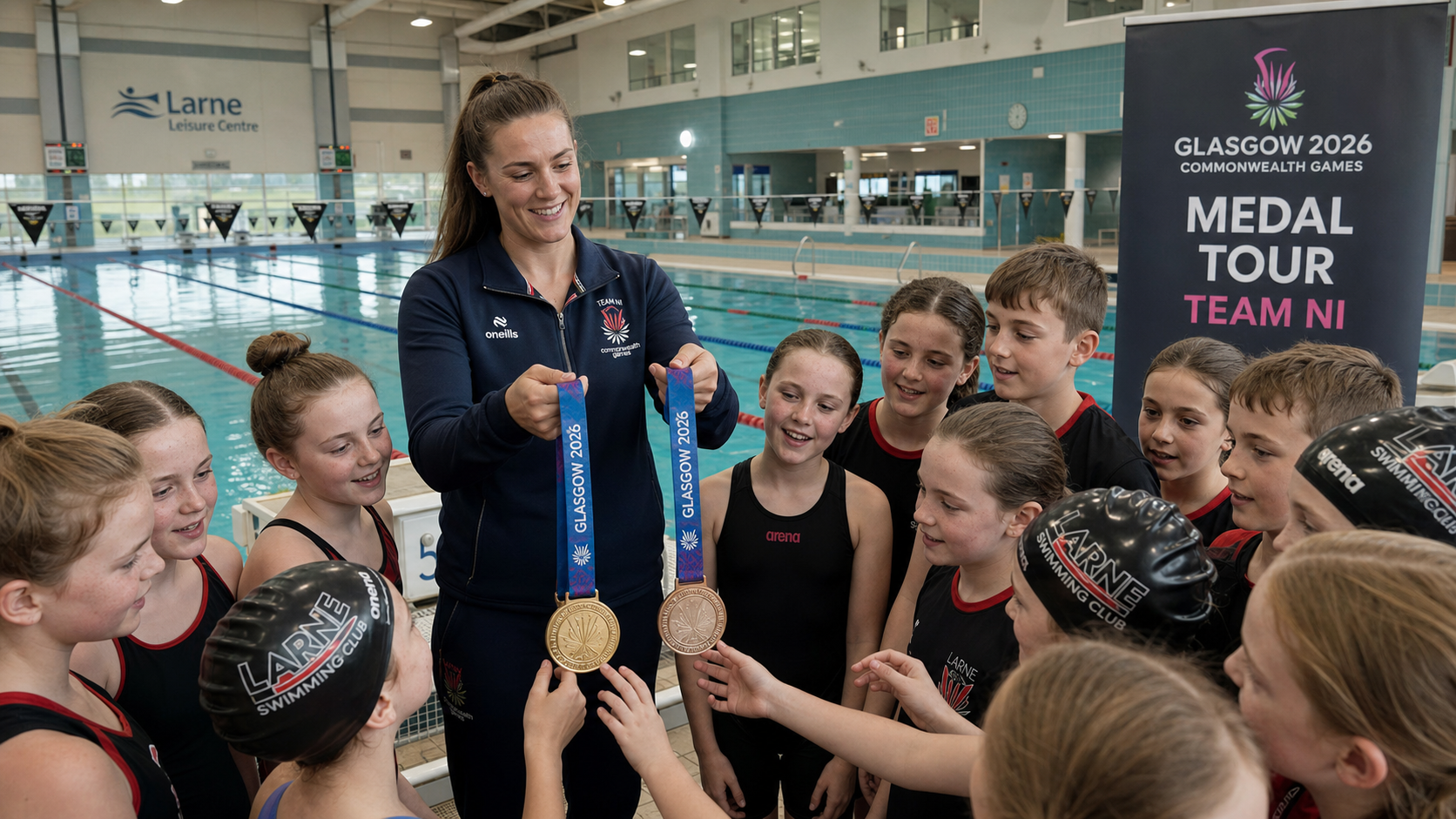
Exactly one month before the opening ceremony of the Glasgow 2026 Commonwealth Games, Team NI swimmer Danielle Hill returned to the Larne Leisure Centre where her career began, bringing with her the official Games medals and a message for the next generation: that greatness can come from anywhere, including a small club on the Antrim coast.
Background
Danielle Hill's journey from Larne Swimming Club to the international stage is one of the more quietly remarkable stories in Northern Irish sport. She first competed at the Commonwealth Games in Glasgow in 2014, aged just 14, and has since built a career that spans four Games appearances and multiple national records. What makes her story particularly resonant is that she has never left her roots behind — she continues to coach the development squad at the very club where she learned to swim.
The Commonwealth Games Medal Tour is a tradition that brings the official medals to communities across the participating nations in the weeks before the Games begin. For Northern Ireland, the tour represents an opportunity to connect elite sport with the grassroots clubs and schools that produce the athletes who go on to represent the region. Hill's decision to host the tour stop at Larne was a deliberate and meaningful choice, reflecting her belief that young athletes in smaller towns deserve the same inspiration as those in the major cities.
The Glasgow 2026 Commonwealth Games are scheduled to run from 23 July to 2 August, bringing together more than 3,000 athletes from 74 nations across ten sports and six Para sports. For Northern Ireland, the Games represent one of the most significant sporting occasions on the calendar, with athletes competing across a range of disciplines from athletics and swimming to boxing and gymnastics.
Key Developments
The medal tour stop at Larne Leisure Centre on 25 June drew young swimmers from across the club's age groups, with Hill on hand to show them the official medals for the 2026 Games. The medals, designed by Glasgow artist Militsa Milenkova, are notable for a world-first feature: they incorporate Braille and tactile elements, making them the first medals at a major multi-sport event to be fully accessible to athletes with visual impairments.
Hill described the medals as "stunning," singling out the inclusive design as something that sets them apart from anything she has received in her career. The Braille feature ensures that para-athletes competing in the six Para sports at the Games can experience the physical recognition of their achievement in a way that is meaningful to them — a small but significant step forward in the broader movement towards genuine inclusion in elite sport.
Speaking to the young swimmers gathered at the club, Hill drew on her own experience of starting out in Larne and working her way to the international stage. She emphasised that the path from a local leisure centre to a Commonwealth Games podium is real and achievable, and that the volunteers, coaches, and families who support young athletes are as much a part of that journey as the athletes themselves.
"It's really special to be here, from starting in the club at such a young age to now coaching our development squad," Hill said. "To get the chance to show them the new medals is inspiring for them and I hope it will help light a fire in some of the young swimmers to let them know anything is possible, no matter how small a town or club you come from."
Why It Matters
Stories like Danielle Hill's matter because they challenge a persistent assumption in Irish and Northern Irish sport: that elite athletes are produced by well-resourced urban academies rather than by the quiet dedication of local clubs and the volunteers who run them. Larne is not a large town, and Larne Swimming Club is not a facility with Olympic-standard infrastructure. Yet it has produced an athlete who will compete at her fourth Commonwealth Games this summer.
The inclusive medal design is also significant beyond the symbolic. For the first time, a para-athlete who wins gold at a major multi-sport event will be able to feel the medal's design as well as see it. This is the kind of detail that reflects a genuine shift in how major sporting organisations think about disability — not as an afterthought, but as a core consideration in the design process. Northern Ireland's para-athletes, who have historically been underrepresented in media coverage of the Games, deserve that recognition.
There is also a broader point about the role of community sport in public health and social cohesion. Swimming clubs like Larne provide structured activity, mentorship, and a sense of belonging for young people in areas that can sometimes feel overlooked by national sporting bodies. Hill's continued involvement as a coach, even at the height of her competitive career, is a model of how elite athletes can give back to the communities that shaped them.
Local Impact
For the young swimmers at Larne Leisure Centre, the visit was more than a photo opportunity. Several of the club's development squad members are at the age where decisions about commitment to sport are made — whether to continue training through the difficult teenage years or to step back. Seeing a four-time Commonwealth Games competitor who still turns up to coach them on weekday mornings is a powerful argument for staying the course.
The Antrim coast has a strong tradition of producing competitive swimmers, and Larne's club has been central to that tradition for decades. The town itself, with its ferry port and industrial heritage, is not typically associated with elite sport in the way that Belfast or Derry might be. Hill's success, and her continued presence in the community, challenges that perception and gives the club a profile it has earned through years of patient development work.
What's Next
The Commonwealth Games Medal Tour will continue across Northern Ireland and the other home nations in the weeks leading up to the opening ceremony on 23 July. Danielle Hill is expected to be named in the Team NI swimming squad for Glasgow, where she will compete in her fourth Games. The full Team NI squad announcement is anticipated in early July. The Games themselves run until 2 August, with swimming events scheduled across the first week of competition at Tollcross International Swimming Centre in Glasgow.