Irish Unity at the UN: How Trump's Greenland Deal Has Unexpectedly Energised the Border Poll Debate in New York
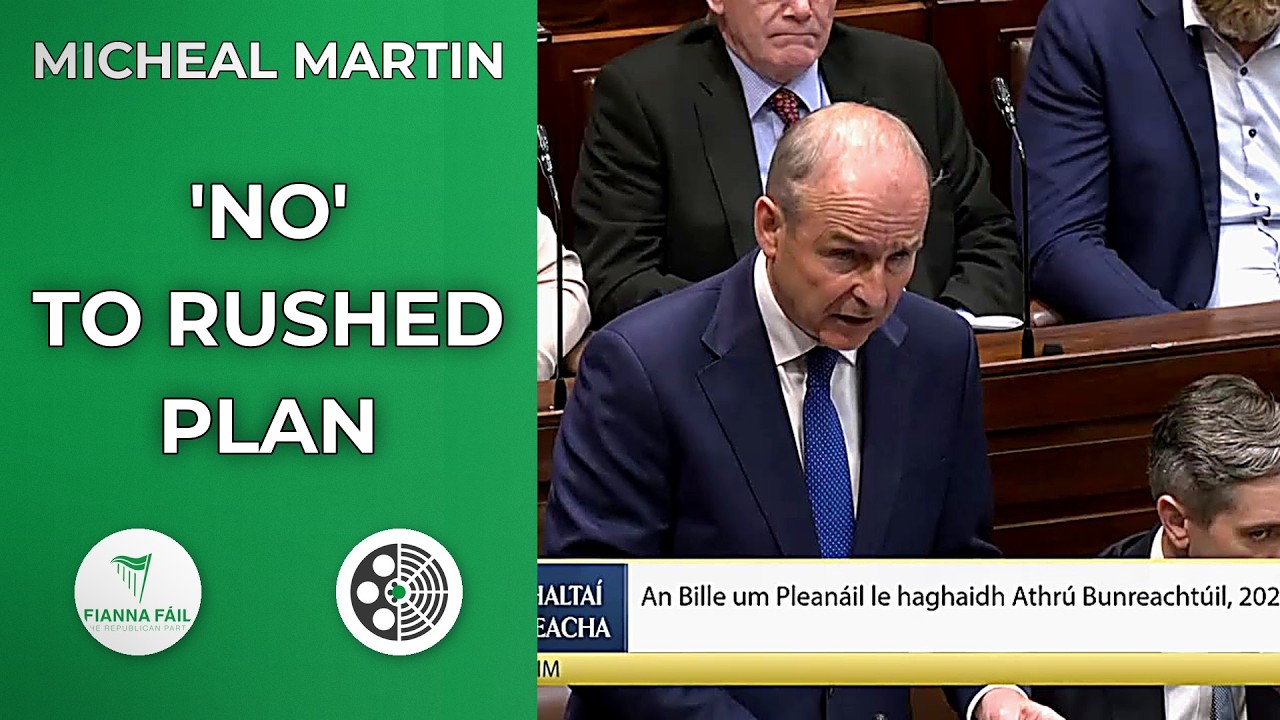
The Irish unity debate has found an unexpected platform at the 81st United Nations General Assembly in New York, where Taoiseach Micheál Martin's delegation is navigating a global conversation about borders, self-determination, and territorial integrity that has been dramatically reshaped by Donald Trump's announcement of a "historic" deal to expand US military presence in Greenland — a development that Irish-American political figures have seized upon to press the case for a border poll with renewed urgency.
Background
The question of Irish unity has been a constant presence in Irish political life since the signing of the Good Friday Agreement in 1998, which established the principle that a change in the constitutional status of Northern Ireland could only occur with the consent of a majority of its people. The Agreement created the framework for a border poll — a referendum on Irish unity — but left the timing and conditions for such a poll to the discretion of the Secretary of State for Northern Ireland.
The debate has intensified in recent years, driven by a combination of factors: the demographic changes in Northern Ireland that have seen the Catholic and nationalist population grow relative to the Protestant and unionist population; the impact of Brexit, which has created a new economic and political dynamic on the island of Ireland; and the growing interest in Irish unity among sections of the Northern Irish population that had previously been indifferent or opposed to the idea.
The international dimension of the debate has also grown in significance. Donald Trump's expressed support for Irish unity during his visit to Ireland earlier in 2026 — a statement that was widely reported but carefully managed by the Irish government — gave the issue a profile in American political discourse that it had not previously enjoyed. The Irish-American community, which has historically been a significant factor in shaping US policy towards Ireland, has been energised by Trump's comments and has been pressing both the US and Irish governments to take concrete steps towards a border poll.
Key Developments
The UNGA week has provided a forum for these conversations to continue at the highest diplomatic level. Trump's announcement of a "historic" deal to expand US military presence in Greenland — framed by the administration as a matter of national security and strategic interest — has prompted a broader discussion about the circumstances in which territorial changes can be legitimate, and Irish-American political figures have been quick to draw parallels with the situation in Northern Ireland.
The Taoiseach's delegation has been careful to manage the Irish unity dimension of the UNGA week, focusing publicly on the Gaza ceasefire, UN reform, and women's rights in Afghanistan rather than on the border poll question. But in bilateral meetings and in conversations with Irish-American political figures, the unity debate has been a significant undercurrent. Minister of State Neale Richmond, who has responsibility for the diaspora, met with representatives of Irish-American organisations that have been campaigning for a border poll, and confirmed that the government remains committed to the principle of Irish unity through consent.
The broader geopolitical context — in which the Trump administration's approach to international borders and territorial integrity has been unconventional, to say the least — has created both opportunities and risks for the Irish unity debate. On one hand, Trump's expressed sympathy for Irish unity gives the issue a profile in Washington that it has not previously enjoyed. On the other hand, the association of the border poll debate with Trump's broader approach to international relations is not necessarily helpful for a cause that has traditionally been framed in terms of democratic consent and international law.
Why It Matters
The Irish unity debate matters at UNGA because the United Nations is the forum in which the principles of self-determination and democratic consent are most authoritatively articulated. Ireland's position — that unity can only come through the democratic consent of the people of Northern Ireland, as provided for in the Good Friday Agreement — is consistent with international law and with the UN Charter, and the Taoiseach's presence at UNGA provides an opportunity to reinforce that position in the context of a global conversation about borders and self-determination.
The Irish-American dimension is also significant. The United States has historically played a crucial role in the Northern Ireland peace process, and the continued engagement of Irish-American political figures with the unity debate is a reminder that the international dimension of the Irish question has not disappeared. The government's management of that engagement — encouraging it without allowing it to become a source of diplomatic tension with the UK — is a delicate but important task.
Local Impact
In New York, where the Irish-American community is one of the most politically active diaspora communities in the world, the UNGA week has been an opportunity for engagement between the Irish government and the organisations that represent Irish-Americans across the political spectrum. The Ancient Order of Hibernians, the Irish American Unity Conference, and a range of other organisations have been active in the margins of the UNGA, pressing the case for a border poll and for greater US engagement with the Irish unity question. The Irish Consulate in New York has been managing these relationships carefully, ensuring that the government's position — support for unity through consent, opposition to any unilateral action — is clearly communicated to all parties.
What's Next
The Taoiseach is scheduled to deliver Ireland's national statement at UNGA on Thursday evening, and the unity question is expected to feature, at least implicitly, in his remarks about self-determination and democratic consent. The government will then return to Dublin, where the Dáil is expected to debate the unity question in October following the publication of a new report from the Shared Island Unit on the economic dimensions of Irish unity. The report, which has been in preparation for several months, is expected to provide the most comprehensive analysis to date of the economic implications of a united Ireland, and its findings are likely to shape the political debate for months to come.