St Columb's Hall Returns to Community Ownership as £3.75 Million Lottery Grant Secures Derry Landmark's Future
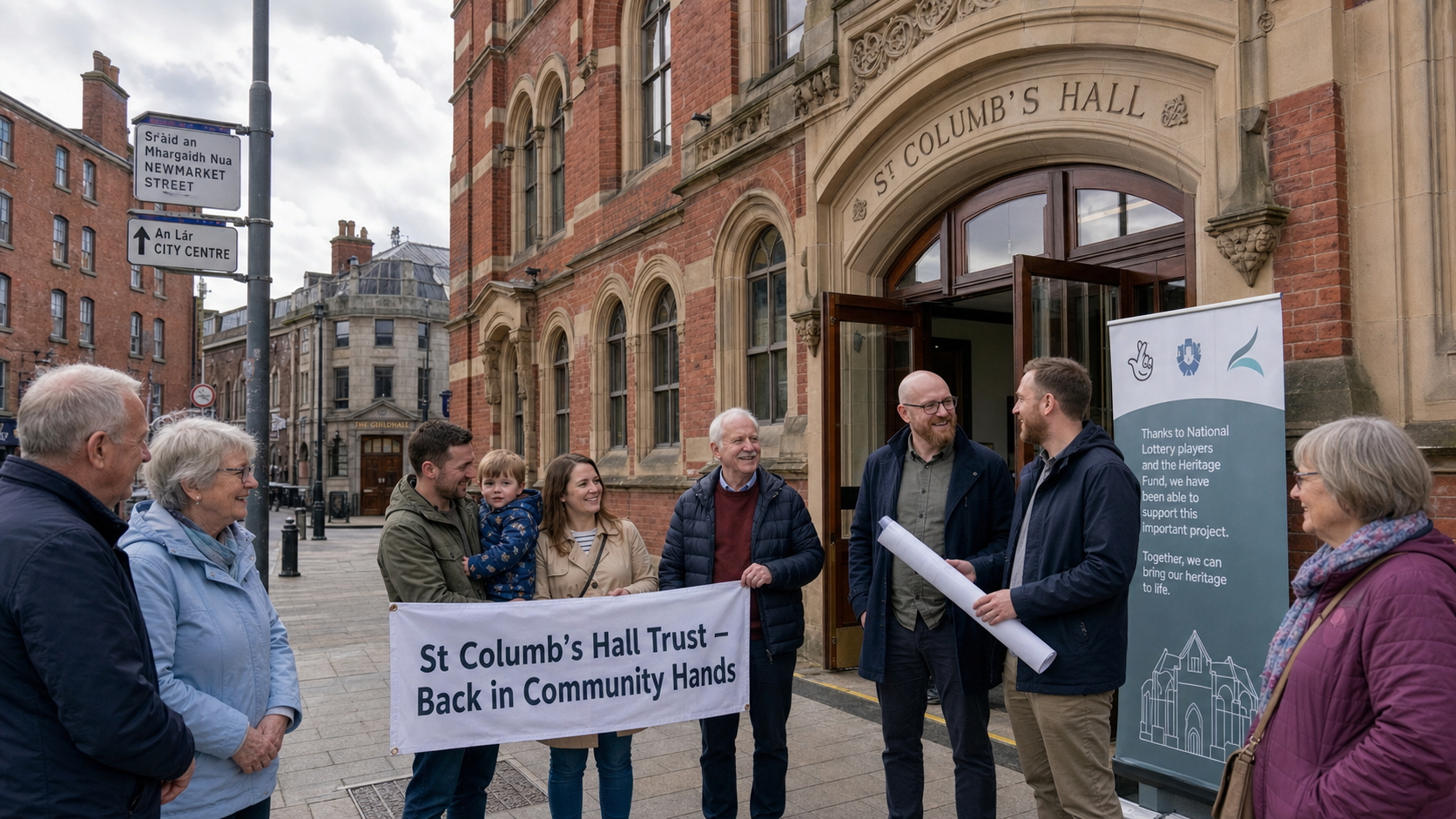
One of Derry's most storied public buildings has been brought back into community hands after the St Columb's Hall Trust completed the purchase of the 138-year-old Grade A listed venue on Wednesday, backed by a £3.75 million award from the National Lottery Heritage Fund — a moment that local representatives have described as a turning point for the city's cultural heart.
Background
St Columb's Hall has occupied a singular place in Derry's civic life since it first opened its doors in 1888. Built on the proceeds of public donations from ordinary citizens across the city and surrounding areas, it earned the affectionate title of "the people's hall" — a designation that proved prophetic, given the breadth of events it hosted across more than a century of turbulent Irish history. Emmeline Pankhurst addressed audiences within its walls. Eamon de Valera spoke there. Generations of Derry families attended concerts, dances, political meetings, and community gatherings in a building that served as a barometer of the city's social temperature.
The 45,000-square-foot venue fell into serious decline in the years before its closure in 2020, with approximately two-thirds of the structure rendered unusable by structural deterioration. The roof, floors, windows, and external walls all required urgent attention, and the absence of a functioning lift made large sections of the building inaccessible. For a city that had invested so much of its identity in the hall, its shuttered state represented a visible wound in the urban fabric of the Waterside and city centre.
The St Columb's Hall Trust was established specifically to address this situation, bringing together community representatives, heritage advocates, and local business figures committed to returning the building to active use. The National Lottery Heritage Fund award, the largest single grant in the project's fundraising history, has now made that ambition a practical reality.
Key Developments
The Trust confirmed on Wednesday that the purchase of the building has been completed, with the £3.75 million Heritage Fund award forming the cornerstone of the restoration budget. Construction work is scheduled to commence in the spring of 2027, with the project expected to deliver a comprehensively restored venue that retains its historic character while meeting modern accessibility and safety standards.
The restoration plan is extensive. Structural repairs will address the roof, floors, windows, doors, staircases, external walls, and metalwork throughout the building. New electrical, lighting, ventilation, alarm, and IT systems will be installed, and a modernised lift will ensure full accessibility for people of all abilities — a significant improvement on the building's previous configuration.
Beyond structural work, the project includes the creation of new facilities that will expand the hall's community function. A rooftop terrace will offer views across the city, while a ground-floor exhibition area will provide a permanent space for heritage displays. New meeting rooms designed for debates, lectures, and community gatherings will complement creative entrepreneurial spaces intended to support local businesses and cultural organisations.
Foyle MP Colum Eastwood welcomed the acquisition, describing it as "a landmark day for Derry." Mayor Grace Uí Niallais said the restoration would "breathe new life into the city centre and honour the generations who built this hall with their own contributions."
Why It Matters
The return of St Columb's Hall to community ownership is significant beyond the immediate restoration project. Derry has faced persistent challenges in retaining and developing cultural infrastructure, and the loss of a venue of this scale and historical resonance for six years represented a genuine gap in the city's capacity to host large-scale community and cultural events. The hall's restoration will add a major venue to a city that has invested heavily in its cultural identity since the 2013 UK City of Culture designation — an investment that produced the Ebrington development, the expansion of the Millennium Forum, and the regeneration of the Guildhall area.
The heritage engagement programme attached to the restoration project is also noteworthy. The Trust has committed to reaching 3,000 people through workshops and community activities, with specific programmes targeting young people aged 16 to 25 and older residents aged 65 and above. This intergenerational approach reflects a broader understanding that heritage buildings derive their value not merely from their physical fabric but from the living connections communities maintain with them.
For context, the National Lottery Heritage Fund has supported a number of significant restoration projects across Northern Ireland in recent years, but awards of this scale for community-led projects in Derry remain relatively rare. The Trust's success in securing the funding reflects both the quality of its application and the strength of the case for the hall's cultural and historical significance.
Local Impact
The restoration will have tangible effects across Derry's city centre and Waterside communities. The hall's location makes it a natural anchor for the surrounding streets, and its reopening is expected to generate footfall that benefits local businesses, cafés, and cultural venues in the vicinity. The creative entrepreneurial spaces planned for the building could provide affordable workspace for artists, designers, and small cultural enterprises — a resource that is in short supply in the city.
For residents of the Waterside and the broader Derry area, the restoration represents the return of a venue that many families associate with significant personal memories. The heritage engagement programme will actively seek to capture and preserve those memories, creating an oral and documentary record of the hall's role in the city's life that will inform the building's future programming.
What's Next
The Trust will spend the remainder of 2026 finalising procurement processes and appointing contractors for the restoration work. Construction is scheduled to begin in spring 2027, with a completion timeline yet to be formally confirmed. The heritage engagement programme will run in parallel with the physical restoration, beginning community outreach activities in early 2027. A formal reopening date is expected to be announced once the construction programme is established.