Sligo's Community Wellbeing Hub Hailed as 'Game Changer' for Rural Health as Members Call for National Rollout
A small community health initiative in Ballinalack, Co. Sligo, has become one of the most talked-about models of rural wellbeing in Ireland, with members describing the Hello GoodLife and Wellbeing Hub as a "game changer" that has transformed their lives in ways the conventional health system never managed. Supported by the Sligo Leader Partnership and staffed by a combination of paid workers and volunteers, the hub is drawing attention from health policymakers and community development organisations who see in it a blueprint for addressing the chronic isolation and physical decline that affects rural communities across the country.
Background
Rural Ireland has long faced a particular set of health challenges that urban communities do not experience to the same degree. Geographic isolation, limited public transport, the closure of local services, and the dispersal of extended family networks have combined to create conditions in which older adults in particular can find themselves cut off from both social contact and physical activity. The consequences are well documented: higher rates of depression, faster physical decline, and greater pressure on already stretched primary care services.
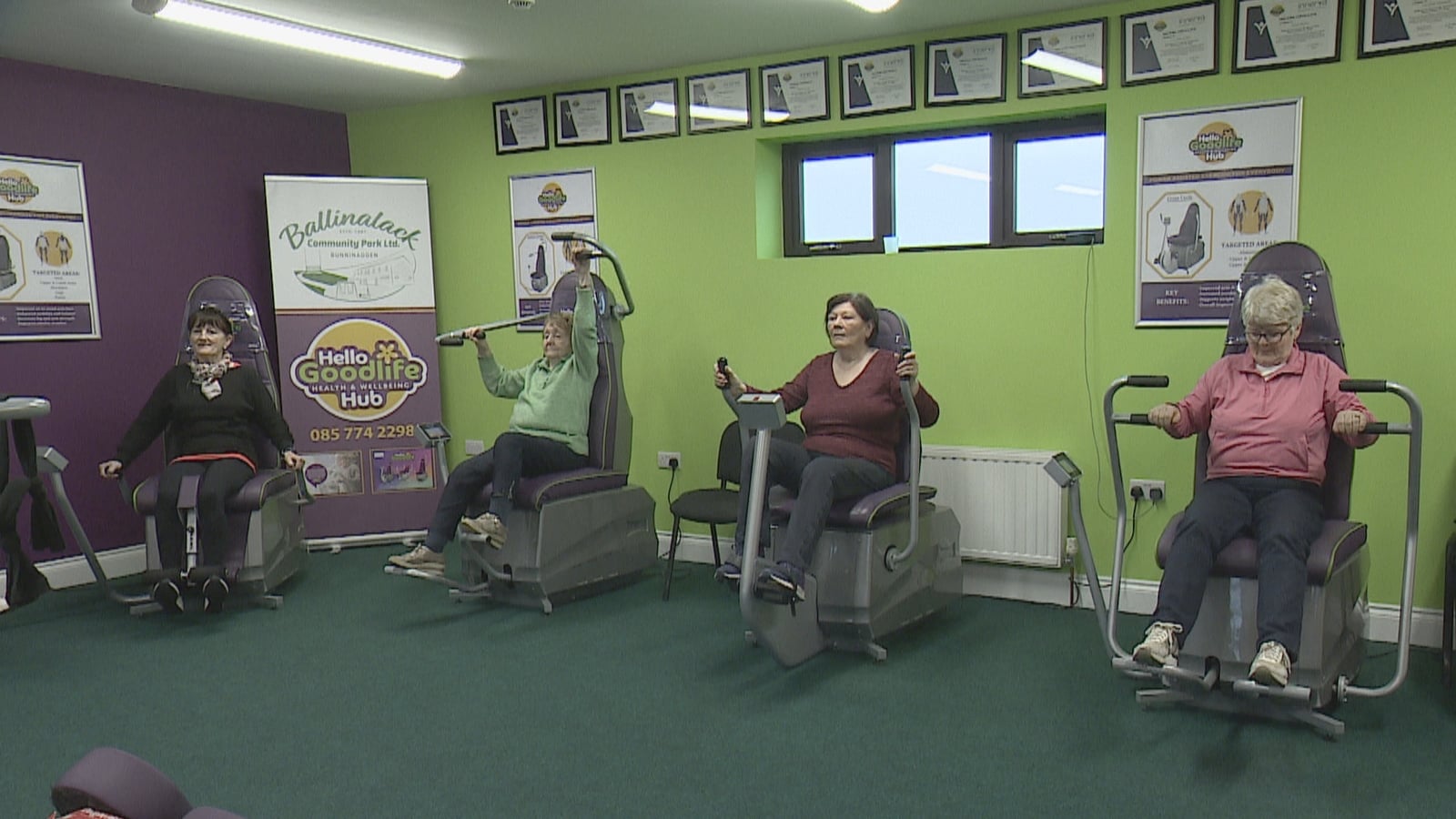
The Hello GoodLife and Wellbeing Hub was established in Ballinalack as a direct response to these challenges, drawing on a model that has been developed and refined in other parts of Europe but adapted to the specific needs and character of a rural Irish community. The hub uses a circuit of power-assisted exercise machines — equipment designed to provide effective physical exercise without placing excessive strain on joints or requiring high levels of existing fitness. This makes it accessible to adults who might be deterred by conventional gyms, including those managing chronic conditions, recovering from surgery, or simply returning to physical activity after years of inactivity.
The Sligo Leader Partnership, which provides funding and organisational support, has been central to the hub's development. Leader partnerships, funded through the EU's LEADER programme and administered through the Department of Rural and Community Development, exist to support exactly this kind of community-led initiative — projects that address local needs in ways that statutory services cannot or do not reach.
Key Developments
The hub currently employs five staff members and relies on approximately fifteen volunteers to deliver its programme. Members range in age from their mid-thirties to their mid-nineties, a demographic spread that is itself unusual and speaks to the hub's success in creating an environment where people of very different ages and abilities feel comfortable exercising together. The social dimension of the hub — the conversations, the shared tea, the sense of belonging to a community — is described by members as equally important to their wellbeing as the physical activity itself.
Among those who have benefited most are individuals managing conditions including Parkinson's disease, osteoporosis, and chronic back pain. One member with long-standing back problems described the facility as a "game changer," crediting it with a level of improvement that years of conventional treatment had not achieved. Health professionals working with the hub report similar outcomes, noting that regular participation appears to slow physical decline, improve balance and coordination, and reduce the frequency with which members require acute medical intervention.
The hub's success has not gone unnoticed. RTÉ News featured the initiative in a report that drew significant public attention, prompting enquiries from community groups in other counties interested in replicating the model. The Sligo Leader Partnership has been in discussions with counterpart organisations in other regions about how the approach might be adapted and scaled, though funding remains the primary constraint on expansion.
Why It Matters
Ireland's rural health infrastructure has been under sustained pressure for years. GP shortages in rural areas, the centralisation of specialist services in larger urban centres, and the ongoing challenges facing community nursing and home care services have left many rural communities feeling underserved. Against this backdrop, community-led initiatives like the Ballinalack hub represent something genuinely important: a demonstration that local people, given modest resources and organisational support, can create health-promoting environments that the statutory system has failed to provide.
The model also speaks to a growing body of evidence about the relationship between social connection and health outcomes. Loneliness and social isolation are now recognised as significant risk factors for a range of physical and mental health conditions. The hub addresses this directly, not by treating isolation as a medical problem but by creating a space where community naturally forms around shared activity. Unlike the Republic's urban-focused health investment model, the Ballinalack hub demonstrates that community-led solutions can deliver measurable outcomes at a fraction of the cost of statutory provision.
The cost-effectiveness of the model is also striking. Five staff members and fifteen volunteers, supported by Leader funding, are delivering measurable health improvements for a community that would otherwise be placing greater demands on GP services, physiotherapy waiting lists, and acute hospital beds.
Local Impact
For the people of Ballinalack and the surrounding area, the hub has become a focal point of community life in a way that few initiatives manage. Members speak of friendships formed, of neighbours who had become strangers reconnecting, of a renewed sense of purpose and belonging. In a rural area where the local pub, the post office, and the parish hall have all faced pressure in recent years, the hub has filled a social void that many had feared was permanent.
The impact on individual families has been equally significant. Adult children who had been worried about elderly parents living alone report that the hub has given them reassurance — not just because their parents are physically more active, but because they are socially engaged and emotionally supported in ways that reduce the risk of the crises that so often precipitate emergency hospital admissions.
What's Next
The Sligo Leader Partnership is expected to publish a formal evaluation of the hub's impact later this year, with the aim of providing a replicable model that other communities can adapt. Discussions are ongoing with the Department of Rural and Community Development about whether additional Leader funding could support the establishment of similar hubs in other counties. Health advocates are also calling on the HSE to formally recognise community wellbeing hubs as part of the primary care infrastructure, which would open up additional funding streams and allow the model to be integrated more fully into the health system.