Sinn Féin Leads Northern Ireland Polls at 28% as Assembly Election Looms and Unionism Remains Divided
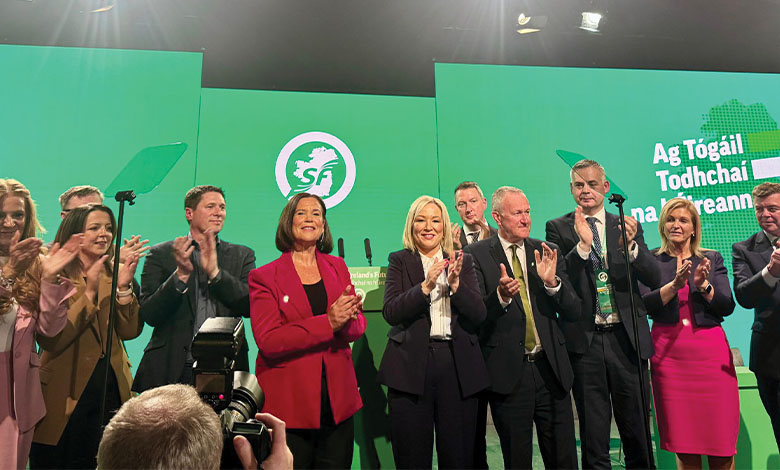
The latest polling data from Northern Ireland confirms Sinn Féin's continued dominance of the region's political landscape, with the party holding 28% support — six points ahead of the DUP on 22% and eleven points ahead of the Alliance Party on 17%. The figures, drawn from polling conducted in May 2026, reflect a political environment that has been fundamentally reshaped by the 2024 Westminster election and the ongoing fragmentation of the unionist bloc. With an Assembly election expected within the next two years, the question of whether the DUP can recover its position — and whether Alliance can continue its upward trajectory — will define the next phase of Northern Irish politics.
Background
The 2024 UK general election was a watershed moment for Northern Irish politics. Sinn Féin achieved what commentators described as a "hat-trick," becoming the largest party at the Westminster, Stormont, and local government levels simultaneously — a historic first that would have been unimaginable a decade earlier. The DUP suffered significant losses, dropping to second place and losing three seats, most notably the North Antrim constituency held by the Paisley family for 54 years, which fell to TUV leader Jim Allister. The DUP also lost the Lagan Valley seat, held by former leader Jeffrey Donaldson for 27 years, to the Alliance Party's Sorcha Eastwood.
The DUP's difficulties have been compounded by the fallout from the conviction of Jeffrey Donaldson for child sexual offences, a scandal that has damaged the party's reputation and created internal tensions about accountability and governance. The Stormont Assembly has launched a review into Donaldson's conduct as an MLA, and the party has been working to manage the reputational damage while maintaining its position as the leading unionist party.
The Alliance Party's growth has been one of the defining features of Northern Irish politics over the past decade. The party, which describes itself as non-sectarian and cross-community, has been attracting younger, educated voters who identify as "Northern Irish" rather than strictly unionist or nationalist. Its 17% polling figure represents a significant increase from its 13.5% share in the 2022 Assembly election, and the party's leadership believes it has the potential to become the second-largest party at the next Assembly election.
Key Developments
The UUP has been attempting to stabilise under new leadership, with Jon Burrows becoming leader in early 2026 following the resignation of Doug Beattie. Burrows has sought to position the UUP as a moderate, pro-Union alternative to the DUP, but the party's 9% polling figure suggests that it has not yet succeeded in differentiating itself sufficiently from its larger rival. The SDLP, polling at 11%, faces its own challenges in a political environment where Sinn Féin has consolidated its position as the dominant nationalist party.
The TUV, led by Jim Allister, continues to punch above its weight in terms of political influence, with Allister's presence at Westminster providing a platform for hardline unionist views that the DUP has struggled to match. The TUV's polling figure of approximately 7% understates its impact on the broader unionist conversation, as its positions on issues including the Windsor Framework and the Irish Sea border continue to shape the terms of debate within unionism.
The next Assembly election is not required until 2027, but the political dynamics — including the ongoing budget crisis and the approach of the UK government's spending review — could create pressure for an earlier poll. Sinn Féin's Michelle O'Neill, as First Minister, has indicated that she is focused on delivering for all communities in Northern Ireland rather than on electoral strategy, but the party's political machine is clearly preparing for the next contest.
Why It Matters
The polling figures matter because they reflect a fundamental shift in Northern Irish politics that has been building for years. The emergence of Sinn Féin as the largest party — and the prospect of it consolidating that position at the next Assembly election — raises profound questions about the future of the power-sharing arrangements established by the Good Friday Agreement. The Agreement was designed for a political landscape in which unionism and nationalism were roughly balanced; the growing dominance of Sinn Féin, combined with the rise of the Alliance Party as a significant third force, is creating a new political geometry that the Agreement's architects did not anticipate.
The fragmentation of unionism is particularly significant. The combined vote share of the DUP, UUP, and TUV remains numerically significant, but the internal competition between these parties dilutes their collective influence and makes it harder for unionism to present a coherent position on the issues that matter most to its voters. The DUP's recovery from the Donaldson scandal and the 2024 election losses will be one of the most closely watched stories in Northern Irish politics over the next two years.
Local Impact
The political dynamics reflected in the polling figures have direct implications for communities across Northern Ireland. The ongoing budget crisis, which is the most immediate political challenge facing the Executive, is being played out against a backdrop of electoral positioning by all parties. In Belfast, where Sinn Féin, the DUP, and Alliance are all competing for votes across the city's constituencies, the political temperature is high. In rural areas, particularly in counties Fermanagh, Tyrone, and Armagh, where Sinn Féin has been strongest, the party's continued dominance is reshaping local political dynamics in ways that are still being absorbed.
What's Next
The next Assembly election is expected by 2027 at the latest, though the political dynamics could bring it forward. The DUP's party conference, scheduled for the autumn, will be a key moment for the party to set out its strategy for recovery. The Alliance Party is expected to announce a series of policy initiatives in the coming months aimed at consolidating its position as a credible governing party. Sinn Féin, meanwhile, is focused on delivering on its programme for government commitments, with the budget crisis and the health waiting list backlog the most pressing items on its agenda.