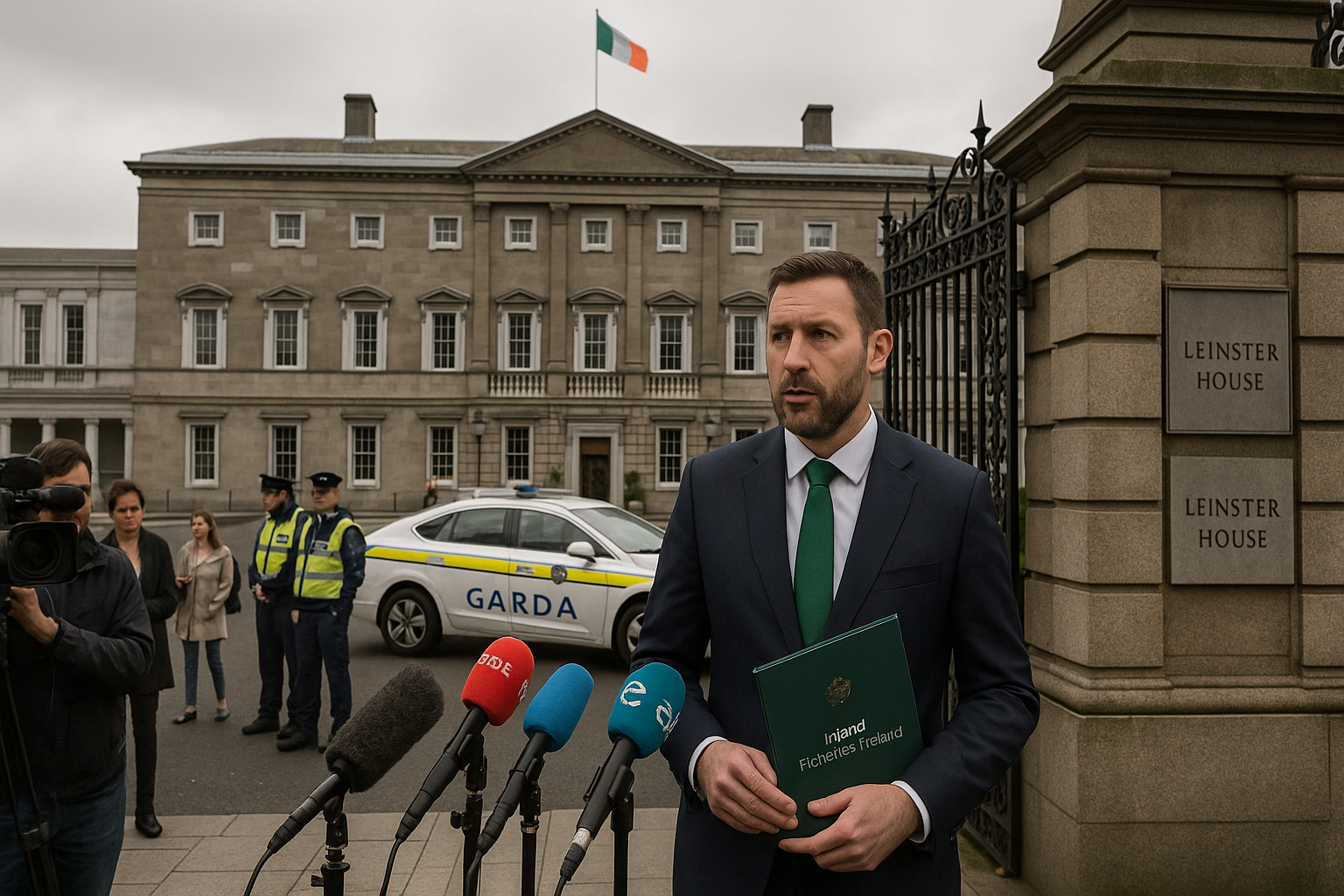
Sinn Féin Calls on Senator to Cooperate with Garda Probe into Fisheries Blackmail Claims
Sinn Féin has called on a serving senator to cooperate with a Garda investigation into sensational allegations of blackmail, fraud, and the destruction of evidence at Inland Fisheries Ireland (IFI), the state body responsible for the country’s inland fisheries and sea angling resources. The investigation, which is being conducted by the Garda National Economic Crime Bureau, was launched after the Dáil’s Public Accounts Committee referred an anonymous letter it had received to the authorities.
Background
Inland Fisheries Ireland has been embroiled in controversy for a number of years, with allegations of mismanagement, bullying, and financial irregularities. The state body has been the subject of a number of internal and external investigations, and the latest revelations have only added to the sense of crisis surrounding the organisation. The allegations of blackmail against a serving senator have taken the scandal to a new level and have raised serious questions about the integrity of Irish public life.
Key Developments
The Garda investigation was confirmed on April 30 by Sinn Féin TD John Brady, who is the chairman of the Dáil’s Public Accounts Committee. Brady said that the committee had received an unsigned letter in February 2026 which contained a number of serious allegations against IFI. The committee subsequently referred the letter to the Gardaí, who have now launched a full investigation. The allegations of blackmail centre on the former CEO of IFI, Francis O’Donnell, who testified at the Workplace Relations Committee in March 2026. O’Donnell claimed that four years prior, he had reported to the Gardaí that he was being blackmailed by a senator. The senator allegedly threatened to publicise details from a protected disclosure unless O’Donnell reinstated a suspended relative of a former IFI board member. The senator also allegedly falsely accused O’Donnell of having connections to the Continuity IRA, a dissident republican group. Sinn Féin has now called on the senator in question to cooperate fully with the Garda investigation. For more on this story, see the report from The Irish Times.
Why It Matters
The allegations of blackmail against a serving senator are a matter of grave public concern, and they have the potential to do serious damage to the reputation of Irish politics. The case has also shone a spotlight on the culture of secrecy and cronyism that is alleged to exist within some state bodies. The investigation by the Garda National Economic Crime Bureau will be closely watched, and there will be intense pressure on the authorities to get to the bottom of the allegations and to bring anyone who has broken the law to justice. The case has also raised questions about the effectiveness of the protected disclosure legislation, which is designed to protect whistleblowers who expose wrongdoing in the workplace. As the Oireachtas debates show, there is a growing demand for greater transparency and accountability in Irish public life.
Local Impact
Inland Fisheries Ireland is responsible for the management and development of a vital natural resource, and the ongoing controversy at the state body is a matter of great concern to the many communities that depend on angling and tourism for their livelihoods. The allegations of fraud and mismanagement have undermined public confidence in IFI, and there are fears that the scandal could do long-term damage to the reputation of Irish angling. The case has also had a major impact on the staff of IFI, who have been working in a climate of fear and uncertainty for a number of years.
The Broader Context of Accountability
The Inland Fisheries Ireland (IFI) is a state agency responsible for the protection, management, and conservation of Ireland's inland fisheries and sea angling resources. It was established under the Inland Fisheries Act 2010, which merged the Central Fisheries Board and the seven regional fisheries boards into a single national body. The agency manages some of Ireland's most valuable natural resources, including its salmon and trout rivers, and plays a crucial role in supporting rural tourism and the angling industry.
The allegations of blackmail and corruption at the IFI are particularly serious because they involve a sitting Senator and a state agency responsible for managing public resources. The Garda National Economic Crime Bureau, which is investigating the matter, specialises in complex financial crimes and has the expertise to handle investigations of this nature. The bureau's involvement signals that the Gardaí are treating the allegations with the utmost seriousness.
The case has also raised questions about the effectiveness of Ireland's protected disclosure legislation, which is designed to protect whistleblowers who report wrongdoing in the public interest. Francis O'Donnell's testimony at the Workplace Relations Committee suggests that he faced significant pressure and intimidation after making a protected disclosure, which is precisely the kind of retaliation that the legislation is designed to prevent. The Dáil Committee of Public Accounts, chaired by Sinn Féin's John Brady, has been at the forefront of efforts to hold public bodies accountable for their use of taxpayers' money, and its referral of the allegations to the Gardaí reflects its determination to ensure that the matter is properly investigated.
What's Next
The Garda investigation into the allegations at IFI is likely to be a long and complex one. The Public Accounts Committee is also expected to continue its own investigation into the matter, and there are likely to be further revelations in the weeks and months to come. The case has put the issue of standards in public life firmly on the political agenda, and there will be growing pressure on the government to introduce new measures to tackle corruption and to promote greater transparency and accountability. The one thing that is certain is that the IFI scandal is far from over, and it is likely to have a lasting impact on Irish public life.