Sicon Reports €7.2 Billion Order Book as Irish Construction Giant Navigates Inflation and Housing Demand
Sicon Limited, the parent company of John Sisk & Son, has reported an advance order book of €7.2 billion — a figure that reflects the extraordinary scale of construction demand across Ireland and internationally, and that positions the company as one of the most significant players in the Irish and European construction markets as the country grapples with a housing crisis and an infrastructure investment backlog.
Background
John Sisk & Son is one of Ireland's oldest and most storied construction companies, with a history stretching back to 1859. Over more than 160 years, the company has been involved in some of the most significant construction projects in Ireland and internationally, from the construction of major infrastructure projects in the early decades of the state to the delivery of complex commercial, residential, and industrial developments in the modern era. The company's parent, Sicon Limited, has grown significantly in recent years, expanding its operations across Europe and beyond.
The Irish construction sector has been operating in a challenging environment for several years, characterised by a combination of strong demand — driven by the housing crisis, the need for infrastructure investment, and the growth of the data centre and pharmaceutical sectors — and significant supply-side constraints, including labour shortages, material cost inflation, and planning delays. The sector has also been affected by the broader inflationary pressures that have pushed up the cost of construction across Europe, making it more difficult to deliver projects within budget and on time.
Against this backdrop, Sicon's €7.2 billion order book is a remarkable figure. It reflects the company's ability to win major contracts across a range of sectors and geographies, and its capacity to deliver complex projects at scale. It also reflects the extraordinary level of construction activity that is under way or planned across Ireland and Europe, driven by the need to address the housing crisis, to invest in energy infrastructure, and to build the data centres and pharmaceutical facilities that are central to the modern Irish economy.
Key Developments
The €7.2 billion order book figure was disclosed in Sicon's most recent financial reporting, and it has attracted significant attention from analysts and commentators who follow the Irish construction sector. The figure represents a substantial increase on previous years and positions Sicon as one of the largest construction companies in Ireland and one of the most significant in Europe.
The company's order book spans a wide range of sectors, including residential development, commercial construction, data centres, pharmaceutical facilities, and infrastructure projects. In Ireland, Sicon has been involved in several of the most significant construction projects of recent years, including major residential developments in Dublin and other urban centres, and large-scale infrastructure projects commissioned by the state.
The company has also been expanding its international operations, with significant projects under way in the United Kingdom, continental Europe, and further afield. This international diversification has helped to insulate Sicon from some of the volatility in the Irish market, and has provided the company with access to a broader pool of talent and resources.
Despite the strong order book, Sicon's management has acknowledged the challenges posed by inflationary pressures, labour shortages, and the complexity of delivering large-scale projects in a market where supply chains remain under strain. The company has invested significantly in its workforce and in its project management capabilities, and has been working with clients to develop contract structures that provide greater certainty on costs and timelines.
Why It Matters
Sicon's €7.2 billion order book matters because it is a measure of the scale of the construction challenge facing Ireland. The housing crisis, which has been the defining domestic policy issue of the past decade, requires the delivery of tens of thousands of new homes every year — a target that the construction sector has consistently struggled to meet. The data centre and pharmaceutical sectors, which are central to Ireland's economic model, require continuous investment in new facilities. And the state's infrastructure investment programme, which includes major projects in transport, energy, and water, requires a construction sector that is capable of delivering at scale.
The contrast between Sicon's strong performance and the challenges facing smaller contractors in the Irish market is also significant. Many smaller construction companies have struggled with the combination of rising costs, labour shortages, and the difficulty of securing financing for new projects. The concentration of major contracts in the hands of a small number of large companies raises questions about the resilience and diversity of the Irish construction sector.
Local Impact
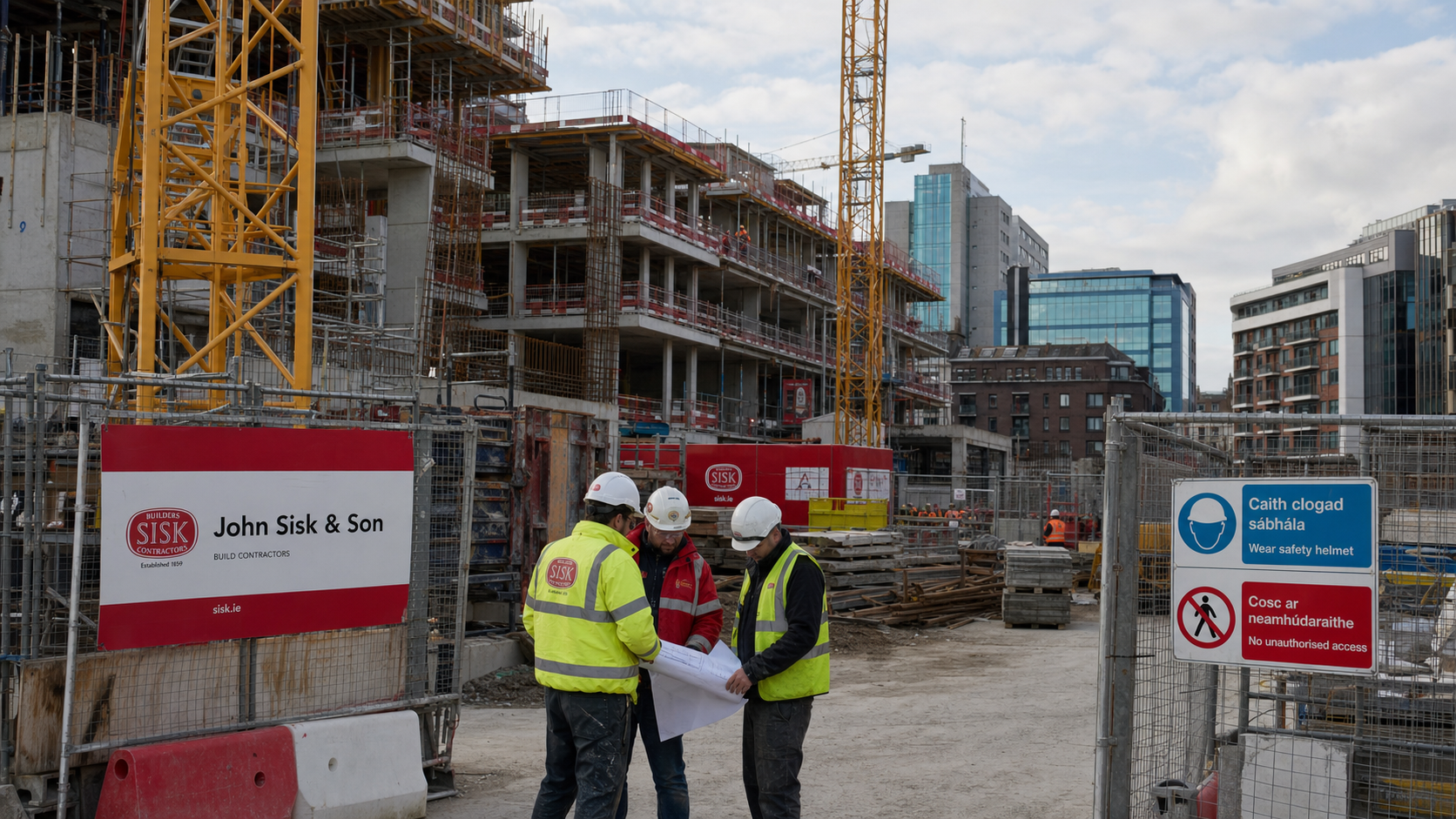
Across Ireland, Sicon's projects are a visible presence in the construction landscape. In Dublin, the company is involved in several major residential and commercial developments that are reshaping the city's skyline. In Cork, Galway, and Limerick, Sicon projects are contributing to the expansion of urban infrastructure. And in rural areas, the company's involvement in infrastructure projects — roads, water treatment facilities, and energy installations — is helping to address some of the longstanding deficits in public services.
For the thousands of workers employed by Sicon and its subcontractors, the strong order book provides a degree of employment security that is welcome in a sector that has historically been characterised by volatility. The company's investment in apprenticeships and training programmes is also helping to address the skills shortage that is one of the most significant constraints on the sector's capacity to deliver.
What's Next
Sicon's management has indicated that the company expects its order book to remain strong through 2027 and beyond, driven by continued demand for construction services across its key sectors. The company is expected to announce several new major contract wins in the coming months, and is actively pursuing opportunities in the growing renewable energy sector, where the need for new infrastructure — wind farms, solar installations, and grid connections — is creating significant demand for construction services. Budget 2027's decisions on capital investment will also be closely watched by the company and by the broader construction sector.