Shane Sweetnam Claims Career-Defining Rolex Grand Prix Victory at Falsterbo on Irish-Bred James Kann Cruz
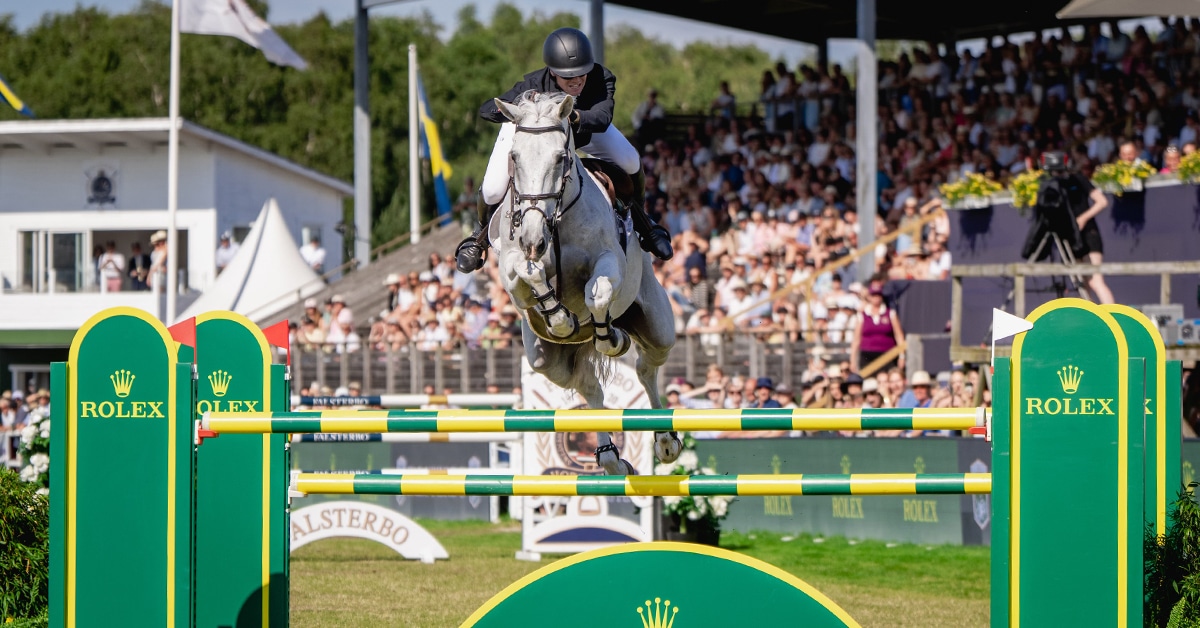
Cork show jumper Shane Sweetnam has claimed his first five-star Grand Prix victory as a pair with the Irish-bred gelding CSF James Kann Cruz, winning the Rolex Grand Prix at the historic Falsterbo Horse Show in Sweden on July 12 with a faultless jump-off round in 37.68 seconds that defeated Germany's Richard Vogel and Switzerland's Steve Guerdat in a competition that featured 50 of the world's leading horse-and-rider combinations and served as the fourth event of the 2026 Rolex Series.
Background
Shane Sweetnam is one of the most accomplished Irish show jumpers of his generation, a Cork native who has built a career at the highest level of the sport through a combination of technical excellence, competitive intelligence, and a deep partnership with a string of exceptional horses. His relationship with CSF James Kann Cruz — a 13-year-old Irish-bred gelding — has been one of the defining partnerships of his career, and the Falsterbo victory represents the culmination of years of work with a horse that has consistently performed at the highest level without previously claiming a five-star Grand Prix title as a pair.
The Falsterbo Horse Show, held on the historic grass arena at the tip of the Falsterbo peninsula in southern Sweden, is one of the most prestigious equestrian events in the world. The Rolex Grand Prix at Falsterbo is a five-star competition that attracts the world's leading riders, and its inclusion in the Rolex Series — which also features events at Geneva, Aachen, and Calgary — gives it a significance that extends beyond the immediate result. Winning a Rolex Series event is a career milestone for any show jumper, and Sweetnam's victory at Falsterbo places him among the elite of the sport.
Irish show jumping has a long and distinguished tradition, with riders including Eddie Macken, Paul Darragh, and Cian O'Connor having competed at the highest level over the decades. Sweetnam's success at Falsterbo adds to that tradition and reflects the continued strength of Irish equestrian sport, which benefits from the country's deep connection to horse breeding and the quality of the Irish-bred horses that compete at the top of the sport worldwide.
Key Developments
The Rolex Grand Prix at Falsterbo on July 12 featured 50 of the world's leading horse-and-rider combinations, with course designer Frank Rothenberger setting a challenging track of 14 obstacles and 17 efforts. Fourteen combinations successfully navigated the first round to qualify for the jump-off, setting up a tense and competitive finale.
As the final rider to enter the arena in the jump-off, Sweetnam faced a target set by Germany's Richard Vogel and his stallion Cloudio, who had established a lead with a clear round in 38.63 seconds. Switzerland's Steve Guerdat, riding Albführen's Iashin Sitte, had previously set a strong pace with a time of 38.68 seconds. Despite a minor slip during the rollback turn, Sweetnam and James Kann Cruz maintained their momentum to cross the finish line in 37.68 seconds — nearly a full second faster than Vogel — securing the victory in dramatic fashion.
Fellow Irish riders Jordan Coyle and Trevor Breen also competed in the event, finishing 10th and 13th respectively, underlining the strength of Irish representation at the top level of the sport. Sweetnam's victory was greeted with particular warmth by the Irish equestrian community, for whom the Falsterbo result represents a long-awaited breakthrough at five-star level with a horse that has been a consistent performer without previously claiming the top prize.
Why It Matters
Sweetnam's Falsterbo victory is significant for Irish show jumping for several reasons. First, it demonstrates that Irish riders can compete and win at the very highest level of the sport, against the world's best riders and on the most prestigious stages. Second, the fact that the winning horse is Irish-bred — CSF James Kann Cruz was bred in Ireland — reflects the quality of Irish horse breeding and the contribution that the Irish equestrian industry makes to the sport globally. Third, the victory in a Rolex Series event gives Sweetnam and Irish show jumping significant international exposure, with the Rolex Series broadcast to audiences across the world.
The Irish equestrian industry is one of the most significant in the world, with Ireland breeding and exporting horses that compete at the highest levels of show jumping, eventing, and racing. The success of Irish-bred horses in international competition is a source of national pride and a powerful advertisement for the quality of Irish breeding. Sweetnam's victory at Falsterbo, on an Irish-bred horse, is a perfect encapsulation of that story.
Local Impact
Sweetnam's victory has been celebrated across the Irish equestrian community, with Horse Sport Ireland and the Equestrian Federation of Ireland both acknowledging the achievement. In Cork, where Sweetnam grew up, the result has been greeted with particular pride. The Irish equestrian industry employs tens of thousands of people across the country, from breeders and trainers to farriers, vets, and stable staff, and the success of Irish riders and horses at international level is a direct advertisement for the quality of that industry.
What's Next
Sweetnam will continue his international campaign with James Kann Cruz in the coming months, with the Rolex Series events at Calgary and Geneva among the potential targets. The 2026 World Equestrian Games, scheduled for later in the year, will also be a focus for the Irish show jumping team, and Sweetnam's Falsterbo victory will strengthen his case for selection. Horse Sport Ireland will be working with the national team selectors to identify the strongest possible squad for the major international competitions in the second half of the year.