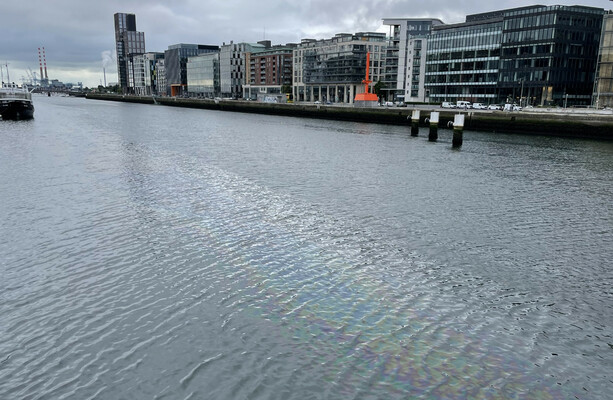
Second Oil Leak Reported in River Liffey Near Samuel Beckett Bridge Raising Pollution Concerns
A second oil or diesel leak has been reported in the River Liffey in Dublin, close to the Samuel Beckett Bridge, prompting an investigation by the Environmental Protection Agency and Dublin City Council — with the recurring nature of the incidents raising serious questions about the adequacy of industrial pollution monitoring in the capital and the long-term health of the river.
Background
The River Liffey is the defining geographical feature of Dublin city, flowing from its source in the Wicklow Mountains through the heart of the capital before emptying into Dublin Bay. The river has had a complex relationship with the city throughout its history — at various points a source of drinking water, a transport artery, a dumping ground for industrial waste, and, in more recent decades, a focus of environmental restoration and urban regeneration.
The quality of the Liffey has improved dramatically since the 1970s and 1980s, when industrial and sewage pollution had reduced the river to a state that was, in places, effectively lifeless. The construction of the Ringsend Wastewater Treatment Plant and the progressive reduction of industrial discharges transformed the river's ecology, and salmon — absent from the Liffey for generations — have returned to the lower reaches of the river in recent years.
However, the river remains vulnerable to pollution incidents, particularly in the urban reaches between the city centre and the sea. The concentration of commercial and industrial activity along the quays, combined with the complexity of the drainage infrastructure beneath the city, means that spills and leaks can reach the river through a variety of pathways. The Samuel Beckett Bridge area, where the latest incident has been reported, is one of the most commercially active stretches of the river, with significant development on both the north and south quays.
Key Developments
The oil or diesel leak reported on 9 July is the second such incident in the Samuel Beckett Bridge area in recent months. The first incident prompted an investigation that identified the likely source of the pollution, but the recurrence suggests that the remedial measures taken following the initial incident may not have been fully effective, or that there is a separate source of pollution that has not yet been identified.
Dublin City Council's drainage and water quality teams were alerted to the incident and deployed to assess the extent of the pollution and to begin containment measures. The Environmental Protection Agency has been notified and is expected to conduct its own investigation into the source of the leak. The EPA has powers to require businesses and property owners to take remedial action where they are found to be responsible for pollution incidents, and it can impose significant fines for breaches of environmental regulations.
The visible impact of the leak — an oil sheen on the surface of the river — was reported by members of the public and by river users, including kayakers and rowers who use the Liffey regularly. The sheen is not only aesthetically unpleasant but potentially harmful to the river's ecology, particularly to fish and invertebrates in the affected area. The council's water quality team has been monitoring the river downstream of the incident to assess the extent of any ecological impact.
The incident has prompted renewed calls from environmental groups for a more systematic approach to pollution monitoring on the Liffey and its tributaries. Current monitoring arrangements rely heavily on reactive responses to reported incidents, and critics argue that a more proactive approach — including continuous water quality monitoring at key points along the river — would allow pollution incidents to be detected and addressed more quickly.
Why It Matters
The health of the River Liffey matters for Dublin in ways that go beyond the purely environmental. The river is a central element of the city's public realm and its identity, and the quality of the water is directly relevant to the experience of the millions of people who live, work, and visit along its banks. The regeneration of the Docklands area — one of the most significant urban development projects in the history of the state — has been built in part on the assumption of a clean and attractive river environment.
The recurring nature of the pollution incidents near the Samuel Beckett Bridge is particularly concerning given the investment that has been made in the Docklands area. The bridge itself, designed by Santiago Calatrava and opened in 2009, is one of the most recognisable landmarks of the new Dublin, and the area around it has attracted significant residential and commercial development. Pollution incidents in this stretch of the river undermine the environmental quality that the development has sought to create.
The broader question of industrial pollution monitoring in Dublin is one that the EPA and Dublin City Council have been grappling with for years. The city's drainage infrastructure is complex and ageing, and the identification of pollution sources can be technically challenging. The investment required to upgrade monitoring systems and to address legacy infrastructure problems is substantial, but the cost of inaction — in terms of ecological damage and reputational harm — is also significant.
Local Impact
For the businesses and residents of the Docklands area, the pollution incident is a source of frustration and concern. The area has been transformed over the past two decades from a derelict industrial zone into one of Dublin's most vibrant urban quarters, and the quality of the river environment is central to that transformation. Restaurants and cafés along the quays, whose outdoor seating areas overlook the river, are particularly sensitive to incidents that affect the visual and olfactory quality of the waterfront.
For the rowing clubs and water sports organisations that use the Liffey, the pollution incident is a practical problem as well as an environmental one. The clubs, which are based at various points along the river, have been advised to avoid the affected area until the pollution has been contained and the water quality has returned to acceptable levels.
What's Next
The EPA investigation into the source of the leak is expected to conclude within the coming weeks, with a report to be published setting out the findings and any enforcement action taken. Dublin City Council will publish its own assessment of the incident and the remedial measures taken. Environmental groups have called for a public meeting to discuss the recurring pollution incidents on the Liffey and to consider what additional monitoring and enforcement measures are needed to prevent future occurrences.