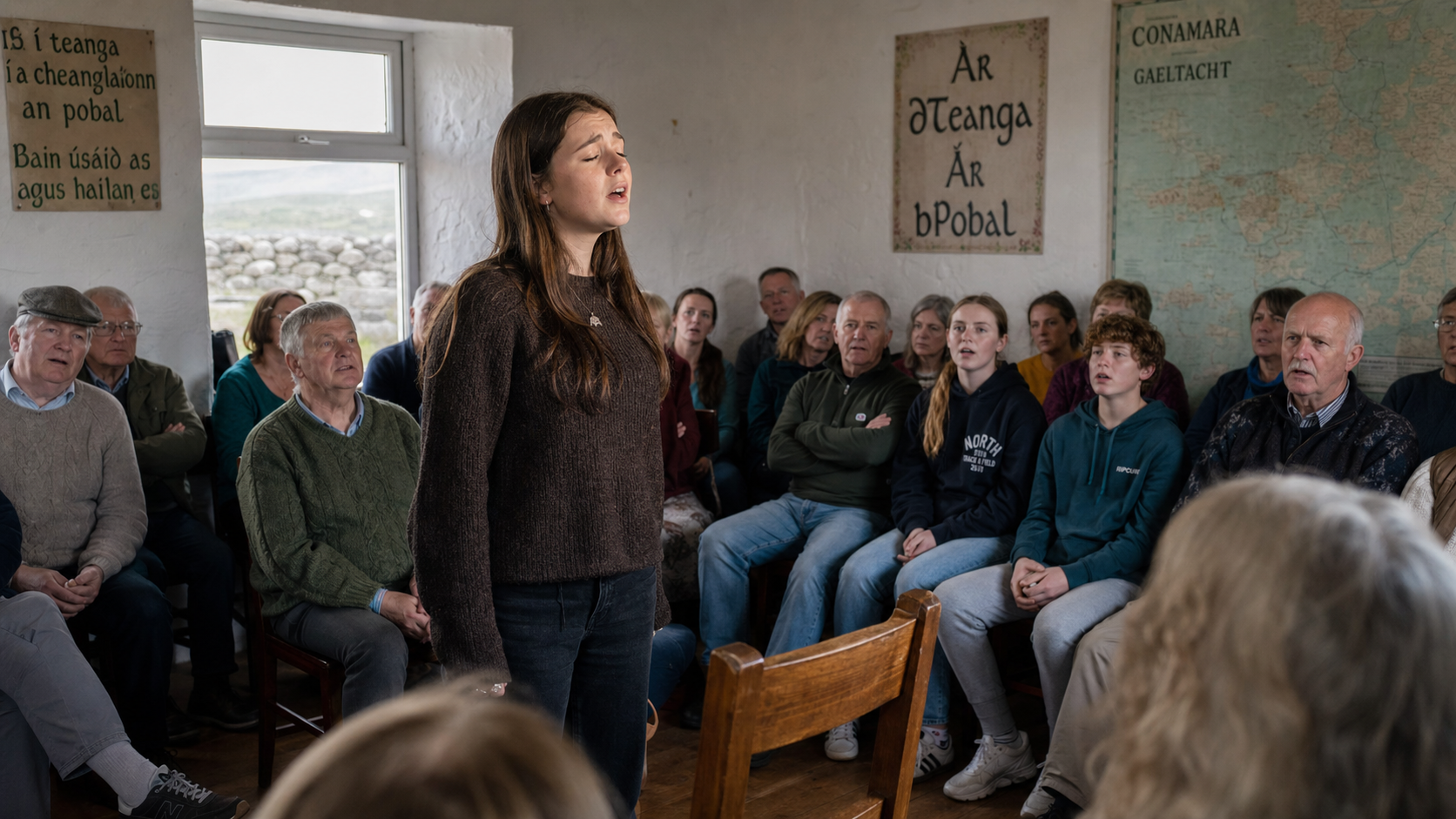
Sean-Nós Singing Finds New Voice as Young Irish Singers Rediscover Ancient Tradition
Sean-nós singing, the ancient unaccompanied Irish language vocal tradition that has been the heartbeat of Gaeltacht culture for centuries, is experiencing a remarkable revival among younger generations, with new practitioners emerging from both traditional Gaeltacht communities and urban centres across Ireland in a development that scholars and practitioners describe as one of the most encouraging cultural stories of recent years.
Background
Sean-nós — literally "old style" in Irish — is a form of unaccompanied solo singing in the Irish language that is characterised by its highly ornamented, melismatic style, its deeply personal emotional expression, and its intimate connection to the Irish language and the communities in which it developed. The tradition is most strongly associated with the Gaeltacht areas of Connacht, particularly Connemara, but has deep roots in Munster and Ulster as well, with each region having its own distinctive stylistic characteristics.
For much of the twentieth century, sean-nós was seen as a tradition in decline — associated with older generations and with the shrinking Gaeltacht communities that were its primary custodians. The rise of popular music, the dominance of English-language culture, and the social changes that accompanied modernisation all posed challenges to a tradition that required deep immersion in the Irish language and in the specific cultural context from which it emerged.
The revival that is now under way is therefore all the more striking. Young singers from Connemara, Donegal, and Kerry are taking up the tradition with genuine commitment, but so too are young people from Dublin, Cork, and Belfast who have come to sean-nós through Irish language classes, summer colleges, and the growing network of Irish language cultural events that has developed in urban centres over the past decade.
Key Developments
The Irish Times has reported on the revival, noting that practitioners describe a growing interest among young people who are drawn to the tradition's emotional directness and its connection to the Irish language. Unlike many other musical forms, sean-nós requires no instruments and no amplification — just a voice, a song, and an audience willing to listen in the particular way that the tradition demands. That simplicity, paradoxically, is part of its appeal for a generation that has grown up surrounded by the complexity and noise of digital media.
The Fleadh Cheoil na hÉireann, which concluded in Belfast last week with record visitor numbers, provided a significant platform for sean-nós singing, with competitions attracting entries from across the country and from the Irish diaspora. The standard of singing at this year's Fleadh was described by judges as exceptionally high, with several young competitors producing performances that drew comparisons with the great sean-nós singers of previous generations.
Why It Matters
The revival of sean-nós is significant not just as a cultural story but as a story about the Irish language itself. Sean-nós is one of the most intimate and demanding forms of Irish language expression — it requires not just linguistic competence but a deep emotional and cultural engagement with the language and the tradition it carries. Young people who take up sean-nós are not just learning a musical form; they are entering into a relationship with the Irish language and with the communities and histories that the tradition embodies. That relationship, once established, tends to be deep and lasting, and the revival of sean-nós is therefore a hopeful sign for the broader project of Irish language revitalisation.
Local Impact
In the Gaeltacht areas where sean-nós has its deepest roots — Connemara, the Aran Islands, Donegal, and the Dingle peninsula — the revival is being welcomed as a sign that the tradition will survive and flourish into the next generation. Local festivals, summer colleges, and community events have all reported increased interest in sean-nós workshops and performances. In urban centres, Irish language organisations including Conradh na Gaeilge have been running sean-nós workshops that have attracted participants from a wide range of backgrounds, many of whom have no family connection to the Gaeltacht but who have been drawn to the tradition through their engagement with the Irish language.
What's Next
The Oireachtas na Gaeilge, the annual Irish language festival, will take place in November and will include a major programme of sean-nós competitions and performances. Several recordings of young sean-nós singers are expected to be released in the autumn, and a documentary on the revival is understood to be in development. The Heritage Council has included sean-nós on its list of intangible cultural heritage elements that it is working to document and protect, and a new archive of sean-nós recordings is being developed in partnership with Irish universities.