Ryanair's O'Leary Faces Investor Revolt Over Pay as Airline Navigates Energy Cost Pressures
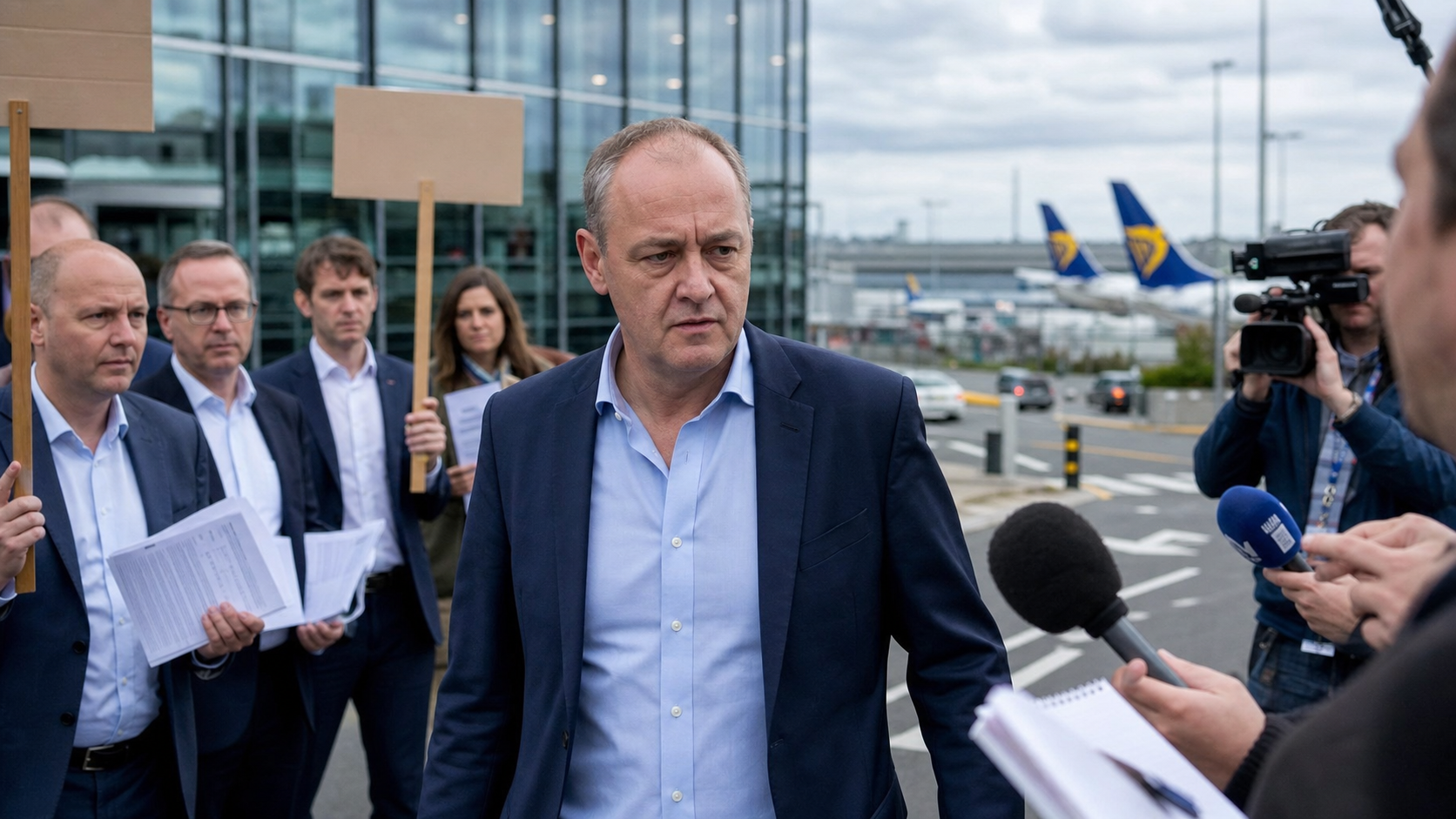
Ryanair chief executive Michael O'Leary faced a significant investor revolt at the airline's annual general meeting this week, with shareholders expressing dissatisfaction with his pay package in a vote that reflects growing scrutiny of executive remuneration across the corporate sector. The controversy was compounded by criticism of comments O'Leary made about rival airlines, which were described as "deeply offensive" by industry figures and prompted a public relations challenge for Europe's largest low-cost carrier at a time when it is navigating rising energy costs and a complex competitive environment.
Background
Michael O'Leary has been the dominant figure in European aviation for more than three decades, transforming Ryanair from a small Irish regional carrier into the continent's largest airline by passenger numbers. His combative management style, his willingness to court controversy, and his relentless focus on cost reduction have made him one of the most recognisable business figures in Ireland and one of the most influential executives in the global aviation industry. His pay packages have periodically attracted criticism from institutional investors and governance advocates, but the airline's consistent financial performance has generally provided sufficient justification for the board to maintain its support.
The current period is more challenging than most for Ryanair and for the aviation sector more broadly. Rising energy costs, driven by the Middle East energy shock that has pushed wholesale jet fuel prices higher, are squeezing margins across the industry. The ECB's interest rate increase announced this week adds to the financial pressures facing businesses with significant debt loads, and the competitive dynamics of European aviation — with legacy carriers, other low-cost operators, and new entrants all competing for market share — are as intense as they have ever been.
Against this backdrop, the investor revolt over O'Leary's pay package reflects a broader trend in corporate governance, where institutional shareholders are increasingly willing to use their voting power to signal dissatisfaction with executive remuneration that they regard as excessive or insufficiently linked to long-term performance. The vote at Ryanair's AGM is not binding on the board, but it sends a clear signal that a significant proportion of the airline's shareholders believe that the current pay arrangements need to be reviewed.
Key Developments
The investor revolt at the AGM was accompanied by criticism of comments O'Leary made about rival airlines, which were characterised as "deeply offensive" by industry figures. The specific nature of the comments has not been fully detailed in public reporting, but the reaction from within the industry suggests that they crossed a line that even O'Leary's most ardent defenders found difficult to justify. The combination of the pay revolt and the comments controversy created a difficult week for the airline's communications team and for the board, which has consistently backed O'Leary through previous controversies.
Ryanair's financial performance remains strong by the standards of the aviation industry, with the airline continuing to grow its passenger numbers and to expand its route network across Europe. The airline's cost discipline, which has been the foundation of its competitive advantage since O'Leary took over as chief executive, remains intact, and its ability to absorb fuel cost increases through a combination of hedging and operational efficiency is better than most of its competitors. However, the margin pressure created by higher energy costs is real, and the airline's pricing strategy in the coming months will be closely watched by analysts and investors.
The controversy over O'Leary's comments about rivals is a reminder that the airline's brand, which has been built in part on O'Leary's willingness to say things that other executives would not, carries risks as well as benefits. In an era of heightened sensitivity to corporate conduct and reputational risk, comments that might previously have been dismissed as characteristic O'Leary bluster are now more likely to generate sustained negative coverage and to attract the attention of regulators and advocacy groups.
Why It Matters
Ryanair is one of Ireland's most significant companies, employing thousands of people directly and supporting tens of thousands more through its supply chain and the tourism activity it generates. Its performance has a direct impact on the Irish economy, on the connectivity of Irish airports, and on the cost of air travel for Irish consumers and businesses. The governance questions raised by the investor revolt over O'Leary's pay are therefore not simply a matter of corporate politics — they have implications for the long-term sustainability of the airline's leadership model and for the confidence of institutional investors in the company's governance standards.
The energy cost pressures facing Ryanair are also a microcosm of the broader challenge facing the Irish and European economies. The Middle East energy shock that is driving up jet fuel prices is the same shock that is pushing up electricity and gas bills for Irish households and businesses, and the ECB's response — raising interest rates to combat the resulting inflation — adds another layer of cost pressure across the economy. For Ryanair, as for many Irish businesses, the coming months will require careful financial management and strategic agility.
Local Impact
Ryanair's operations at Dublin, Cork, Shannon, Knock, and Kerry airports are a critical component of Ireland's aviation infrastructure, providing connectivity to hundreds of European destinations that would otherwise be inaccessible or significantly more expensive for Irish travellers. Any significant change in the airline's route network or pricing strategy — driven by cost pressures, governance concerns, or strategic decisions — would have a direct impact on the options available to Irish consumers and on the competitiveness of Irish tourism and business travel. The airline's Dublin headquarters and its maintenance and training facilities also represent significant direct employment in the Irish economy.
What's Next
Ryanair's board will be expected to respond to the investor revolt over O'Leary's pay by engaging with major shareholders and reviewing the remuneration framework ahead of the next AGM. The airline will publish its next set of financial results in the coming months, providing an updated picture of how it is managing the energy cost pressures and the competitive challenges facing the sector. O'Leary's position as chief executive is not under immediate threat — the board has consistently backed him through previous controversies — but the combination of the pay revolt and the comments controversy suggests that the relationship between the airline's leadership and its institutional shareholders is under greater strain than at any point in recent years.