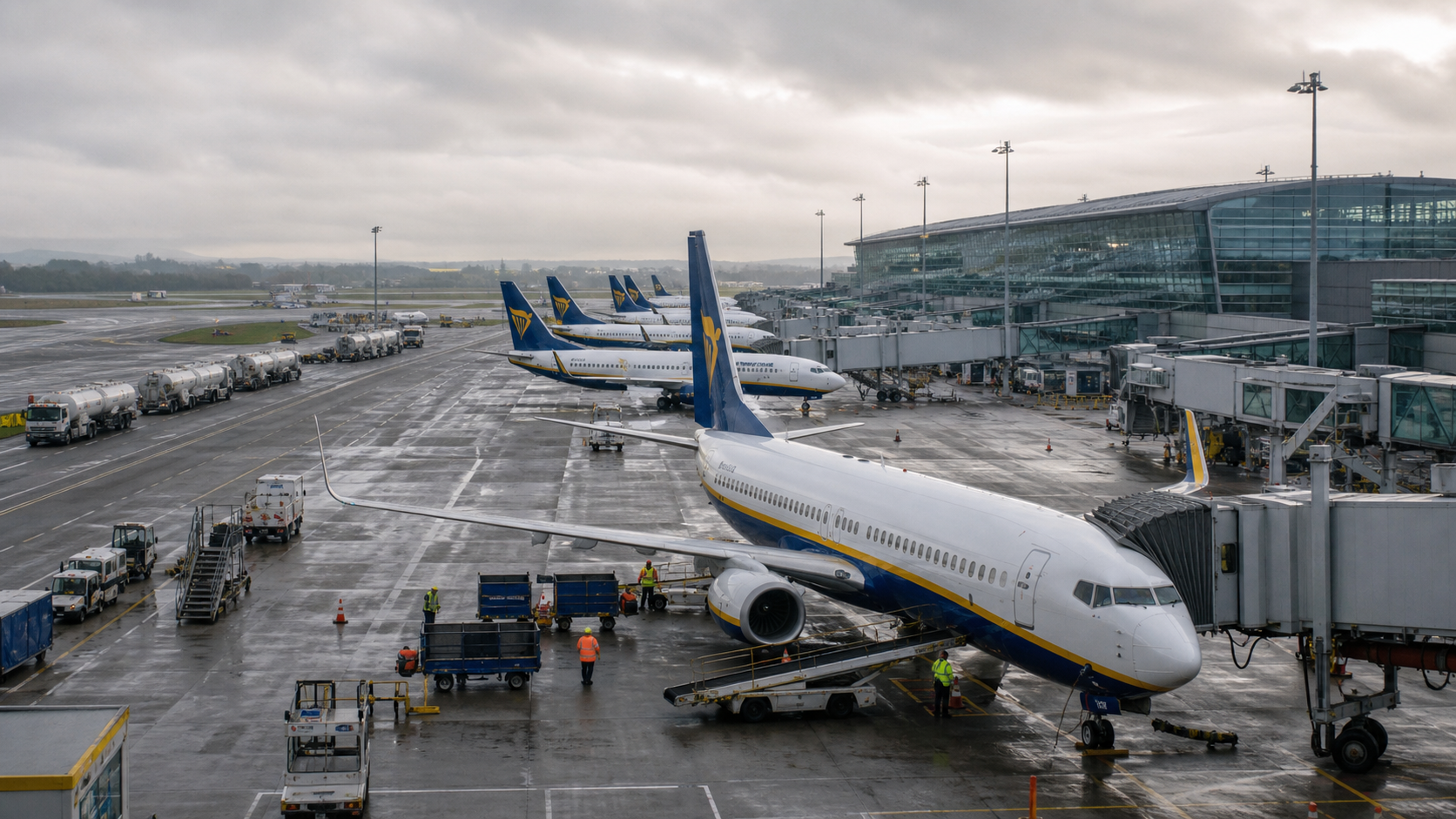
Ryanair Cuts Winter Passenger Target to 214m as Unhedged Jet Fuel Costs Bite Amid Middle East Conflict
Ryanair has reduced its full-year passenger target from 216 million to 214 million, trimming winter capacity in response to soaring unhedged jet fuel costs that have been trading near $140 to $163 per barrel amid the US-Iran conflict, with the airline warning that sustained high oil prices could threaten the survival of less well-hedged competitors and push European short-haul airfares materially higher in summer 2027.
Background
Ryanair is Europe's largest airline by passenger numbers and one of the most profitable low-cost carriers in the world. The Dublin-based airline operates a fleet of Boeing 737 aircraft and serves more than 200 destinations across Europe, North Africa, and the Middle East. Its business model is built on high aircraft utilisation, low operating costs, and aggressive pricing, with ancillary revenues from baggage fees, seat selection, and other add-ons playing an increasingly important role in its financial performance.
Fuel is the single largest cost for any airline, typically accounting for 25 to 35 per cent of total operating costs. Airlines manage fuel price risk through hedging — purchasing fuel in advance at fixed prices to protect against market volatility. Ryanair is one of the best-hedged airlines in Europe, having secured approximately 80 per cent of its fuel requirements through March 2027 at a rate of roughly $67 per barrel. However, the remaining 20 per cent of its fuel needs must be purchased at volatile spot market prices, which have risen sharply in recent months as the US-Iran conflict has disrupted global oil markets.
The conflict between the United States and Iran, which escalated significantly in the summer of 2026, has pushed jet fuel prices to levels not seen since the energy crisis of 2022. Spot prices for jet fuel have been trading between $140 and $163 per barrel — more than double Ryanair's hedged rate — creating a significant financial headwind for the airline's unhedged fuel purchases.
Key Developments
Ryanair announced on 2 September 2026 that it was reducing its fiscal 2027 passenger target by 2 million, from 216 million to 214 million. The reduction reflects a strategic decision to keep capacity broadly flat during the winter season — which runs from November to March — rather than growing it as originally planned. By reducing its exposure to unhedged fuel during the typically unprofitable winter period, the airline expects to cut its winter losses by between €70 million and €100 million.
Despite the winter reduction, Ryanair remains on track to grow its summer traffic by more than 5 per cent, targeting 145 million passengers for the April to October period. The airline's August 2026 traffic figures showed 22.2 million passengers, a 6 per cent increase on the same month in 2025, with a load factor of 96 per cent — indicating that demand for its services remains strong.
Ryanair warned that sustained high oil prices could act as a significant "stress test" for the European aviation industry, with less well-hedged competitors potentially struggling to maintain current capacity or even survive the winter season. The airline suggested that if high oil prices persist through summer 2027, short-haul airfares across Europe will likely increase materially to reflect higher costs.
Why It Matters
Ryanair's decision to trim its passenger target is a significant signal about the state of the European aviation market. The airline is one of the most financially sophisticated operators in the industry, and its decision to reduce winter capacity rather than absorb the cost of unhedged fuel reflects a clear-eyed assessment of the financial risks posed by the current oil price environment.
For Irish consumers, the warning about higher airfares in summer 2027 is particularly relevant. Ireland is heavily dependent on air travel for connectivity to the rest of Europe and the world, and Ryanair is the dominant carrier on many routes from Dublin, Cork, Shannon, and other Irish airports. Higher airfares would affect not only leisure travellers but also business travellers and the diaspora, for whom affordable air travel is essential for maintaining connections with family and friends abroad.
The broader implications for the European aviation industry are also significant. If Ryanair's assessment is correct and some less well-hedged competitors struggle to survive the winter, the result could be a further consolidation of the European short-haul market around a smaller number of large carriers — a development that would reduce competition and put further upward pressure on fares.
Local Impact
Ryanair's capacity reduction will affect a number of Irish airports. Dublin Airport, which is Ryanair's largest base in Ireland, will see fewer winter departures than originally planned, with some routes likely to see reduced frequency. Cork Airport and Shannon Airport, which are also significant Ryanair bases, may also be affected. The Dublin Airport Authority has been briefed on the capacity changes and is adjusting its operational planning accordingly. For Irish tourism, the reduction in winter capacity is a concern, as winter visitor numbers have been growing in recent years and the sector has been working to reduce its dependence on the summer peak season.
What's Next
Ryanair will publish its half-year financial results in November 2026, which will provide a clearer picture of the financial impact of the fuel cost increases. The airline has indicated it will review its capacity plans for summer 2027 in the light of oil price developments over the coming months. If fuel prices remain elevated, further capacity adjustments cannot be ruled out. The airline's CEO Michael O'Leary is expected to address the issue at the company's annual general meeting later this year.