RTE Defends Patrick Kielty as Late Late Show Host Faces Criticism from Irish Jewish Group
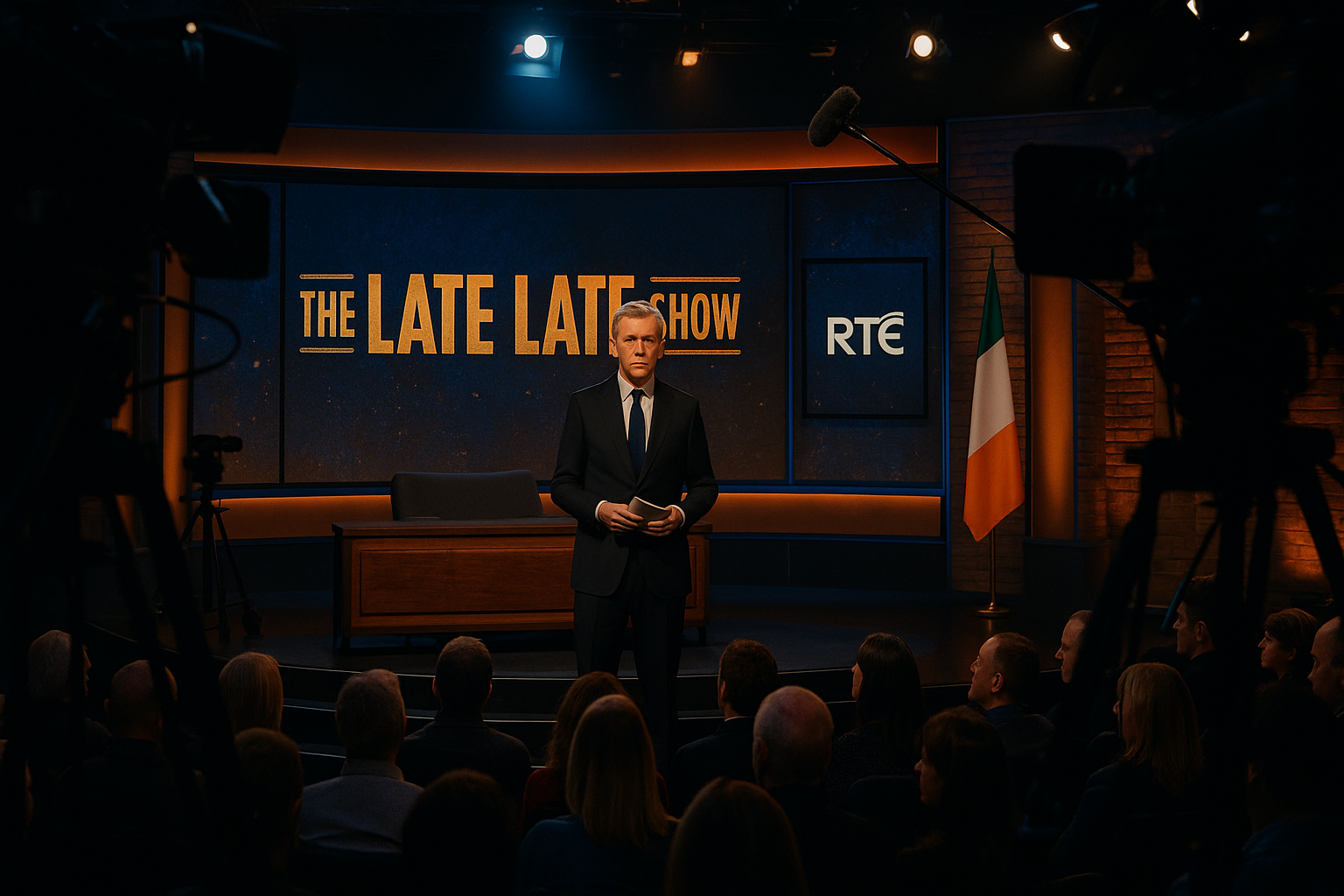
RTE has issued a public defence of Patrick Kielty, the Dundrum-born comedian and presenter who took over as host of The Late Late Show in 2023, after an Irish Jewish group levelled criticism at the broadcaster over the programme's handling of sensitive topics — a controversy that has reignited debate about the responsibilities of Ireland's national broadcaster in an increasingly polarised public discourse.
Background
The Late Late Show is Ireland's most watched and longest-running chat show, a cultural institution that has been part of Irish life since 1962. The programme carries a weight of national significance that few television formats anywhere in the world can match — it has hosted presidents, popes, and pop stars, and its Friday night slot remains one of the most coveted in Irish broadcasting. When Gay Byrne hosted it for 37 years, and later Pat Kenny and Ryan Tubridy, the show was a barometer of Irish society's evolving attitudes.
Patrick Kielty, who grew up in Dundrum, County Down, and whose father was murdered by loyalist paramilitaries during the Troubles, brought a distinctive Northern Irish perspective to the role when he took over in September 2023. His appointment was widely welcomed as a fresh start for a show that had faced criticism under his predecessor, and his early episodes drew strong ratings. However, the role of hosting Ireland's premier chat show inevitably draws scrutiny, particularly when the programme touches on politically sensitive subjects.
The Irish Jewish Representative Council has been among the voices raising concerns about how Irish media — including RTE — has covered the conflict in Gaza and related issues of antisemitism in Ireland. The specific nature of the criticism directed at Kielty and The Late Late Show has not been fully detailed publicly, but RTE's decision to issue a formal defence of its presenter indicates the seriousness with which the broadcaster is treating the complaint.
Key Developments
RTE issued a statement over the May Bank Holiday weekend defending Kielty against the criticism from the Irish Jewish group. The broadcaster maintained that The Late Late Show had handled the relevant content responsibly and in accordance with its editorial standards. RTE has not disclosed the specific content that prompted the complaint, but the statement represents a public commitment to stand behind its presenter.
Separately, RTE is currently producing a documentary film investigating a historic murder that occurred in the United States in the 1930s, which has been linked to the Ku Klux Klan — a project that reflects the broadcaster's continued investment in long-form investigative journalism. The broadcaster is also mourning the death of Grainne Ui Mhaitiu, a former presenter of the beloved children's programme Bosco, who passed away at the age of 72 over the bank holiday weekend.
Why It Matters
The controversy around Kielty and The Late Late Show reflects a broader tension in Irish public life about how the national broadcaster navigates politically charged subjects. RTE occupies a unique position — it is publicly funded, carries a public service remit, and is expected to reflect the full diversity of Irish society. When it comes to the conflict in Gaza, Irish public opinion has been strongly sympathetic to the Palestinian cause, but that sympathy must be balanced against the broadcaster's obligations to accuracy, fairness, and the protection of minority communities.
This is not the first time RTE has faced criticism from the Irish Jewish community. The broadcaster has previously been accused of insufficient coverage of antisemitism in Ireland, and the community has expressed concern about the tone of some coverage of the Middle East conflict. Unlike the BBC, which has faced similar controversies in Britain and has a well-established editorial complaints process, RTE's complaints procedures have been less publicly visible.
Local Impact
For viewers across the island of Ireland, the controversy touches on fundamental questions about what Irish public broadcasting is for and who it serves. The Late Late Show reaches audiences in both the Republic and Northern Ireland, and its handling of sensitive topics has implications for communities on both sides of the border. In Belfast, where the Jewish community is small but long-established, the debate about how Irish media covers antisemitism is followed closely. The controversy also comes at a moment when RTE is under financial pressure, having faced significant governance and financial scandals in recent years.
What's Next
RTE's formal complaints process will determine whether the Irish Jewish group's concerns are upheld or rejected. The Broadcasting Authority of Ireland (BAI) could also become involved if the complaint is escalated. The Late Late Show's summer schedule is expected to be announced shortly, and Kielty's future as host will be subject to ongoing scrutiny. RTE's annual report, due later this year, will provide further insight into the broadcaster's financial position and editorial direction.
Sources: TheJournal.ie — RTE and Late Late Show coverage; RTE — National broadcaster