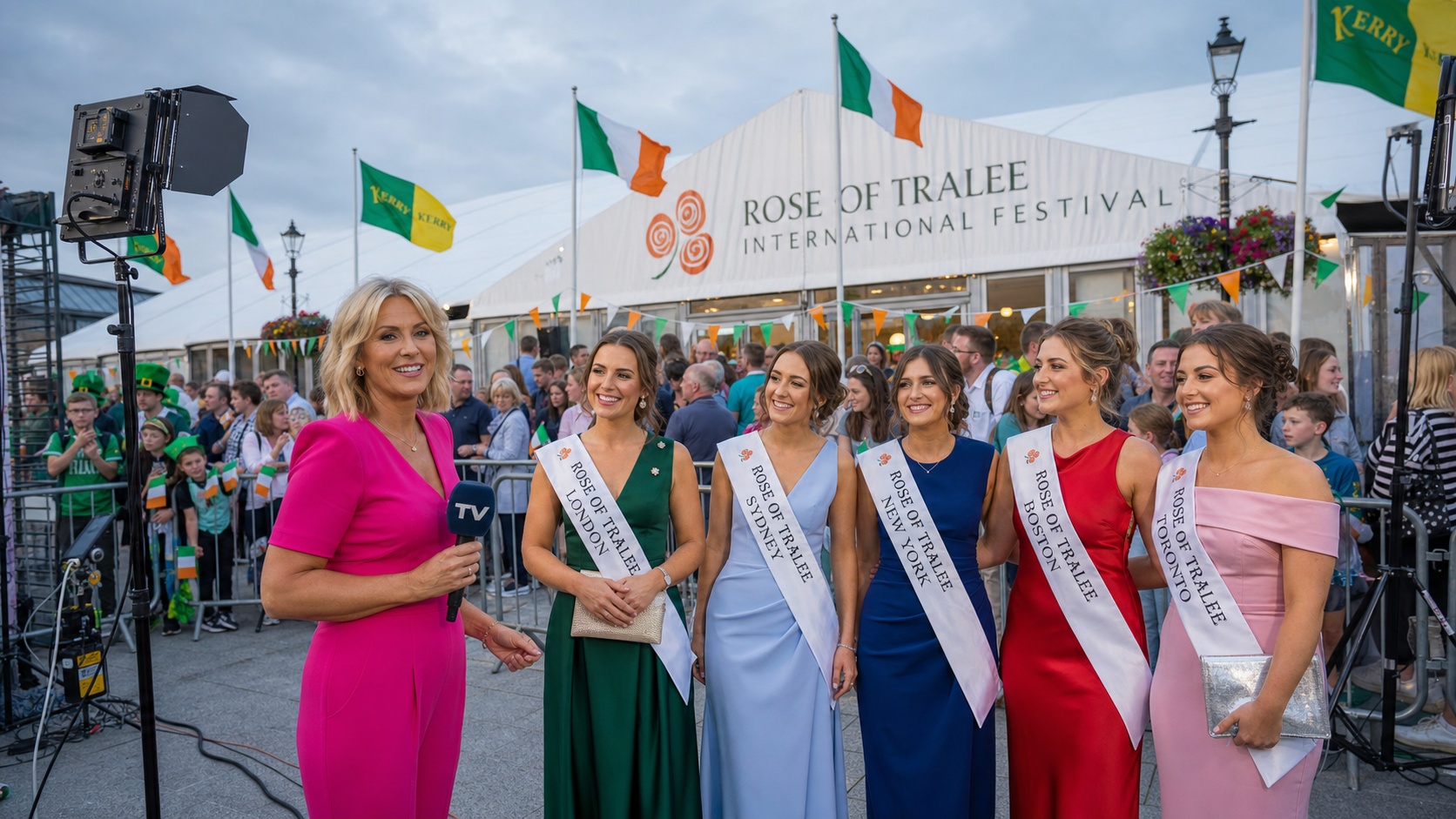
Rose of Tralee 2026 Kicks Off as Kathryn Thomas Hits Back at Critics Calling Festival 'Outdated'
The 66th Rose of Tralee International Festival has opened in Tralee, County Kerry, with 32 contestants representing Irish communities from around the world, as co-host Kathryn Thomas hit back at critics who dismiss the festival as outdated and irrelevant, calling such comments "boring" and "lazy" and arguing that the event continues to serve a vital function in connecting the Irish diaspora and celebrating the diversity of modern Irish identity.
Background
The Rose of Tralee has been a fixture of the Irish cultural calendar since 1959, when it was established as a local festival in Tralee to celebrate the town's most famous song. Over the decades, it has grown into an international event that attracts contestants from Irish communities across the world — from New York to Sydney, from London to Dubai — and that is watched by hundreds of thousands of viewers on RTÉ. It is, by any measure, one of the most enduring and distinctive events in Irish cultural life.
It is also one of the most debated. Critics of the Rose of Tralee have argued for years that the festival's format — which involves young women of Irish heritage being interviewed on stage about their lives, interests, and community involvement — is anachronistic, that it reinforces outdated ideas about femininity and Irish identity, and that it has no place in a modern, progressive Ireland. Supporters counter that the festival has evolved significantly over the years, that it provides a genuine platform for young Irish women to share their stories and advocate for causes they care about, and that the criticism often comes from people who have never actually watched the event.
The 2026 festival has attracted 32 contestants, representing Irish communities from across Ireland and the diaspora. This year's Roses are using the platform to advocate for a range of causes, including stroke awareness, arthritis, support for those experiencing hair loss, and mental health. The diversity of the contestants — in terms of background, profession, and the causes they champion — reflects the organisers' ongoing efforts to modernise the festival while retaining its core identity.
Key Developments
Kathryn Thomas, who is co-hosting the televised Rose Selection nights on RTÉ One on 17 and 18 August, addressed the criticism of the festival directly in an interview published this week. "I find the criticism boring and lazy," she said. "People who say the Rose of Tralee is outdated have usually never watched it, or haven't watched it in years. The women who take part are extraordinary — they're doctors, engineers, teachers, athletes, activists. They're using this platform to talk about things that matter to them and to their communities. That's not outdated. That's exactly what we should be celebrating."
Thomas's comments have generated significant discussion on social media, with opinion divided between those who agree with her defence of the festival and those who maintain that its fundamental premise — selecting a "Rose" based on a combination of personality, community involvement, and presentation — is inherently problematic. The debate reflects a broader tension in Irish cultural life between the desire to preserve traditions that have deep roots in the national psyche and the imperative to challenge practices that may no longer reflect contemporary values.
The festival itself has been running since Monday, with a series of events in Tralee including a parade, a family fun day, and a series of community events that showcase the town's hospitality and the warmth of the welcome extended to the Roses and their escorts. The televised selection nights, which are the centrepiece of the festival, will air on RTÉ One on Sunday and Monday evenings.
Why It Matters
The Rose of Tralee debate is, at its core, a debate about Irish identity — about what it means to be Irish in the 21st century, and about which traditions are worth preserving and which should be allowed to evolve or fade. The festival's defenders argue that it serves a genuine function in connecting the Irish diaspora, providing a space where Irish communities from around the world can come together and celebrate their shared heritage. Its critics argue that the format is too narrow and too focused on a particular vision of Irish womanhood to serve that function effectively.
What is clear is that the Rose of Tralee continues to generate strong feelings on both sides of the debate, which is itself a measure of its cultural significance. Events that nobody cares about do not attract this level of passionate argument. The festival's longevity — 66 years and counting — suggests that it has a resilience and a relevance that its critics consistently underestimate.
Local Impact
For Tralee and County Kerry, the Rose of Tralee is an enormous economic event. The festival brings tens of thousands of visitors to the town over the course of the week, filling hotels, restaurants, and bars and generating a significant boost to the local economy at a time of year when tourism is already strong. Kerry County Council and Tralee Town Council have both invested in infrastructure improvements in the town centre in advance of the festival, and local businesses have been preparing for months for the influx of visitors.
What's Next
The Rose of Tralee Selection nights air on RTÉ One on Sunday 17 and Monday 18 August, with the new Rose being announced at the conclusion of the second night. The festival continues in Tralee through the week, with a series of events celebrating the winning Rose and her county. The 2027 festival has already been confirmed for Tralee, with the organisers indicating that they are planning a series of innovations to the format that will be announced in the coming months.