Rhasidat Adeleke Withdraws from Monaco Diamond League as European Championship Qualification Pressure Mounts
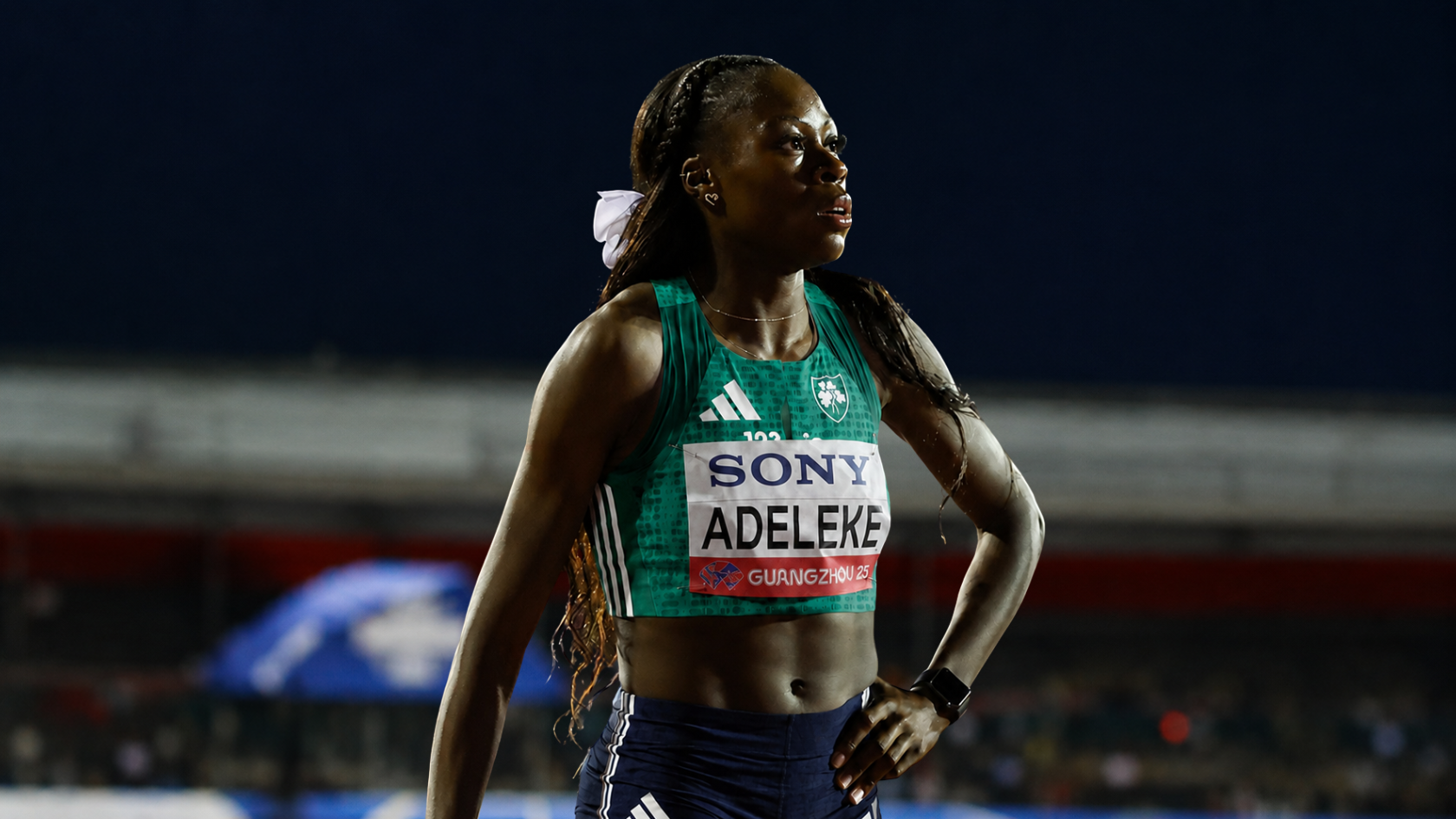
Irish sprint sensation Rhasidat Adeleke has withdrawn from the prestigious Monaco Diamond League meeting, scheduled for 10 July, where she was set to compete in the 400m. Her place in the high-profile race was taken by Dutch athlete Lieke Klaver. The withdrawal comes at a critical juncture for the Irish record holder, who is under pressure to achieve the 51.2-second qualifying standard for the European Athletics Championships in Birmingham before the 26 July deadline, following a difficult return from injury that saw her finish last at the Prefontaine Classic in Oregon with a time of 52.26 seconds.
Background
Rhasidat Adeleke is one of the most exciting athletes Ireland has produced in a generation. Born in Dublin to Nigerian parents and raised in Tallaght, she developed her athletic talent at the University of Texas before returning to compete for Ireland. Her performances in the 400m have been extraordinary — she holds the Irish record at 49.07 seconds, a time that places her among the elite of European sprinting, and she has won Diamond League meetings and competed at the highest level of global athletics.
However, the past year has been marked by injury and frustration. A hamstring injury sustained in 2025 ruled her out of the World Athletics Championships and disrupted her preparation for the 2026 season. Her return to competition has been slower and more difficult than anticipated, and the performances she has produced since coming back have been significantly below her best. The Prefontaine Classic in Oregon in early July, where she finished last in the 400m with a time of 52.26 seconds, was a stark illustration of how far she still has to go to return to her peak.
The Monaco Withdrawal
The Monaco Diamond League is one of the most prestigious meetings on the athletics calendar, held at the Stade Louis II in the principality and attracting the world's best athletes. Adeleke had previously enjoyed great success at the venue — in July 2024, she produced a stunning performance to win the Diamond League 400m with a time of 49.17 seconds, one of the highlights of her career to that point. Her withdrawal from this year's meeting is therefore a significant setback, both practically and psychologically.
The withdrawal was announced just two days before the Monaco meeting, with no detailed explanation provided by Adeleke's management team. Her place in the 400m was subsequently taken by Lieke Klaver of the Netherlands, one of Europe's leading 400m runners. The decision to withdraw suggests that Adeleke and her coaching team have concluded that she is not yet ready to compete at the level required for a Diamond League final, and that pushing her into a high-profile race before she is ready could be counterproductive to her recovery.
The Qualification Challenge
The timing is particularly challenging because of the European Championships qualification deadline. The Birmingham Europeans, scheduled for August 2026, require athletes to achieve a qualifying standard of 51.2 seconds in the 400m. Adeleke's current form — based on her Prefontaine time of 52.26 — is more than a second outside that standard, a significant gap at the elite level. With the deadline of 26 July approaching, she has a limited number of opportunities to post a qualifying time.
After her Prefontaine performance, Adeleke was characteristically defiant in her public comments, stating, "It's been beyond rough but I'm building. I can't quit, that's for losers." The sentiment reflects the competitive spirit that has driven her to the top of the sport, but it also underscores the frustration of an athlete who knows she is capable of so much more than her current performances suggest.
What Comes Next
With Monaco now off the table, Adeleke and her team will be looking for alternative opportunities to post a qualifying time before the 26 July deadline. The European athletics circuit offers several meetings in the coming weeks that could provide the right conditions, and the expectation is that she will target one or more of these events in her bid to reach Birmingham. The challenge will be to find a meeting that offers the right level of competition — strong enough to push her to a fast time, but not so strong that she is overwhelmed before she has fully regained her fitness and confidence.
The Irish athletics community is firmly behind Adeleke as she navigates this difficult period. Athletics Ireland has expressed its full support for the athlete and her management team, and there is a widespread belief that, given time and the right conditions, she will return to the form that made her one of the most exciting sprinters in Europe. Whether that return comes in time for Birmingham remains to be seen, but no one who has watched Adeleke compete at her best is in any doubt about her ability to do so.