PSNI and Pride: Belfast's Policing Service Navigates Difficult Conversation on LGBTQ+ Inclusion
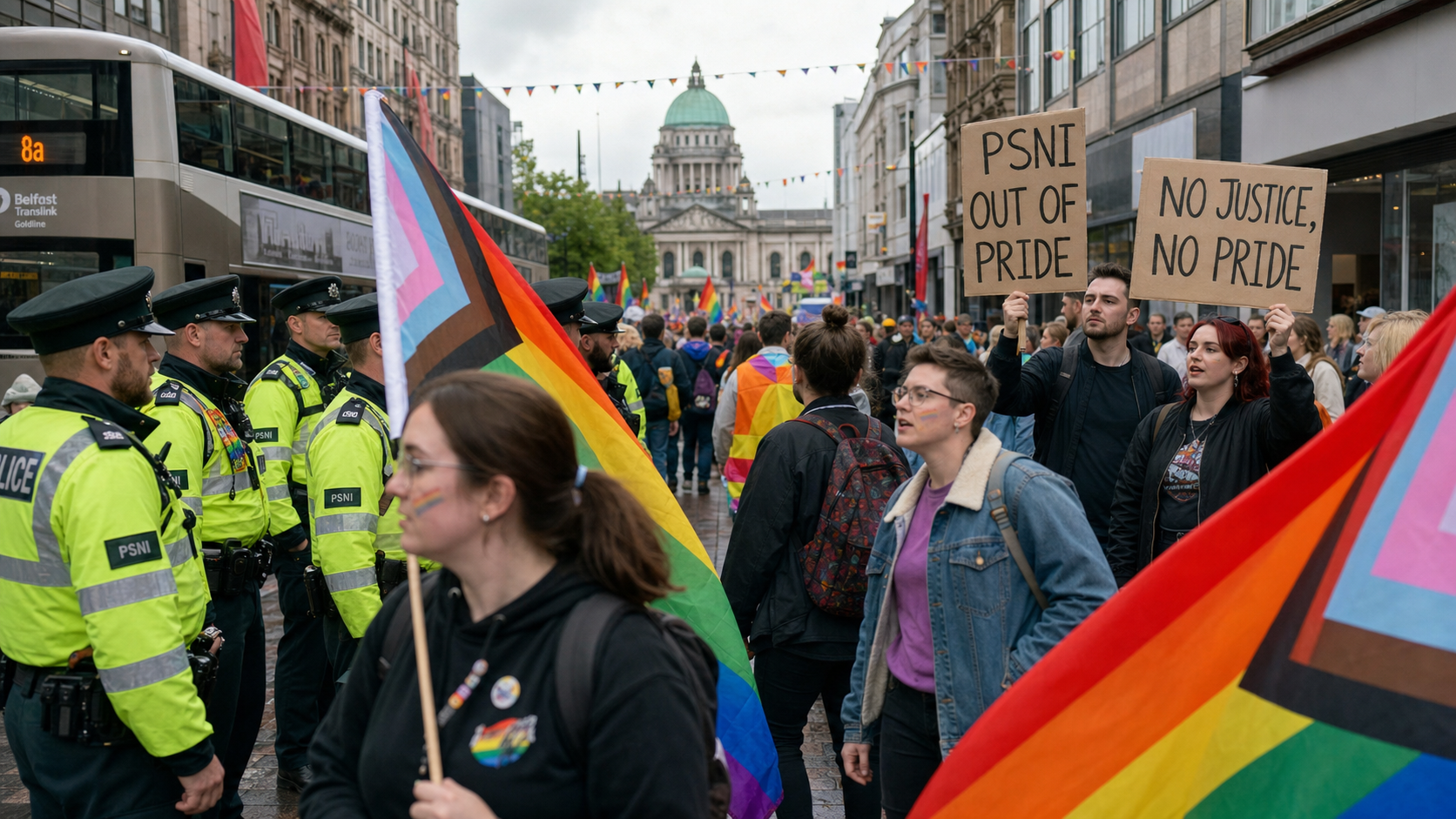
The Police Service of Northern Ireland faced protests at a Belfast Pride 'Pride Talks Back' panel event this month as demonstrators challenged the service's relationship with the LGBTQ+ community, chanting 'PSNI out of Pride' and accusing the service of 'pink-washing'. Senior officers, including Deputy Chief Constable Bobby Singleton, acknowledged the tensions and described the question of a formal apology for the historical treatment of LGBTQ+ people as a 'live' topic of ongoing discussion.
Background
The relationship between the PSNI and Northern Ireland's LGBTQ+ community has been complicated by a 2023 decision to instruct officers not to participate in Pride parades in uniform. The decision, intended to maintain the service's impartiality during what had become a contested public event, was received very differently by different communities. For many in the LGBTQ+ community, the withdrawal of uniformed officers from Pride represented a step backwards in the service's commitment to inclusion and diversity. For others, particularly within more conservative sections of Northern Ireland society, the decision was seen as an appropriate exercise of institutional neutrality.
The historical context is significant. Prior to the decriminalisation of homosexuality in Northern Ireland in 1982 — five years after it was decriminalised in England and Wales — the RUC, the PSNI's predecessor, was responsible for enforcing laws that criminalised same-sex relationships between men. The legacy of that enforcement, and the broader experience of LGBTQ+ people in Northern Ireland during the Troubles and beyond, has left a complex inheritance that the PSNI is still working to address.
Belfast Pride, which takes place each August, has grown into one of the largest Pride events in Ireland and the UK, attracting tens of thousands of participants. The event has become increasingly politicised in recent years, with debates about who should and should not be included in the parade reflecting broader tensions within the LGBTQ+ community about identity, inclusion, and the relationship between community organisations and state institutions.
Key Developments
The 'Pride Talks Back' panel event, which was designed as a forum for open discussion about the PSNI's relationship with the LGBTQ+ community, was disrupted by protesters who entered the venue and chanted slogans challenging the service's presence. The protest reflected a view held by some activists that the PSNI's engagement with Pride events is performative rather than substantive — a form of institutional image management that does not reflect genuine commitment to the safety and dignity of LGBTQ+ people.
Deputy Chief Constable Bobby Singleton, who was present at the event, acknowledged the tensions directly. He emphasised the service's commitment to "difficult conversations" and confirmed that the question of a formal apology for the historical treatment of LGBTQ+ people by the RUC and PSNI remains a "live" topic of discussion within the service's leadership. He did not commit to a timeline for any such apology, but his acknowledgement that the issue is actively under consideration represents a shift from previous positions.
The PSNI has in recent years taken steps to improve its relationship with the LGBTQ+ community, including the establishment of a dedicated LGBTQ+ liaison officer network and participation in diversity training programmes. However, critics argue that these measures are insufficient without a formal reckoning with the historical record.
Why It Matters
The PSNI's relationship with the LGBTQ+ community is one dimension of a broader challenge facing the service: how to build trust with communities that have historically had reason to distrust policing in Northern Ireland. The service has made significant progress in its relationship with the nationalist and republican community since its establishment in 2001, but that progress has been uneven and remains contested. The challenge with the LGBTQ+ community is in some ways different — it cuts across the traditional communal divide — but the underlying dynamic is similar: a community that experienced harm at the hands of the state seeking acknowledgement and accountability before trust can be rebuilt.
The question of a formal apology is not merely symbolic. Research on transitional justice consistently shows that formal acknowledgements of historical harm — when they are genuine and accompanied by concrete commitments to change — can play a significant role in rebuilding trust between institutions and communities. The PSNI's willingness to engage with this question, even if it has not yet committed to a specific course of action, is a meaningful development.
Local Impact
The debate about the PSNI's relationship with Pride is playing out against the backdrop of Belfast's preparations for a summer of major cultural events, including Fleadh Cheoil na hÉireann in August. The city's LGBTQ+ community is a significant presence in the Cathedral Quarter and across the city centre, and the relationship between that community and the policing service has practical implications for public safety at events throughout the year. The PSNI's LGBTQ+ liaison officers are based across all district policing teams in Belfast, and their effectiveness depends in part on the broader relationship between the service and the community they serve.
What's Next
Belfast Pride takes place in August, and the question of PSNI participation — in what form and to what extent — will be a focus of attention in the weeks ahead. The service's leadership is expected to make a decision on the uniform policy before the event. The question of a formal apology for historical treatment of LGBTQ+ people is likely to be addressed in the PSNI's annual equality and diversity report, due for publication in the autumn.