Paddy Power Accelerates Retreat from High Street as Betting Shop Closures Reshape Irish Retail Landscape
Paddy Power is accelerating its long-running withdrawal from the Irish high street, with the bookmaker closing a significant number of its remaining retail betting shops as the relentless growth of online and mobile gambling continues to cannibalise the traditional shop-based model — a trend that is reshaping the retail landscape in towns and cities across Ireland and raising questions about the future of the betting shop as a feature of Irish commercial life.
Background
Paddy Power is one of Ireland's most recognisable brands, with a history stretching back to 1988 when three Irish bookmakers — Stewart Kenny, David Power, and John Corcoran — merged their businesses to create a new company. The brand grew rapidly through the 1990s and 2000s, becoming synonymous with innovative marketing, competitive odds, and a distinctive Irish personality that set it apart from its British competitors. At its peak, Paddy Power operated hundreds of betting shops across Ireland and Great Britain, making it one of the most visible presences on the Irish high street.
The company merged with British bookmaker Betfair in 2016 to create Flutter Entertainment, which has since grown into one of the world's largest online gambling companies through a series of further acquisitions including FanDuel in the United States. The Paddy Power brand has been retained as the primary retail and online brand in Ireland and Great Britain, but the strategic focus of the parent company has shifted decisively toward online and mobile gambling, which offers significantly higher margins and lower operating costs than the traditional retail model.
The shift in consumer behaviour toward online gambling has been accelerating for more than a decade, driven by the proliferation of smartphones, the improvement of mobile betting apps, and the expansion of in-play betting markets that allow customers to bet on events as they unfold. The pandemic accelerated this trend further, as the closure of betting shops during lockdowns pushed many customers online who have not returned to the high street.
Key Developments
Paddy Power's acceleration of its retail closure programme reflects a strategic decision by Flutter Entertainment that the economics of operating physical betting shops in Ireland are no longer sustainable at scale. The company has been closing shops gradually for several years, but the pace of closures has increased in 2026 as the gap between the profitability of online and retail operations has widened further.
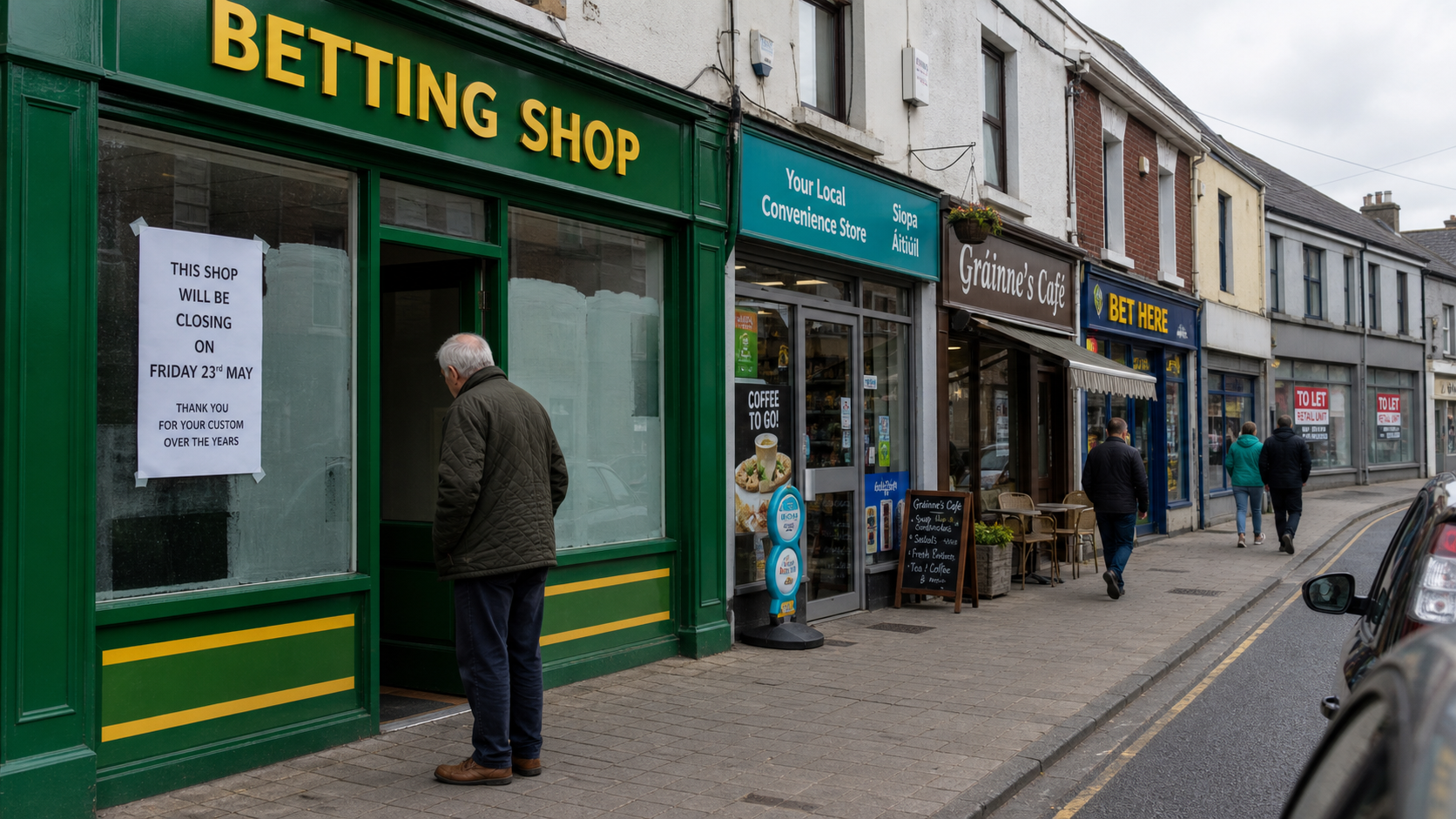
The closures are affecting betting shops across Ireland, from the major cities to smaller towns where Paddy Power has historically had a significant presence. In Dublin, shops in areas including the city centre, the northside, and the southside suburbs have been among those affected. In Cork, Galway, Limerick, and Waterford, the closure of Paddy Power shops is changing the character of high streets that have featured the bookmaker's distinctive green livery for decades.
The company has indicated that it will maintain a presence in the Irish retail market, but at a significantly reduced scale compared to its peak. The remaining shops will be focused on high-footfall locations where the economics of retail betting remain viable, and will be supported by enhanced digital integration — allowing customers to use the shop's facilities while also accessing the full range of online betting markets through their smartphones.
Why It Matters
The retreat of Paddy Power from the Irish high street matters for several reasons. At the most immediate level, it represents the loss of employment for the staff who work in the shops being closed. Betting shop employees are typically paid at or near the minimum wage, and the loss of these jobs — while individually modest — adds to the broader pressures on retail employment in Irish towns and cities.
The closures also have implications for the character of Irish high streets, which have been under pressure from a combination of online retail, changing consumer habits, and the economic disruption of the pandemic. The loss of a well-known brand from a high street location creates a vacancy that can be difficult to fill, and the cumulative effect of multiple closures can accelerate the decline of a retail area.
For context, the Irish gambling market is undergoing significant regulatory change, with the Gambling Regulation Act 2024 establishing a new regulatory framework for the sector and creating the Gambling Regulatory Authority of Ireland. The new framework includes stricter advertising restrictions, enhanced consumer protection measures, and new requirements for operators to contribute to a social fund for gambling harm prevention. These regulatory changes add to the cost pressures facing retail betting operators and may accelerate the shift toward online gambling.
Local Impact
In the towns and cities where Paddy Power shops are closing, the impact is felt both by the employees who lose their jobs and by the communities that lose a familiar retail presence. In smaller towns, where the Paddy Power shop may have been one of the few remaining national retail brands on the high street, the closure can have a disproportionate impact on the perception of the town's commercial vitality.
Local authorities in several counties have been working with the Gambling Regulatory Authority of Ireland and with retail development agencies to identify alternative uses for former betting shop premises. The relatively small footprint of a typical betting shop — usually between 50 and 150 square metres — makes them suitable for a range of alternative uses, including food and beverage outlets, health and beauty services, and community facilities.
What's Next
Flutter Entertainment is expected to provide an update on its retail strategy in Ireland when it publishes its next set of financial results. The Gambling Regulatory Authority of Ireland is expected to publish its first annual report in early 2027, which will include data on the number of licensed betting premises in Ireland and the trends in retail and online gambling. The Oireachtas Committee on Justice is expected to review the implementation of the Gambling Regulation Act in the coming months, with the retail closure trend likely to be one of the issues discussed.