Northern Ireland Economy Fastest Growing UK Region in August as Fleadh Cheoil Tourism Boost Drives Record PMI
Northern Ireland's private sector recorded its fastest rate of growth in nearly two years in August 2026, with the Ulster Bank Business Activity Index rising to 55.5 from 51.4 in July — the strongest performance since October 2024 — positioning the region as the fastest-growing of the 12 UK areas covered by the monthly report, driven by manufacturing, services, and a significant tourism boost from the Fleadh Cheoil na hÉireann in Belfast.
Background
The Ulster Bank Regional Growth Tracker is one of the most closely watched indicators of economic activity in Northern Ireland, providing a monthly snapshot of business conditions across the private sector. A reading above 50 indicates expansion; below 50 indicates contraction. The August reading of 55.5 represents a significant acceleration from the modest growth recorded in recent months and suggests that the Northern Ireland economy entered the autumn in a position of genuine momentum.
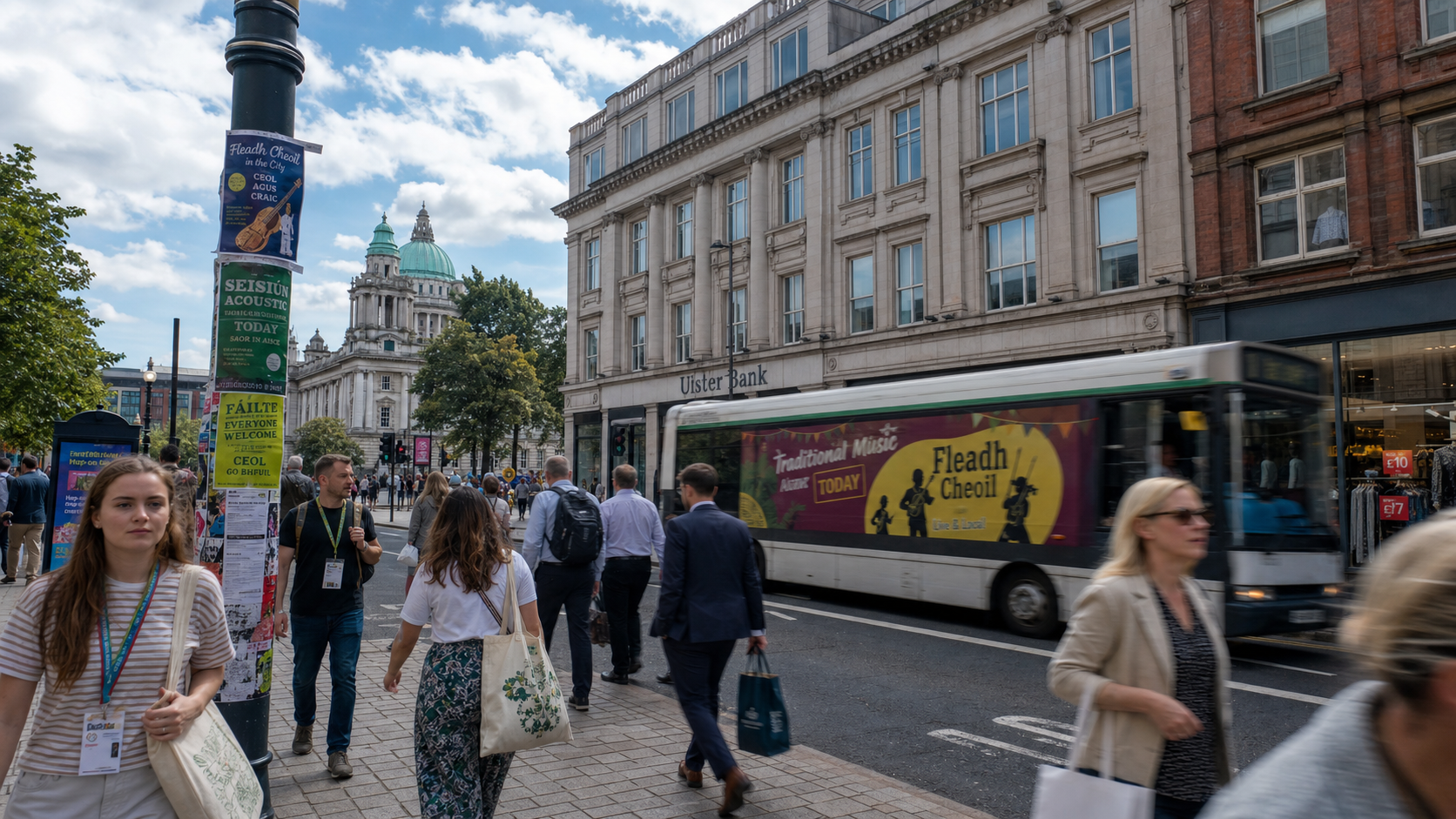
The Fleadh Cheoil na hÉireann, the world's largest Irish traditional music festival, was held in Belfast in August 2026 — the first time the event had been staged in the city. The decision to bring the Fleadh to Belfast was itself a significant cultural and political statement, reflecting the growing confidence of the traditional music community in the city's capacity to host a major all-island event. The festival attracted approximately 1.6 million visitors over its week-long duration, generating substantial economic activity across the hospitality, retail, and transport sectors.
Northern Ireland's economy has been navigating a complex environment in 2026, with the budget crisis at Stormont creating uncertainty for public sector spending and the ongoing energy price pressures affecting household and business costs. The August PMI data suggests that the private sector has been more resilient than the public sector difficulties might imply.
Key Developments
The August Business Activity Index of 55.5 was driven primarily by the manufacturing and services sectors, with both recording strong growth during the month. The tourism boost from the Fleadh Cheoil was particularly significant for the services sector, with hotels, restaurants, bars, and transport providers all reporting increased activity during the festival period.
New orders returned to growth in August, ending a four-month period of decline — a development that suggests the underlying demand environment is improving. However, the labour market showed signs of strain, with employment decreasing for the second time in three months, primarily due to difficulties in hiring and replacing departing staff. These labour shortages, coupled with rising new orders, created capacity pressures that left firms barely able to prevent a rise in outstanding business.
Inflationary pressures remained a significant headwind. Input cost inflation eased to a six-month low but continued to rise sharply, driven by higher prices for fuel, staff wages, and steel. Businesses increasingly passed these costs on to customers, with output price inflation reaching a three-month high. Northern Ireland recorded faster increases in both input costs and output prices compared to other UK regions.
Business confidence remained positive for the third consecutive month, with companies maintaining an optimistic outlook for the coming year, particularly for the final quarter of 2026. However, overall confidence experienced a slight dip, remaining just below the series average.
Why It Matters
The August PMI data is significant for several reasons. First, it demonstrates that Northern Ireland's private sector has the capacity to generate strong growth when conditions are favourable — a point that is sometimes obscured by the focus on the region's public sector difficulties and political instability. Second, it highlights the economic value of major cultural events, with the Fleadh Cheoil providing a clear and measurable boost to economic activity that reinforces the case for investing in cultural tourism.
The labour market difficulties identified in the report are a concern that deserves attention. The combination of strong demand and insufficient labour supply is a structural challenge for the Northern Ireland economy that cannot be resolved simply by improving business conditions. Addressing the skills gap and the barriers to labour market participation — including childcare costs, transport connectivity, and the availability of flexible working arrangements — requires sustained policy attention.
The inflationary pressures identified in the report are also significant, particularly given the ECB's decision to raise interest rates on Thursday. Higher borrowing costs will add to the financial pressures facing Northern Ireland businesses, potentially dampening the investment and expansion plans that are driving the current growth.
Local Impact
In Belfast, the Fleadh Cheoil's economic impact was felt across the city centre and beyond. Hotels in the city reported occupancy rates of close to 100% during the festival week, with visitors from across Ireland, Britain, and the Irish diaspora filling accommodation from the Cathedral Quarter to the Titanic Quarter. Restaurants, bars, and music venues reported record takings, and the city's transport network — including Translink's Metro and Glider services — carried significantly higher passenger numbers than in a typical August week.
In Newry, Derry, and other urban centres across Northern Ireland, the August PMI data reflects a broader improvement in business conditions that is not solely attributable to the Fleadh. Manufacturing activity in particular has been supported by strong export demand, with Northern Ireland's agri-food sector benefiting from favourable conditions in key export markets.
What's Next
The September PMI data will be published in early October and will provide the first indication of whether the August momentum has been sustained into the autumn. The Stormont budget negotiations, the energy price increases taking effect in October, and the broader UK economic environment will all be factors influencing business conditions in the coming months. The Ulster Bank report will also be watched for any signs that the labour market difficulties identified in August are easing or intensifying.