Northern Ireland Construction Sector Faces 'Alarming Return' to Inflationary Pressures Not Seen Since 2022
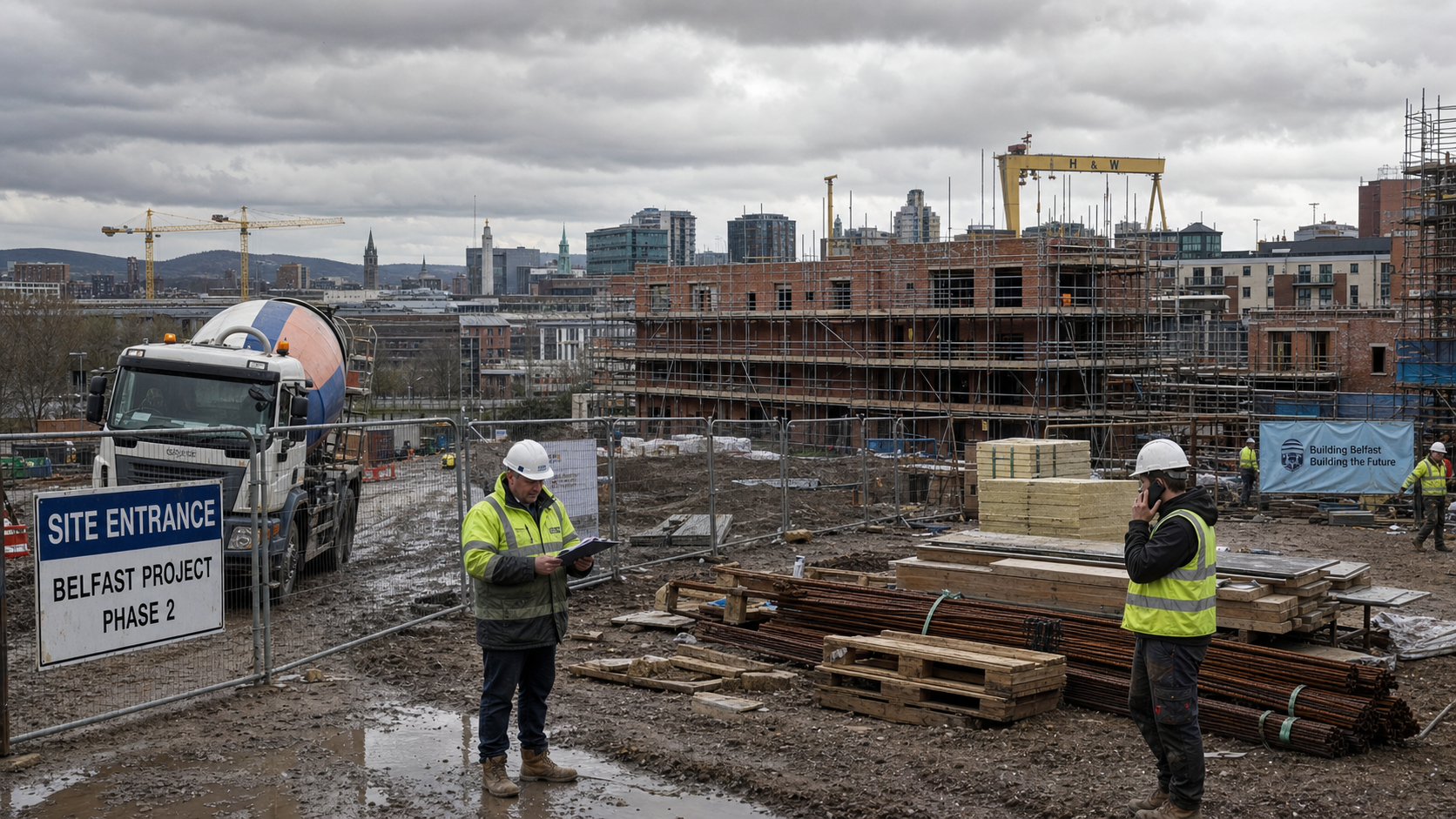
Northern Ireland's construction sector is experiencing what industry leaders describe as an 'alarming return' to inflationary pressures not seen since 2022, with rising material costs, labour shortages, and supply chain disruptions threatening to derail major infrastructure and housing projects across the province. The Construction Employers Federation has called for urgent government action to address the cost pressures, warning that without intervention, key projects — including social housing developments and school building programmes — face significant delays and cost overruns.
Background
Northern Ireland's construction sector has been on a rollercoaster in recent years. The post-pandemic surge in construction activity, driven by pent-up demand and government stimulus, pushed material costs and labour rates to record levels in 2021 and 2022, creating significant challenges for contractors and clients alike. The subsequent easing of inflationary pressures in 2023 and 2024 provided some relief, but the sector is now reporting that costs are rising again at a rate that is causing serious concern.
The construction industry is a critical component of Northern Ireland's economy, employing approximately 50,000 people directly and supporting many more in related industries. The sector is responsible for delivering the housing, schools, hospitals, roads, and other infrastructure that underpin the province's economic and social development. When construction costs rise sharply, the consequences are felt across the entire economy — in delayed housing delivery, in school building programmes that cannot proceed within budget, and in infrastructure projects that must be scaled back or postponed.
The current inflationary pressures are being driven by a combination of factors. Global supply chain disruptions — partly a consequence of geopolitical tensions and partly a legacy of the pandemic — have pushed up the cost of key materials including steel, concrete, and timber. Labour shortages, exacerbated by the impact of Brexit on the availability of skilled workers from the EU, have driven up wage costs. And energy prices, while lower than their 2022 peaks, remain elevated compared with pre-pandemic levels, adding to the cost of operating construction plant and equipment.
Key Developments
The Construction Employers Federation, which represents contractors across Northern Ireland, has described the current situation as an "alarming return" to the inflationary conditions of 2022. The Federation's latest survey of member companies found that material costs have risen by an average of 8% in the first half of 2026, with some categories — including structural steel and specialist electrical components — seeing increases of 15% or more. Labour costs have risen by an average of 6%, reflecting both the general tightening of the labour market and the specific challenges of recruiting skilled tradespeople in a sector that has struggled to attract young people in recent years.
The impact of these cost pressures is being felt across the sector. Several major social housing projects in Belfast, Derry, and other urban centres have been delayed as contractors and clients renegotiate contracts to reflect the changed cost environment. School building projects funded by the Department of Education have seen their budgets come under pressure, with some projects requiring additional funding to proceed. And infrastructure projects — including road improvements and wastewater upgrades — are facing similar challenges.
The Federation has called on the Northern Ireland Executive to take urgent action to address the cost pressures, including reviewing the procurement frameworks used for public sector construction contracts to ensure that they provide adequate flexibility to accommodate cost increases. The Federation has also called for investment in skills and training to address the labour shortage, and for a review of planning processes to reduce the time and cost of obtaining planning permission for construction projects.
Why It Matters
The return of inflationary pressures to Northern Ireland's construction sector matters because the sector is central to the delivery of the province's most pressing social and economic priorities. The housing crisis — with waiting lists for social housing running into the tens of thousands — cannot be addressed without a functioning and affordable construction sector. The school building programme, which is essential for providing modern, fit-for-purpose educational facilities for Northern Ireland's children, depends on the sector's ability to deliver projects within budget. And the infrastructure investment that is needed to support economic growth and address the province's significant infrastructure deficit requires a construction sector that can operate efficiently and competitively.
For context, the 2022 inflationary episode had a significant impact on Northern Ireland's public sector construction programme. Several major projects were delayed or scaled back as a result of cost overruns, and the Department of Finance was required to find additional funding to keep priority projects on track. The prospect of a repeat of that experience — at a time when the Executive is already struggling with a significant budget deficit — is a serious concern for policymakers and for the communities that depend on the delivery of public sector construction projects.
The labour shortage dimension of the problem is particularly challenging. Northern Ireland's construction sector has been struggling to recruit and retain skilled workers for many years, and the impact of Brexit on the availability of EU workers has exacerbated the problem. The sector needs a sustained investment in apprenticeships and skills training to build the domestic workforce it needs, but this is a long-term solution to a problem that is causing immediate difficulties.
Local Impact
Across Northern Ireland, the impact of construction cost inflation is being felt in delayed housing projects, school building programmes, and infrastructure works. In Belfast, several social housing developments in areas including North Belfast, West Belfast, and East Belfast have been affected by cost pressures, with the Housing Executive and housing associations working with contractors to find solutions that allow projects to proceed. In Derry, the expansion of Magee College — a priority project for the city's economic development — faces additional cost challenges that will need to be addressed if the project is to proceed on schedule. In rural areas, road improvement schemes and wastewater upgrades are facing similar pressures, with the Department for Infrastructure working to prioritise the most critical projects within its constrained budget.
What's Next
The Construction Employers Federation is seeking an urgent meeting with the Department of Finance and the Department for Infrastructure to discuss the cost pressures facing the sector and the measures that can be taken to address them. The Federation has also indicated that it will be making representations to the Northern Ireland Executive ahead of the budget discussions in September and October. The Department of Finance has indicated that it is aware of the challenges facing the construction sector and is working with departments to find solutions, but has not yet committed to specific measures.