Northern Ireland's AI Economy Doubles in a Year, Reaching £214m Two Years Ahead of Schedule
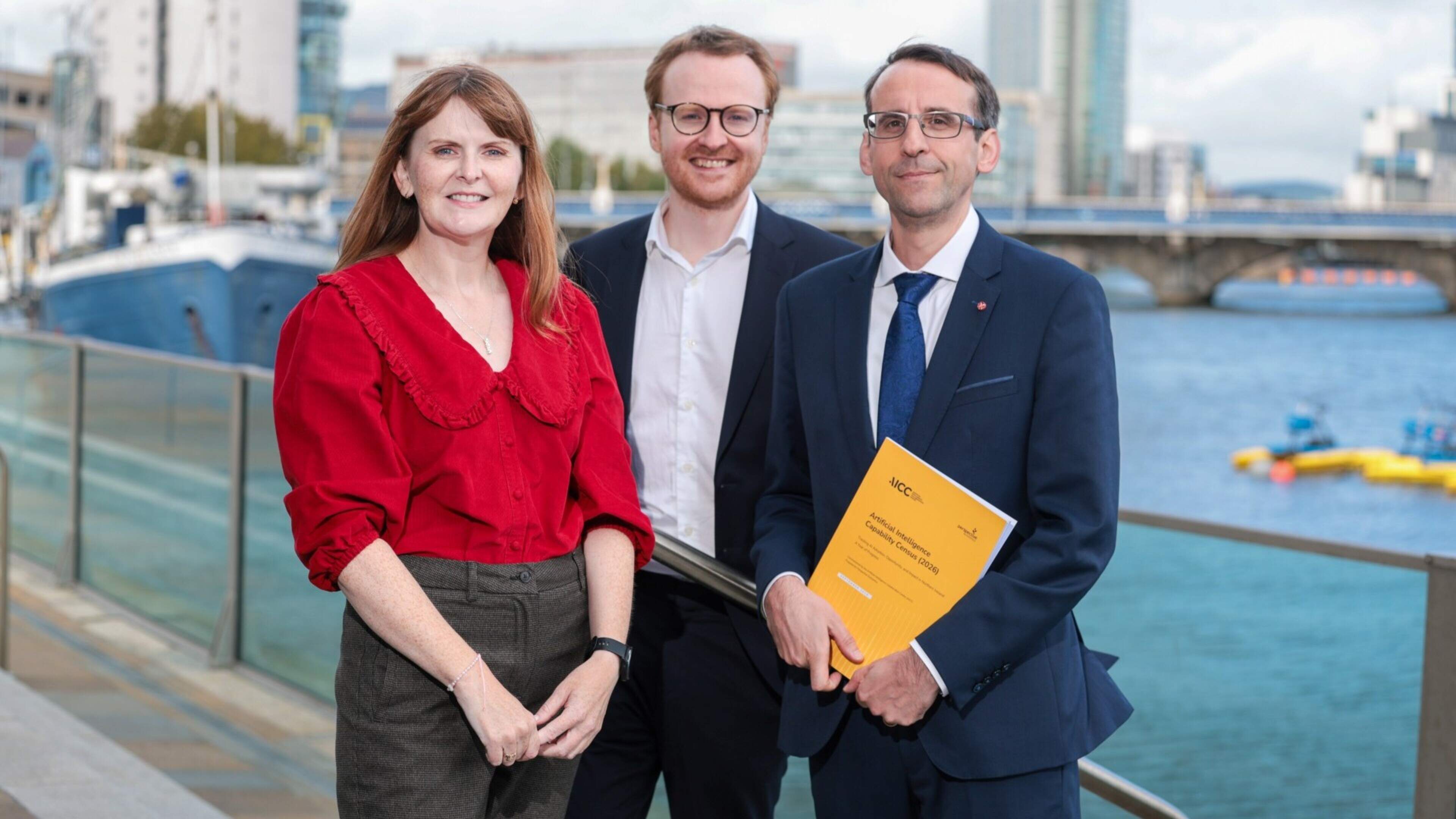
Northern Ireland's artificial intelligence sector has doubled in size over the past twelve months, with 400 firms now commercially engaged with the technology, AI-related employment up 79 per cent to more than 2,400 full-time roles, and the sector generating an estimated £214 million in gross value added — a milestone that was projected to take until 2028 to achieve, according to the AI Capability Census 2026 published this week.
Background
The AI Capability Census is an annual assessment commissioned by the Artificial Intelligence Collaboration Centre (AICC) and prepared by Perspective Economics. It tracks the growth of Northern Ireland's AI sector across a range of metrics, including the number of firms engaged with the technology, employment levels, gross value added, and investment raised. The 2025 census established a baseline that made the 2026 findings all the more striking: in a single year, the sector has effectively doubled across almost every measure.
Northern Ireland has been positioning itself as a hub for technology and data-driven industries for more than a decade, with Belfast in particular attracting significant investment from global firms drawn by the city's talent pool, competitive costs, and proximity to both the UK and European markets. The city's universities — Queen's University Belfast and Ulster University — have invested heavily in AI-related research and teaching, and a cluster of indigenous firms has grown up around that academic infrastructure.
The AICC was established to coordinate and accelerate that growth, providing a focal point for collaboration between academia, industry, and government. Its annual census is the most comprehensive assessment of the sector's health available, and the 2026 edition has been received with considerable enthusiasm by those who have been making the case for Northern Ireland as a serious player in the global AI economy.
Key Developments
The headline figures from the 2026 census are striking. The number of firms commercially engaged in AI development or deployment rose from 198 in 2025 to 400 in 2026 — a 102 per cent increase. Estimated AI-related employment grew from approximately 1,340 to 2,402 full-time equivalent roles, a rise of 79 per cent. The estimated gross value added generated by the sector increased from £82 million to £214 million, surpassing the £200 million milestone that had been set as a target for 2028.
Investment has followed the growth. Firms involved in the census have raised roughly £158 million in equity investment since 2024, reflecting strong confidence from venture capital and institutional investors in the sector's trajectory. Demand for AI-related skills has surged correspondingly, with job advertisements requesting machine learning or AI expertise rising by 161 per cent on a rolling twelve-month basis. The median advertised salary for AI-related roles in the first half of 2026 was approximately £61,000 — well above the Northern Ireland average wage.
Why It Matters
The doubling of Northern Ireland's AI economy in a single year is significant not just as a headline figure but as an indicator of structural change in the regional economy. For decades, Northern Ireland has struggled with a productivity gap relative to the rest of the UK, driven in part by an over-reliance on public sector employment and a relatively thin private sector. The growth of the AI sector represents a meaningful diversification, creating high-value, high-wage jobs in an industry with strong long-term growth prospects.
The comparison with the Republic of Ireland is instructive. The Republic has long been the dominant tech hub on the island, attracting the European headquarters of Apple, Google, Meta, and dozens of other global firms. Northern Ireland's AI growth suggests that the region is beginning to carve out a distinct niche — not competing directly with Dublin for the headquarters of multinationals, but building an indigenous ecosystem of AI-focused firms that can compete globally on their own terms. That is a more sustainable model of tech growth, and one that is less vulnerable to the kind of corporate restructuring that has seen headcount reductions at several major multinationals in recent years.
Local Impact
The growth of the AI sector is being felt most acutely in Belfast, where the majority of the 400 firms identified in the census are based. The city's Titanic Quarter and the area around Queen's University have emerged as the primary clusters, with a growing number of AI-focused startups and scale-ups taking office space in both locations. Ulster University's Belfast campus has also become a significant anchor for the sector, providing both talent and research capacity. Beyond Belfast, firms in Derry/Londonderry, Newry, and Antrim are also represented in the census, suggesting that the growth is not confined to the capital. The AICC has identified the need to ensure that the benefits of AI growth are distributed across the region, rather than concentrated in Belfast alone, as a key priority for the coming year.
What's Next
Despite the impressive growth figures, the census identifies significant challenges ahead. Approximately 45 per cent of businesses in Northern Ireland report that they are not currently utilising the technology, suggesting that the sector's growth has yet to translate into broad-based adoption across the economy. The AICC has identified the transition from initial experimentation to deeper integration as the key challenge for the next phase of development, and is planning a series of programmes to support smaller firms in scaling their capabilities. The 2027 census will be closely watched to see whether the current growth trajectory can be sustained.