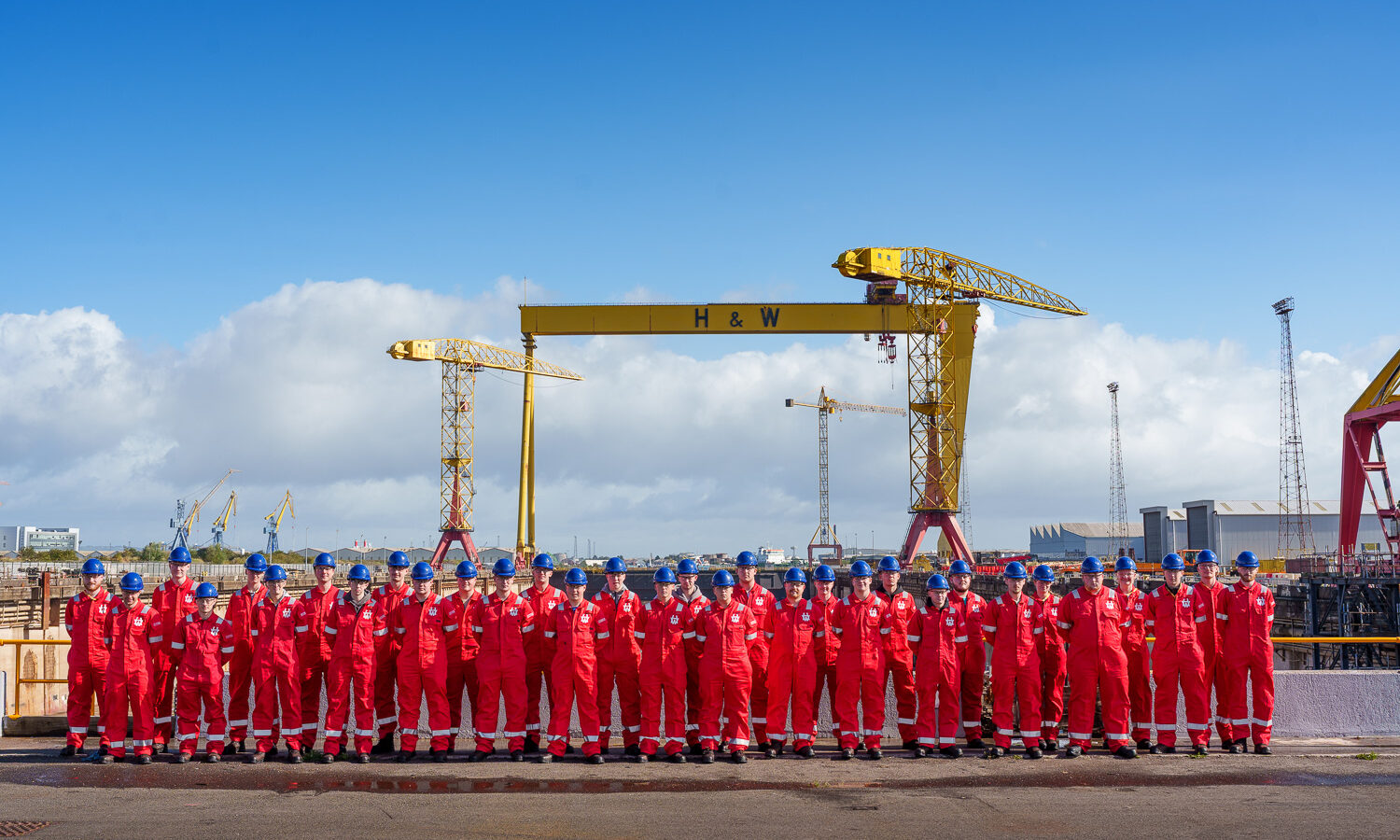
Navantia UK Welcomes 66 Apprentices to Harland and Wolff as £90m Belfast Shipbuilding Revival Gathers Pace
Navantia UK has welcomed 66 new apprentices to the historic Harland and Wolff shipyard in Belfast, bringing the total number of apprentices in training at the site to more than 120, as part of a £90 million investment programme that is transforming the yard into a modern shipbuilding facility capable of delivering the Royal Fleet Auxiliary's Fleet Solid Support ships.
Background
The Harland and Wolff shipyard in Belfast is one of the most iconic industrial sites in the world, synonymous with the construction of the RMS Titanic and with the industrial heritage of the city. The yard's decline from its peak in the mid-twentieth century — when it employed tens of thousands of workers — to near-closure in the early 2000s was one of the defining economic stories of Belfast's post-industrial transformation. The acquisition of the yard by Navantia UK, the British subsidiary of the Spanish state-owned shipbuilder, represented a significant vote of confidence in Belfast's industrial future.
Navantia UK secured the contract to build three 39,000-tonne Fleet Solid Support ships for the Royal Fleet Auxiliary in 2023, the largest vessels to be delivered from the Belfast yard in a generation. The contract, worth several billion pounds, provided the financial foundation for a major investment programme at the yard, including the construction of an extended fabrication hall and the introduction of a new mechanised panel line, which became operational in July 2026. The company has described its approach as "Shipyard 5.0," integrating advanced manufacturing, automation, and digital engineering to increase the yard's productivity.
The apprenticeship programme is central to Navantia UK's strategy for rebuilding the skilled workforce that large-scale shipbuilding requires. The company has expressed long-term ambitions to grow the Belfast workforce to 1,500 people to secure future shipbuilding projects beyond the current FSS programme.
Key Developments
The 66 new apprentices welcomed to the yard this month bring the total number of apprentices in training at Harland and Wolff to more than 120. The recruits are being trained across a range of disciplines, including welding, fabrication, pipe fitting, project planning, and technical support, with additional pathways available in corporate functions such as HR, finance, and procurement. The breadth of the apprenticeship offer reflects Navantia UK's recognition that a modern shipyard requires a diverse range of skills beyond the traditional trades.
The new apprentices will work on the construction of the three Fleet Solid Support ships, which are intended to provide essential logistical support to the Royal Navy. The vessels are among the most complex engineering projects currently under way in the United Kingdom, and the experience gained by the apprentices on the FSS programme will be directly transferable to future shipbuilding contracts.
Navantia UK has described the intake as "an exciting moment" for the yard and for Belfast's industrial future. The company has indicated that it is already in discussions with the Ministry of Defence about potential future contracts that could sustain the Belfast workforce beyond the completion of the FSS programme.
Why It Matters
The revival of large-scale shipbuilding at Harland and Wolff is one of the most significant industrial stories in Northern Ireland in a generation. The yard's history is inseparable from Belfast's identity, and its near-closure in the early 2000s was experienced as a profound loss by the city and its communities. The return of apprenticeship programmes at the scale now being delivered by Navantia UK represents a genuine reindustrialisation of the site, creating skilled, well-paid jobs in a sector that has been absent from Belfast for decades.
The apprenticeship model is particularly important because it creates a pipeline of skilled workers who will be available for future shipbuilding projects, not just the current FSS contract. If Navantia UK succeeds in securing additional contracts — and the company's ambition to grow the workforce to 1,500 suggests it is actively pursuing that goal — the Belfast yard could once again become a significant employer in the city's economy. The £90 million investment in the yard's infrastructure is a tangible demonstration of that ambition.
Local Impact
The 66 new apprentices come from communities across Belfast and the wider Northern Ireland area. Many are from east Belfast, where the shipyard is located and where the decline of the yard had a particularly severe impact on employment and community identity. The apprenticeship programme offers young people from those communities a pathway into skilled, well-paid employment in a sector with genuine long-term prospects. The Belfast Harbour Commissioners, who own the land on which the yard operates, have welcomed the investment and the apprenticeship programme as a positive development for the harbour estate and for the city.
What's Next
Navantia UK expects to complete the first of the three Fleet Solid Support ships within the next three years, with the full programme scheduled for completion by the end of the decade. The company is in discussions with the Ministry of Defence about potential future contracts, and has indicated that it will continue to expand its apprenticeship intake as the workforce grows. The Department for the Economy has been asked to comment on what additional support it can provide to the Navantia UK programme, including through the Assured Skills programme and the Northern Ireland Apprenticeship Awards.