National Broadband Plan Reaches Final Stretch as Six More Counties Complete Main Infrastructure Build
The National Broadband Plan has completed its main infrastructure build in six Irish counties — Monaghan, Laois, Leitrim, Sligo, Offaly, and Kildare — bringing high-speed fibre broadband to more than 80,000 homes, farms, and businesses and pushing the overall project past the 500,000 premises milestone as it enters its final phase.
Background
The National Broadband Plan, managed by National Broadband Ireland in partnership with the Department of Culture, Communications and Sport, was conceived as the state's answer to one of the most persistent inequalities in modern Irish life: the digital divide between urban and rural communities. For decades, families and businesses in rural Ireland operated at a significant disadvantage compared to their urban counterparts, with slow or unreliable internet connections limiting access to education, healthcare, remote working, and economic opportunity.
The plan, which covers approximately 566,000 premises across the country's intervention area — those locations that the commercial market would not serve on its own — has been described by successive governments as the most ambitious infrastructure project in the state since rural electrification in the 1940s and 1950s. That comparison is not made lightly. Rural electrification transformed Irish life in ways that were difficult to imagine before it happened; the National Broadband Plan carries similar transformative potential for the digital age.
The project has not been without controversy. Early delays and cost concerns drew significant criticism, and the decision to award the contract to National Broadband Ireland in 2019 was the subject of intense political scrutiny. However, the rollout has gathered pace in recent years, and the project is now firmly on track for completion by the end of 2026.
Key Developments
The completion of the main infrastructure build in Monaghan, Laois, Leitrim, Sligo, Offaly, and Kildare during September 2026 represents a significant acceleration in the project's final phase. Each of these counties has hosted county closeout events to mark the milestone, celebrating the availability of high-speed connectivity for communities that have waited years for reliable broadband.
As of late July 2026, the project had passed more than 500,000 premises — approximately 89% of the total 566,000 premises in the intervention area. The network provides a minimum download speed of 500 Mbps, with the infrastructure designed to be future-proofed for speeds of up to 10 Gbps as technology evolves.
Minister for Communications Eamon Ryan described the September milestones as "a landmark moment for rural Ireland," adding that the completion of these six counties demonstrates that the project is delivering on its promise. "Every farm, every home, every small business that gets connected to this network is a step towards a more equal Ireland," he said. "The digital divide that has held rural communities back for too long is being closed, county by county."
National Broadband Ireland chief executive Peter Hendrick said the company was "immensely proud" of the progress made. "The teams on the ground have worked through significant challenges — weather, terrain, the sheer scale of the task — and they have delivered. Six more counties are now fully built out, and we are on course to complete the entire project by the end of the year."
Why It Matters
The significance of the National Broadband Plan extends well beyond the technical achievement of laying fibre cable across rural Ireland. The plan is, at its core, a social and economic intervention designed to address one of the most consequential inequalities of the digital era. Research consistently shows that access to high-speed broadband is now as fundamental to economic participation as access to roads or electricity was in previous generations.
For rural businesses, reliable broadband opens access to national and international markets that were previously out of reach. For families, it means children can access the same educational resources as their urban peers. For older residents, it enables access to telehealth services and digital government services that reduce the need for long journeys to urban centres. And for the growing cohort of remote workers who have chosen to live in rural Ireland, it makes that choice economically viable in a way that was simply not possible a decade ago.
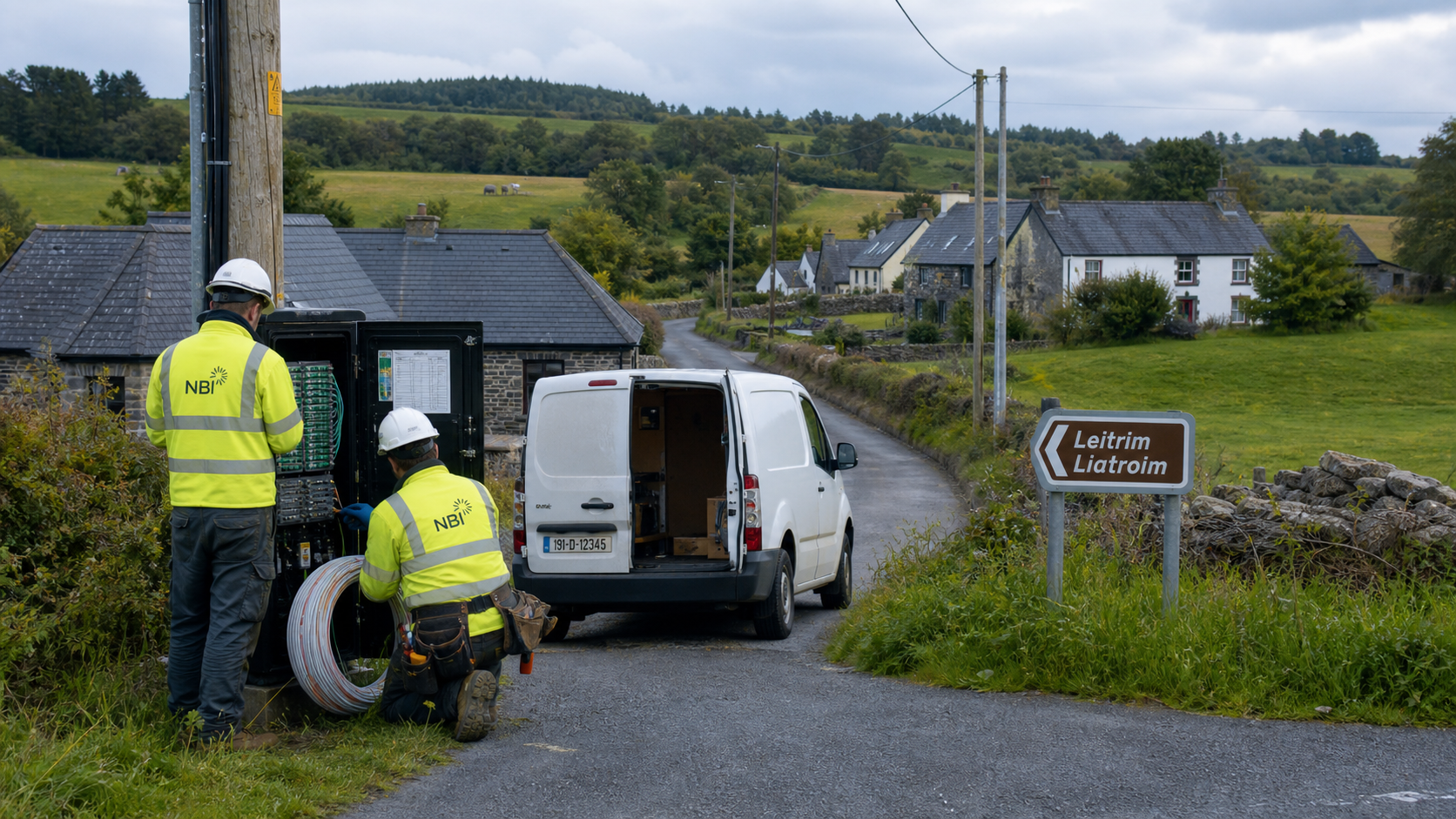
The completion of the six September counties also has implications for the broader rural economy. Leitrim, for example, has one of the lowest population densities in Ireland and has historically struggled to attract investment. High-speed broadband changes the calculus for businesses considering locating in such areas, and for individuals considering whether to return to their home counties after years working in Dublin or abroad.
Local Impact
In County Monaghan, the completion of the build has been particularly welcomed by the agri-food sector, which accounts for a significant proportion of the county's economic activity. Farmers and food producers have been among the most vocal advocates for the plan, citing the importance of reliable connectivity for precision agriculture, online sales, and compliance with increasingly digital regulatory requirements.
In Sligo, the completion has been celebrated by the county's growing creative and tech sector, which has attracted a number of remote workers and small businesses in recent years. In Leitrim, community groups have highlighted the potential for the broadband connection to support rural tourism initiatives and local enterprise. Across all six counties, local authorities have indicated that the completion of the build will be a central element of their economic development strategies for the coming years.
What's Next
Following the September completions, a further four counties — Louth, Wexford, Cavan, and Roscommon — are expected to reach completion in October 2026. The remaining counties are scheduled to complete their builds before the end of the year, with the full project on track to be delivered within the capped state subsidy envelope. Once the main infrastructure build is complete, the focus will shift to take-up — encouraging households and businesses in the intervention area to connect to the network and begin benefiting from the investment that has been made on their behalf.