Michelin-Starred Chestnut in Ballydehob to Close in October as Owners Plan 'Next Chapter'
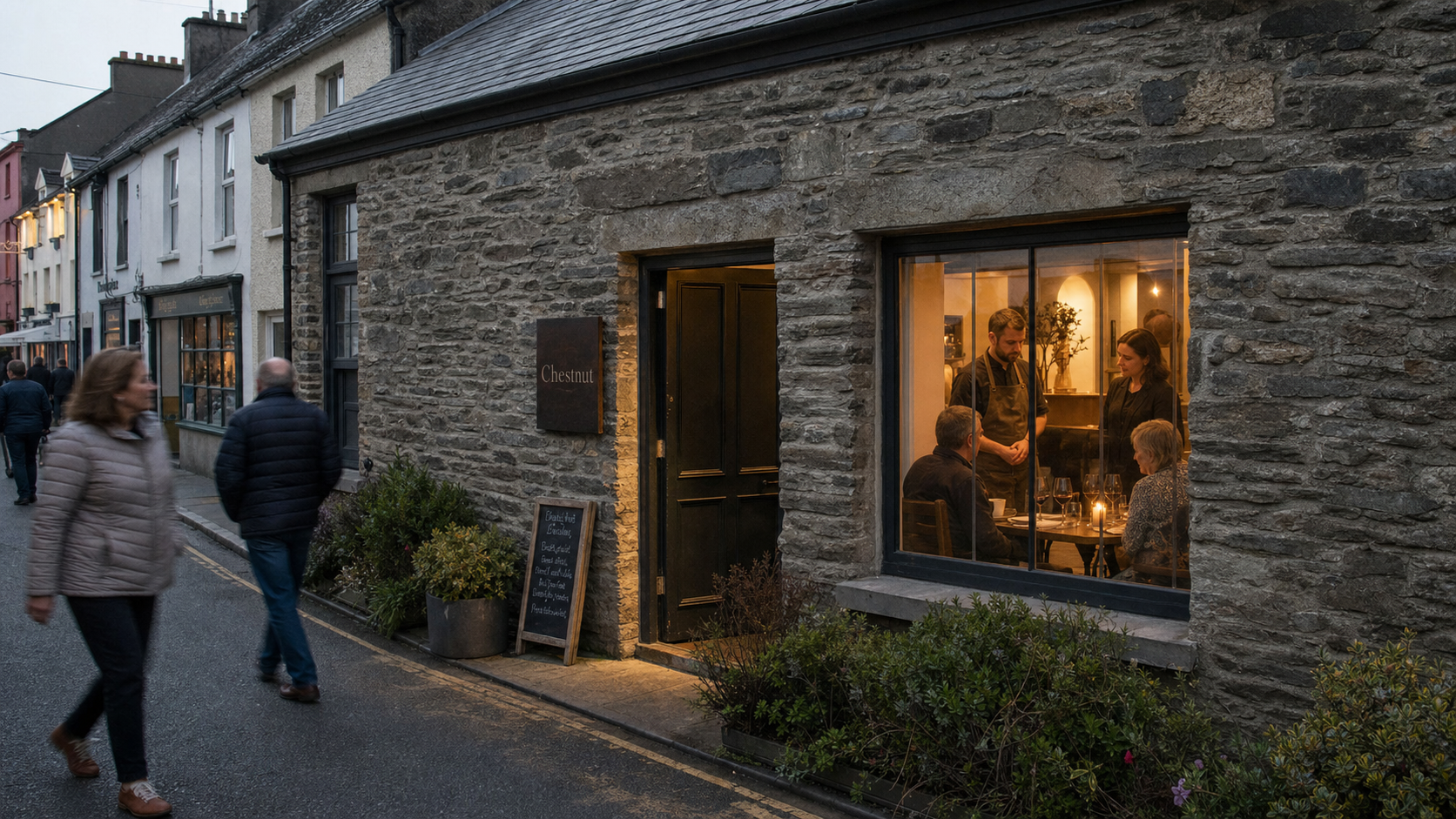
Restaurant Chestnut in Ballydehob, West Cork — one of Ireland's most celebrated Michelin-starred establishments, awarded its star less than a year after opening in 2017 and having retained it throughout its eight-year tenure — will serve its final dinner on 30 October 2026, with chef Rob Krawczyk and partner Elaine Fleming saying they intend to remain in West Cork and will reveal their "next chapter" in due course.
Background
Restaurant Chestnut opened in Ballydehob in 2017, in a small village on the Mizen Peninsula in West Cork that had already established itself as a destination for food lovers drawn by the exceptional quality of local produce and the concentration of talented chefs who had chosen to make their lives in the area. Krawczyk, a chef of Polish heritage who had worked in some of Ireland's finest kitchens before striking out on his own, and Fleming, who managed the front of house with warmth and precision, created a restaurant that was immediately recognised as something special.
The Michelin star arrived in 2018 — less than a year after opening — a recognition that was remarkable for its speed and that confirmed Chestnut's status as one of the most exciting new restaurants in Ireland. The star was awarded for a style of cooking that was deeply rooted in the produce of West Cork: seasonal, ingredient-led tasting menus that showcased the extraordinary quality of local seafood, meat, dairy, and vegetables, prepared with technical skill and a clear culinary vision. The restaurant's intimate atmosphere — it seats only a small number of covers — and its location in a village rather than a city gave it a character that was entirely its own.
Over the eight years of its operation, Chestnut became a destination restaurant in the fullest sense — a place that people travelled specifically to visit, from across Ireland and from abroad. Its success contributed to the broader reputation of West Cork as one of the finest food destinations in Ireland and helped to attract other talented chefs and food producers to the area.
Key Developments
The announcement of Chestnut's closure, made in May 2026, came as a surprise to the Irish food community. Krawczyk and Fleming confirmed that the restaurant's final day of service would be 30 October 2026, and that they had no plans to relocate — a statement that ruled out the possibility of the restaurant continuing in a different location. They indicated that they were pursuing a "next chapter" and would reveal their future professional intentions in due course, a formulation that has generated considerable speculation about what form that next chapter might take.
The restaurant has continued to operate in the months since the announcement, with bookings for the remaining service dates reportedly filling quickly as diners sought to experience Chestnut before its closure. The restaurant operates Wednesday through Saturday, with additional Tuesday night availability during the summer season, and the final weeks of service are expected to be particularly poignant occasions for the many regulars who have made Chestnut a part of their culinary lives over the years.
The closure of Chestnut comes at a time when the Irish restaurant sector is facing significant challenges, including rising food and energy costs, staff shortages, and the difficulty of maintaining the financial viability of small, high-quality establishments in rural locations. While Krawczyk and Fleming have not cited these pressures as the reason for their decision, the broader context is one in which many talented chefs and restaurateurs are reassessing their models and their futures.
Why It Matters
The closure of Chestnut matters for Irish food culture because it marks the end of one of the most distinctive and celebrated chapters in the story of Irish fine dining. The restaurant represented a particular vision of what Irish cuisine could be — rooted in place, committed to local produce, technically accomplished, and deeply personal — and its loss will be felt by the food community and by the many diners who have made the journey to Ballydehob over the years.
The closure also raises broader questions about the sustainability of the model that Chestnut represented. Small, owner-operated, Michelin-starred restaurants in rural locations face particular challenges: the cost of maintaining the quality that Michelin recognition demands, the difficulty of attracting and retaining skilled staff in areas with limited housing and amenities, and the financial pressure of operating at a small scale in a high-cost environment. Chestnut's success over eight years is a testament to the dedication and talent of Krawczyk and Fleming, but its closure is a reminder that even the most acclaimed restaurants are not immune to the structural challenges facing the sector.
Local Impact
In Ballydehob and the wider Mizen Peninsula area, the closure of Chestnut will be felt as a significant loss. The restaurant has been a source of local pride and a driver of food tourism to the area, attracting visitors who might not otherwise have made the journey to this remote corner of West Cork. The local food community — producers, other restaurants, and hospitality businesses — has benefited from the association with Chestnut's reputation, and the closure will remove a significant anchor from the area's food tourism offering. However, the commitment of Krawczyk and Fleming to remain in West Cork offers the prospect that their talents and energy will continue to contribute to the area's food culture in whatever form their next chapter takes.
What's Next
Restaurant Chestnut will continue to serve dinner Wednesday through Saturday until its final service on 30 October 2026. Bookings for the remaining dates are available through the restaurant's website. Krawczyk and Fleming have indicated that they will make an announcement about their future plans in due course. The Irish food community will be watching with great interest to see what form the "next chapter" takes, and there is widespread hope that their talents will continue to enrich Irish food culture in whatever new direction they choose to pursue.