Louth's Historic All-Ireland Semi-Final Against Mayo Captures Nation's Imagination
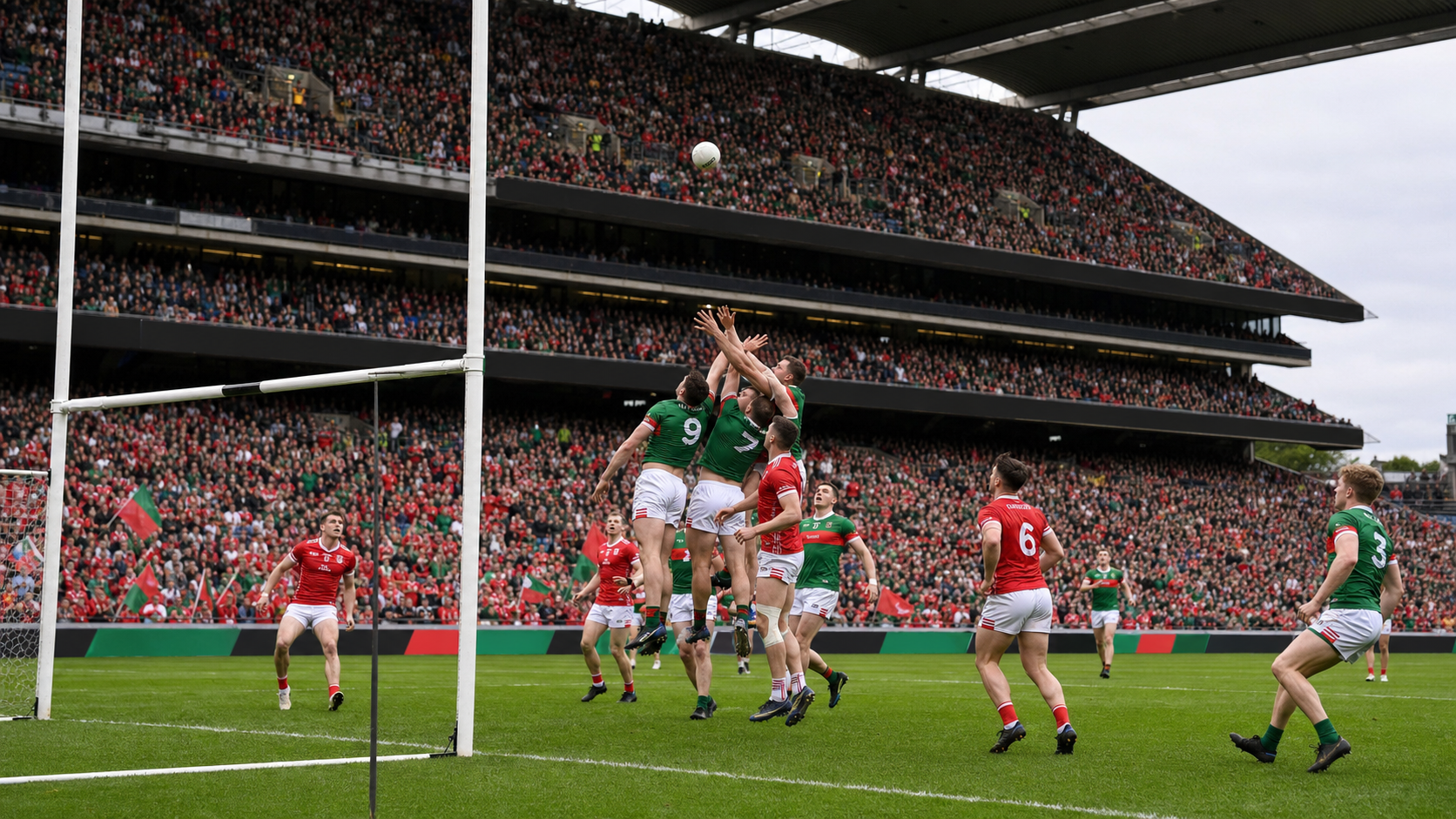
Louth face Mayo in the All-Ireland Senior Football Championship semi-final at Croke Park on Saturday, 11 July, in a fixture that has captured the imagination of the entire country — the Wee County, who have not won an All-Ireland title since 1957, taking on a Mayo side whose own 75-year wait for Sam Maguire has become one of the defining narratives of modern Gaelic football.
Background
Louth's journey to the All-Ireland semi-final is one of the most compelling stories of the 2026 championship. The county, which takes its nickname — the Wee County — from its status as the smallest county in Ireland by area, has a proud but intermittent history in Gaelic football. Their last All-Ireland title came in 1957, when a team led by the legendary Seán Flanagan defeated Cork in the final. In the decades since, Louth have been a county that has occasionally threatened to break through to the highest level without quite managing to sustain the momentum needed to win a championship.
The appointment of Mickey Harte as manager has been transformative. Harte, who won three All-Ireland titles with Tyrone between 2003 and 2008, brought to Louth the tactical sophistication and winning mentality that had been missing from the county's football culture. His ability to organise a defence, to develop young players, and to instil a collective belief in a squad that had previously lacked confidence at the highest level has been the key factor in Louth's remarkable progress through the 2026 championship.
Mayo's story is, of course, one of the most discussed in Gaelic football. The county has reached numerous All-Ireland finals since their last title in 1951 — a run of near-misses that has become almost mythological in its persistence. The passion of Mayo supporters, who travel in enormous numbers to every game regardless of the distance involved, is one of the most distinctive features of the championship landscape, and the prospect of Mayo finally ending their wait is one that generates enormous emotion across the country.
Key Developments
Louth's route to the semi-final has been built on a defensive solidity that has frustrated more fancied opponents throughout the championship. Harte's system — which prioritises organisation, discipline, and the ability to absorb pressure before hitting opponents on the counter-attack — has been executed with impressive consistency by a squad that has bought into the manager's philosophy completely.
The Louth forward line, led by the impressive Sam Mulroy, has provided the cutting edge that the team's defensive structure requires. Mulroy, who has been one of the most consistent performers in the championship, has the ability to score from play and from placed balls, and his form will be a key factor in how Louth perform against Mayo's experienced defensive unit.
Mayo, managed by Kevin McStay, have been in impressive form throughout the championship, combining the physical power and athleticism that has always characterised Mayo football with a more structured and disciplined approach than the county has sometimes displayed in the past. The return of experienced players from injury has given McStay more options in his selection, and the squad has the depth and quality to compete with any team in the country.
The tactical battle between Harte and McStay will be one of the most intriguing aspects of Saturday's game. Both managers are experienced and intelligent tacticians who will have studied each other's teams in detail, and the adjustments they make during the game — particularly at half-time — could be decisive. The ability to adapt to what the opposition is doing, and to make the right substitutions at the right moment, will be as important as the quality of the starting fifteen.
Why It Matters
The Louth-Mayo semi-final matters because it represents the kind of story that Gaelic football does better than almost any other sport — the story of a small county, with limited resources and a modest recent history, competing on equal terms with one of the game's traditional powers. The fact that Louth are in the semi-final at all is a testament to the work that has been done at club and county level over the past several years, and to the transformative impact that the right manager can have on a county's football culture.
For Mayo, the semi-final is another opportunity to take the step that has eluded them for so long. The county's supporters have endured more heartbreak than almost any other in the history of the championship, and the hunger to finally win an All-Ireland title is palpable in every aspect of the county's engagement with the game. Whether that hunger is an asset or a burden — whether it drives the players to perform at their best or creates a pressure that is difficult to manage — is one of the questions that Saturday's game will help to answer.
The broader significance of the semi-final is also worth noting. The All-Ireland championship is one of the few sporting events that genuinely unites communities across Ireland, and the semi-final weekend — with two games at Croke Park attracting capacity crowds — is one of the highlights of the sporting calendar. The economic and cultural impact of the championship on the counties involved, and on the GAA as an organisation, is enormous.
Local Impact
In Louth, the build-up to Saturday's game has generated a level of excitement that the county has not experienced in many years. The county town of Dundalk, which is the heartbeat of Louth football, has been transformed by the championship run, with flags and bunting visible throughout the town and a sense of collective pride that transcends the usual boundaries of club rivalry. Local businesses have reported increased trade as supporters stock up on county colours and prepare for the journey to Croke Park.
In Mayo, the mood is one of quiet determination. The county has been here before — many times — and the experience of previous semi-finals and finals has given the players and supporters a resilience that is hard-won. The towns of Castlebar, Ballina, and Westport will be emptied on Saturday as supporters make the journey east, and the county's pubs and community centres will be packed with those who cannot get tickets watching the game on television.
What's Next
The Louth-Mayo semi-final takes place at Croke Park on Saturday, 11 July, with throw-in at 3:30pm. The game will be broadcast live on RTÉ television and radio. The winner will face either Dublin or Kerry in the All-Ireland final on Sunday, 26 July. For Louth, a victory would be one of the great upsets of the modern championship era and would set up a final appearance for the first time since 1957. For Mayo, it would be another step on the road to ending the longest wait for an All-Ireland title in the history of the game.