Liam Neeson Escorts Catherine Corless to Dublin Premiere of Tuam Babies Film in Emotional Night
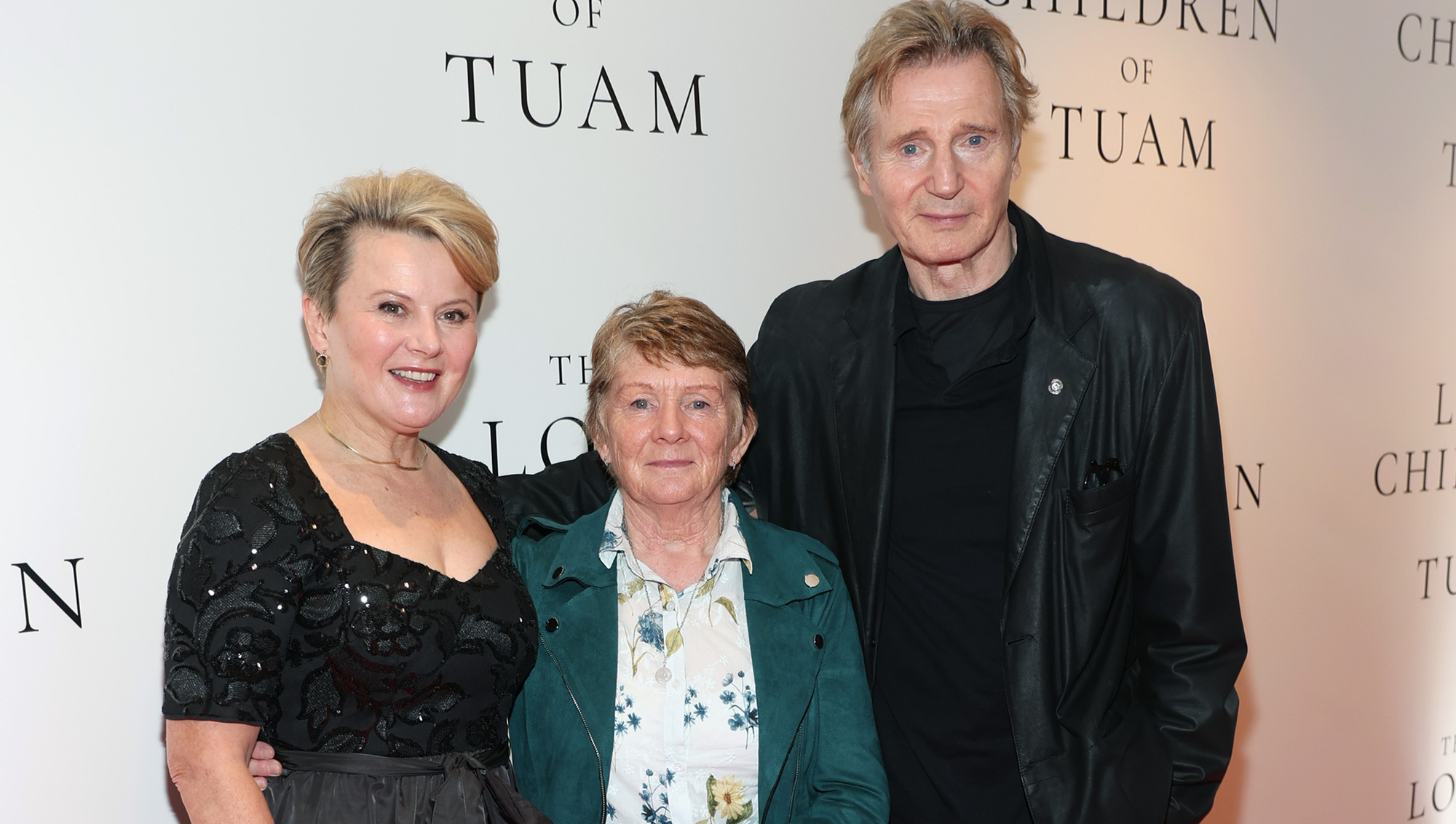
Liam Neeson walked Catherine Corless along the red carpet at the Lighthouse Cinema in Dublin on Thursday evening for the Irish premiere of The Lost Children of Tuam, the film he co-produced about the 796 children buried in unmarked graves at the Bon Secours Mother and Baby Home in County Galway — a night Corless described as "surreal" and "overwhelming" after nearly a decade of fighting to have the story told on screen.
Background
Catherine Corless, an amateur historian from Tuam, spent years painstakingly researching death records and land registry documents before publishing her findings in 2012. Her work revealed that 796 infants and young children who died at the Bon Secours Mother and Baby Home between 1925 and 1961 had been buried in an unmarked mass grave on the site of a former sewage tank. The discovery sent shockwaves through Ireland and prompted a formal State apology and a Commission of Investigation that ran for years.
Neeson, who grew up Catholic in Ballymena, County Antrim, first encountered the story through a 2017 New York Times article by journalist Dan Barry. He described reading it as a moment of profound anger — the rage of a man who had been an altar boy confronting the institutional cruelty that had been hidden in plain sight for decades. He resolved to use his platform to bring the story to a global audience and spent the next eight and a half years working to get the film made.
Directed by Frank Berry and written by Rebecca Lenkiewicz, the film stars Monica Dolan as Corless. It was shot on location in Tuam, with survivors of the home appearing as extras. The production received the honour of Best Irish Film at the Galway Film Fleadh in July 2026 before screening at the Toronto International Film Festival.
Key Developments
Speaking at the Lighthouse Cinema on Thursday, Neeson said the project had consumed him in a way no other had in his career. "I got angrier and angrier," he told the audience. "I'm an Irishman. I was an altar boy. But I was horrified." He described the eight-and-a-half-year journey to get the film made as one of the most challenging of his professional life, involving multiple financing setbacks and the delicate task of ensuring survivors felt respected throughout the process.
Corless, who has spent much of the past decade in the public eye despite being a private person by nature, said she found the evening almost impossible to process. "It is surreal," she said. "I never imagined when I started looking through those records that it would come to this." She praised Neeson's commitment to the project, noting that he had remained steadfast even when the film appeared unlikely to secure funding.
Monica Dolan, who portrays Corless in the film, said she had spent considerable time with the historian in preparation for the role. "Catherine's quiet determination is the heart of this story," Dolan said. "She didn't set out to change Ireland. She just wanted the truth."
Why It Matters
The arrival of The Lost Children of Tuam in Irish cinemas carries a significance that extends well beyond the film industry. Ireland has spent the better part of a decade grappling with the legacy of its mother and baby homes — institutions that housed unmarried mothers and their children, often in conditions of severe deprivation, from the early twentieth century until the 1990s. The State's formal apology in 2021 and the subsequent Commission of Investigation report were important steps, but many survivors and advocates have argued that public awareness of the full scale of what occurred remains inadequate.
A film produced by one of the world's most recognisable actors, screened at major international festivals, and now opening in Irish cinemas, represents a different kind of reckoning — one conducted not in committee rooms or legal proceedings but in the cultural mainstream. For the families of the 796 children buried in Tuam, and for the thousands of survivors of similar institutions across Ireland, the film's release is an act of public acknowledgement that no government report can fully replicate. It is also a reminder that it was not a journalist or a politician but an amateur historian from a small Galway town who forced Ireland to confront what it had buried.
Local Impact
In Tuam itself, the film's release has been met with a mixture of pride and grief. The town has lived with the weight of the story for over a decade, and many residents have expressed hope that the film will finally bring the closure that formal processes have not. The Tuam Mother and Baby Home Memorial Committee, which has campaigned for a dignified memorial on the site, said the premiere represented a moment of validation for all those who had fought to ensure the children were not forgotten. The film opens nationwide across Irish cinemas on September 25, 2026.
What's Next
The film opens in cinemas across Ireland on September 25, 2026, with a wider international release to follow. Neeson has indicated he will undertake a promotional tour to bring the story to audiences in the United States and the United Kingdom. The Tuam Mother and Baby Home Memorial Committee continues to press the government for a permanent, dignified memorial on the site of the former home, with a decision on the memorial's design expected before the end of 2026.