Liam Gallagher's Oasis Documentary Captures Belfast and Dublin Reunion Shows in Landmark Film for Irish Fans
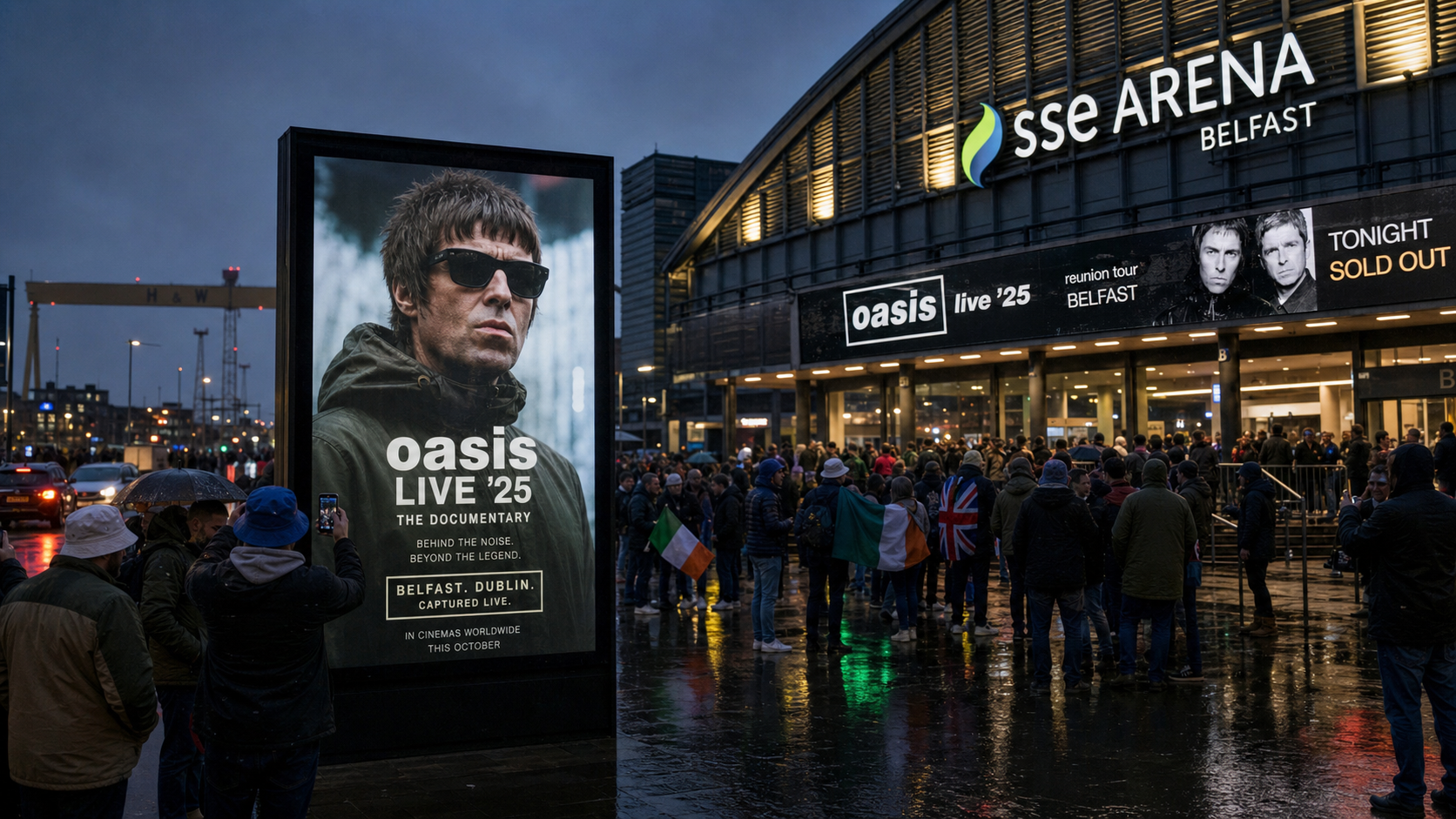
A new documentary about Oasis's landmark reunion tour, featuring footage from the band's sold-out shows in Belfast and Dublin, is generating significant attention ahead of its release, with Liam Gallagher describing the film as an exercise in "exorcising demons" from the band's turbulent history and capturing the emotional reunion of the Gallagher brothers after a fifteen-year split that had seemed permanent.
Background
The announcement of Oasis's reunion in 2025 was one of the most significant moments in British and Irish popular music in years — a development that many fans had long since given up hoping for, given the depth and duration of the feud between Liam and Noel Gallagher that had kept the band apart since their acrimonious split in 2009. The reunion tour, which took in venues across the UK, Ireland, and internationally, was one of the most commercially successful concert tours in history, with demand for tickets far exceeding supply at every venue.
Ireland's relationship with Oasis has always been particularly intense. The band's Irish heritage — their parents are from County Mayo — gave their music a resonance in Ireland that went beyond the usual fan-artist relationship. Their shows in Dublin and Belfast during the reunion tour were among the most emotionally charged of the entire run, with audiences that included people who had seen the band in the 1990s alongside a new generation discovering them for the first time.
The documentary, which Liam Gallagher has been involved in developing, draws on footage from across the reunion tour, including backstage material, interviews, and concert recordings. The Belfast and Dublin shows feature prominently, reflecting both the significance of Ireland to the band's story and the extraordinary atmosphere that characterised those particular nights.
Key Developments
Liam Gallagher's description of the documentary as an exercise in "exorcising demons" is revealing. The fifteen years between the band's split and their reunion were marked by public acrimony between the brothers — interviews, social media posts, and public statements that painted a picture of a relationship that had broken down irreparably. The documentary, by Gallagher's account, addresses that history directly rather than glossing over it.
The Belfast show, held at Boucher Road Playing Fields, drew a capacity crowd of more than 50,000 people — one of the largest concerts ever held in Northern Ireland. The Dublin show at Croke Park was similarly massive, with the stadium's 82,000 capacity filled for two consecutive nights. Both shows were notable for the emotional intensity of the audience response, with fans who had waited fifteen years for the reunion visibly moved by the occasion.
The documentary is expected to include interviews with both Liam and Noel Gallagher, as well as with other band members and key figures from Oasis's history. The involvement of both brothers in the project — given the history of their relationship — is itself a significant development, suggesting a degree of reconciliation that goes beyond the commercial imperatives of the reunion tour.
Why It Matters
Oasis's reunion was a cultural event of a kind that popular music rarely produces — a moment that transcended the usual boundaries of fandom and became a shared experience for a generation. In Ireland, where the band's Mayo heritage gave them a particular claim on affection, the reunion tour was followed with an intensity that reflected both the quality of the music and the emotional weight of the occasion.
The documentary extends that experience, allowing those who attended the shows to relive them and those who could not get tickets to experience something of what they missed. For Irish fans in particular, the inclusion of the Belfast and Dublin footage is significant — a recognition that Ireland was not merely a stop on the tour but a central part of the story.
The broader cultural significance of the Oasis reunion — and of the documentary that captures it — lies in what it says about the enduring power of music to create shared experience across generations. The fans who packed Croke Park and Boucher Road included people in their fifties who had been there in the 1990s and teenagers experiencing Oasis for the first time. That intergenerational connection is one of popular music's most valuable qualities, and the documentary preserves it.
Local Impact
In Belfast, where the Boucher Road show was one of the most significant concerts in the city's recent history, the documentary has been anticipated with considerable excitement. The city's music community — which has produced a remarkable number of significant artists over the past three decades — regards the Oasis show as a landmark event, and the prospect of seeing it captured on film is welcomed.
In Dublin, the Croke Park shows have already entered the mythology of the venue — a stadium that has hosted some of the most significant concerts in Irish history, from U2 to Beyoncé. The Oasis nights are spoken of in the same breath as those landmark events, and the documentary will ensure that they are remembered and celebrated for years to come.
What's Next
The Oasis documentary is expected to be released later in 2026, with a streaming platform deal understood to be in advanced negotiations. A theatrical release in Ireland and the UK is also being considered, which would allow fans to experience the concert footage on the big screen. Liam Gallagher has indicated that he is satisfied with the final cut of the film and that it captures the full emotional arc of the reunion — from the initial announcement through the tour's conclusion.