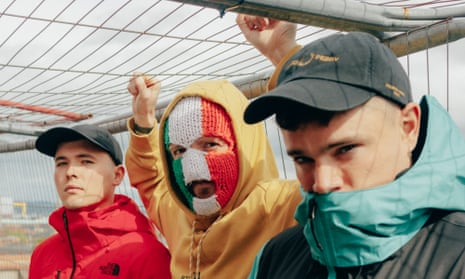
Kneecap’s Móglaí Bap Opens Up on Mother’s Suicide in Powerful Interview
Móglaí Bap, one third of the Belfast-based Irish-language rap group Kneecap, has spoken with heartbreaking honesty about the death of his mother by suicide. In a powerful and deeply moving interview, the musician, whose real name is Naoise Ó Cairealláin, opened up about the devastating impact of his mother’s death and his own struggles with mental health.
Background
Kneecap have become one of the most talked-about and controversial music acts to emerge from Ireland in recent years. Their unique blend of Irish-language rap, dark humour, and politically charged lyrics has won them a huge and devoted following, both at home and abroad. The group, which also includes Mo Chara and DJ Próvaí, are known for their wild live shows and their unapologetic celebration of Belfast’s working-class culture. However, behind the bravado and the controversy, there is a deep and serious purpose to their music, which often tackles themes of identity, community, and social justice.
The group’s profile has exploded in the past year, following the release of their critically acclaimed debut album and a sell-out tour of the UK and Ireland. They have also been the subject of a feature film, which premiered at the Sundance Film Festival to rave reviews. The film, which is a semi-fictionalised account of the group’s origins, has been praised for its raw energy and its honest portrayal of life in post-conflict Belfast.
Key Developments
In an interview with The Irish Times, Móglaí Bap spoke for the first time about the death of his mother, who took her own life when he was just 18 years old. He described the experience as “the worst thing that ever happened to me” and spoke of the profound and lasting impact it has had on his life. He revealed that he has struggled with his own mental health in the years since his mother’s death, and that he has found solace and a sense of purpose in his music.
The interview has been widely praised for its honesty and its bravery. Many people have taken to social media to thank Móglaí Bap for speaking out and for helping to break the stigma that still surrounds suicide and mental health in Ireland. The interview has also shone a light on the high rates of suicide in Northern Ireland, which are the highest in the UK. The issue is particularly acute among young men, and there have been calls for more to be done to provide support and resources for those who are struggling.
Why It Matters
Móglaí Bap’s decision to speak so openly about his personal tragedy is a hugely significant moment. As a high-profile and influential figure, particularly among young people, his words have the power to reach a wide audience and to make a real difference. By sharing his story, he is helping to create a more open and honest conversation about mental health and suicide, and he is sending a powerful message of hope to those who may be struggling in silence. His bravery is a testament to his character and to the strength of the community that has supported him.
Local Impact
The issue of mental health and suicide is one that touches every community in Northern Ireland. The legacy of the Troubles, combined with high levels of poverty and social deprivation, has created a perfect storm of factors that have contributed to a major mental health crisis. Móglaí Bap’s interview will resonate deeply with many people in Northern Ireland who have been affected by suicide. His words will provide comfort and solidarity to those who have lost loved ones, and they will encourage those who are struggling to seek help. The interview is a powerful reminder of the urgent need for more investment in mental health services in Northern Ireland.
What's Next
Kneecap are set to continue their meteoric rise in the coming months, with a number of high-profile festival appearances and a tour of the United States planned for the summer. The group are also working on their second album, which is expected to be released next year. Móglaí Bap has said that he hopes to use his platform to continue to raise awareness of mental health issues and to support those who are struggling. His bravery and his honesty are an inspiration, and his voice is one that needs to be heard.
Attribution: The Irish Times, National Institute of Mental Health