Killarney July Festival Concludes as Irish Racing Turns Attention to Curragh Oaks Weekend
The Killarney July Festival has concluded its popular summer meeting on Thursday, bringing to a close one of the most beloved fixtures on the Irish flat racing calendar. Attention now turns to the Curragh Oaks Festival this weekend, which will provide the next major test for the leading fillies in training in Ireland. Down Royal racecourse in County Down also hosted a card on Thursday, maintaining Northern Ireland's presence on the racing calendar during what has been a busy mid-summer period. The week's racing has taken place against a backdrop of growing concern about the financial sustainability of the Irish racing industry.
Background
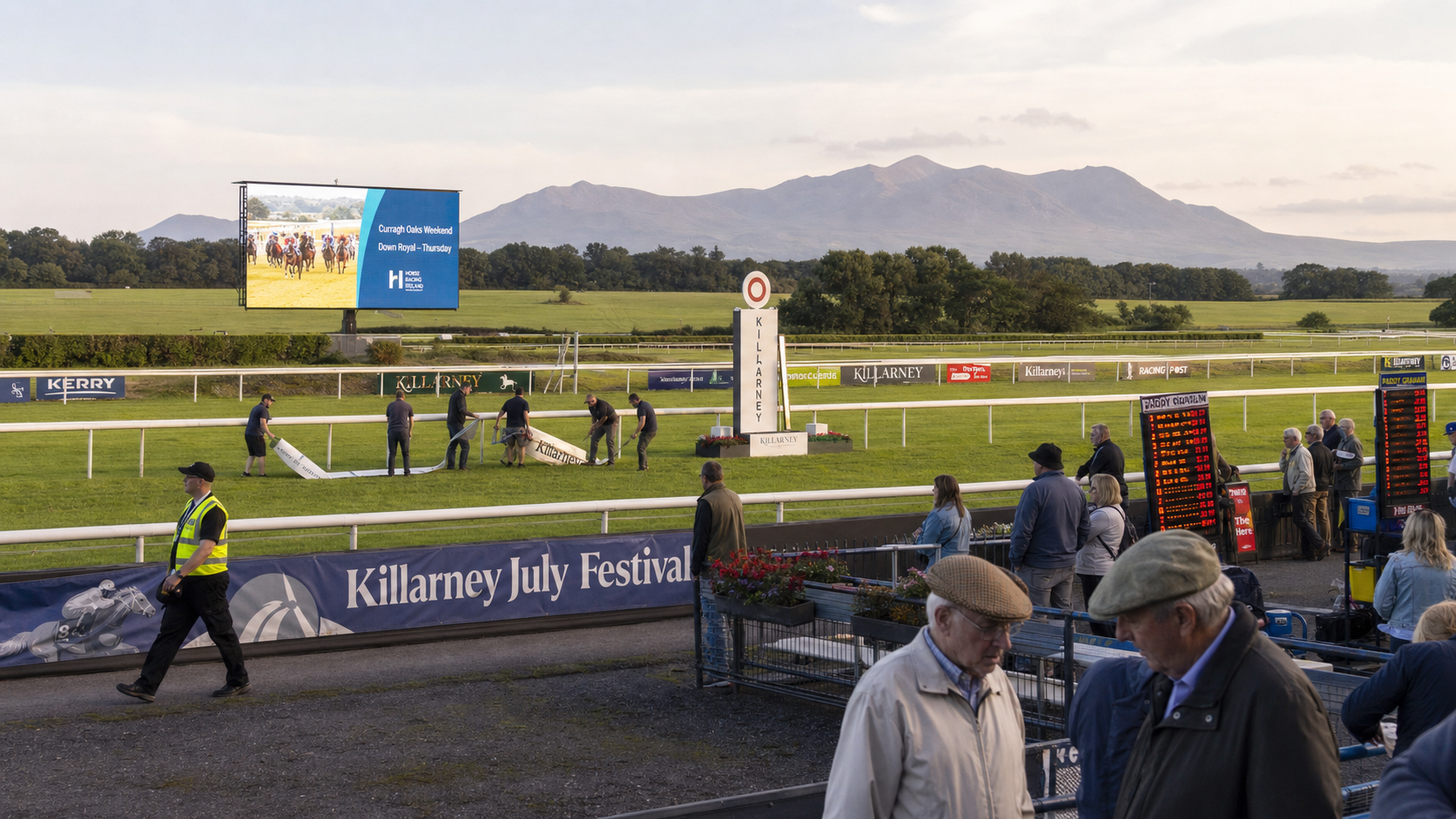
The Killarney July Festival is one of the most atmospheric meetings on the Irish racing calendar, combining competitive racing with the spectacular scenery of the Kerry mountains and the lakes that give the town its name. The festival, which typically runs over four days in mid-July, attracts large crowds from across Munster and beyond, and is as much a social occasion as a sporting one. The racecourse, which sits in a natural amphitheatre on the edge of the town, is one of the most picturesque in Ireland, and the combination of good racing and a relaxed, holiday atmosphere makes it a favourite with both regular racegoers and casual visitors.
Down Royal racecourse in County Down is the oldest racecourse in Ireland, with a history stretching back to the seventeenth century. The course, which is located near Lisburn in County Down, hosts both flat and National Hunt racing throughout the year and is an important part of the racing landscape in Northern Ireland. Its Thursday card this week provided an opportunity for horses from both the North and the South to compete in a competitive but accessible environment.
The Curragh Oaks Festival, which takes place this weekend at the Curragh racecourse in County Kildare, is one of the highlights of the Irish flat racing season. The Curragh, which is the home of Irish flat racing, hosts the Irish Classics — the 1,000 Guineas, 2,000 Guineas, Derby, Oaks, and St Leger — and the Oaks Festival is one of the most prestigious meetings of the summer. The Irish Oaks, a Group One race for three-year-old fillies over a mile and a half, is the centrepiece of the weekend.
Key Developments
The Killarney July Festival concluded on Thursday with a competitive card that drew strong attendance despite the warm weather. The meeting featured a mix of flat and National Hunt racing, reflecting the unique character of the Killarney fixture, which is one of the few summer meetings in Ireland to include jumps racing. The results from the festival will inform the entries for the Curragh Oaks Festival and other upcoming meetings, with trainers using the Killarney card to assess the form and fitness of their horses ahead of the autumn campaign.
Down Royal's Thursday card attracted a solid field, with several horses from leading Irish stables making the journey north to compete. The meeting provided an important opportunity for Northern Ireland's racing community to showcase the quality of the sport in the region, and the racecourse management has been working to develop the fixture list and attract higher-quality horses to Down Royal in recent years.
The broader context for Irish racing this week has been shaped by Horse Racing Ireland's warning that current funding levels are unsustainable beyond 2026. The governing body has been in discussions with the government about the level of state support for the industry, which is a significant employer and economic contributor in rural Ireland. The outcome of these discussions will have important implications for the future of racing at courses like Killarney and Down Royal, which depend on HRI funding to maintain their facilities and prize money levels.
Why It Matters
The Killarney July Festival and the Curragh Oaks Festival are important not just as sporting events but as economic drivers for their respective regions. The Killarney festival generates significant revenue for the town's hotels, restaurants, and retail businesses, and is one of the key events in Kerry's summer tourism calendar. The Curragh Oaks Festival similarly generates substantial economic activity in County Kildare and the wider Dublin area. The financial sustainability of Irish racing is therefore not just a matter of concern for the sport itself but for the rural communities that depend on it. Horse Racing Ireland's warning about funding levels is a reminder that the industry's contribution to the Irish economy — estimated at over €1.8 billion annually — is not guaranteed and requires ongoing investment and support from the state.
Local Impact
In Kerry, the conclusion of the Killarney July Festival marks the end of one of the county's most popular summer events. The festival's economic impact on Killarney town is significant, with the racecourse attracting visitors who also spend money in the town's hotels, restaurants, and shops. In County Down, Down Royal's Thursday card provided an important boost for the local racing community, which has been working to develop the sport's profile in Northern Ireland. The racecourse's management has been in discussions with Horse Racing Ireland about the future of the Down Royal fixture list, and the outcome of those discussions will be important for the long-term sustainability of racing in the North.
What's Next
The Curragh Oaks Festival takes place this weekend, with the Irish Oaks on Saturday as the centrepiece. The race is expected to attract a strong field of three-year-old fillies, with several horses from the leading Ballydoyle and Dermot Weld stables among the likely runners. The Curragh will also host a supporting card of Group and Listed races, providing a full day of high-quality flat racing. Horse Racing Ireland will publish the full fixture list for the remainder of the 2026 season in the coming weeks, with the autumn schedule expected to include several major international meetings at Leopardstown and the Curragh.