John Banville, Ian Rankin and Sara Baume Headline West Cork Literary Festival in Bantry
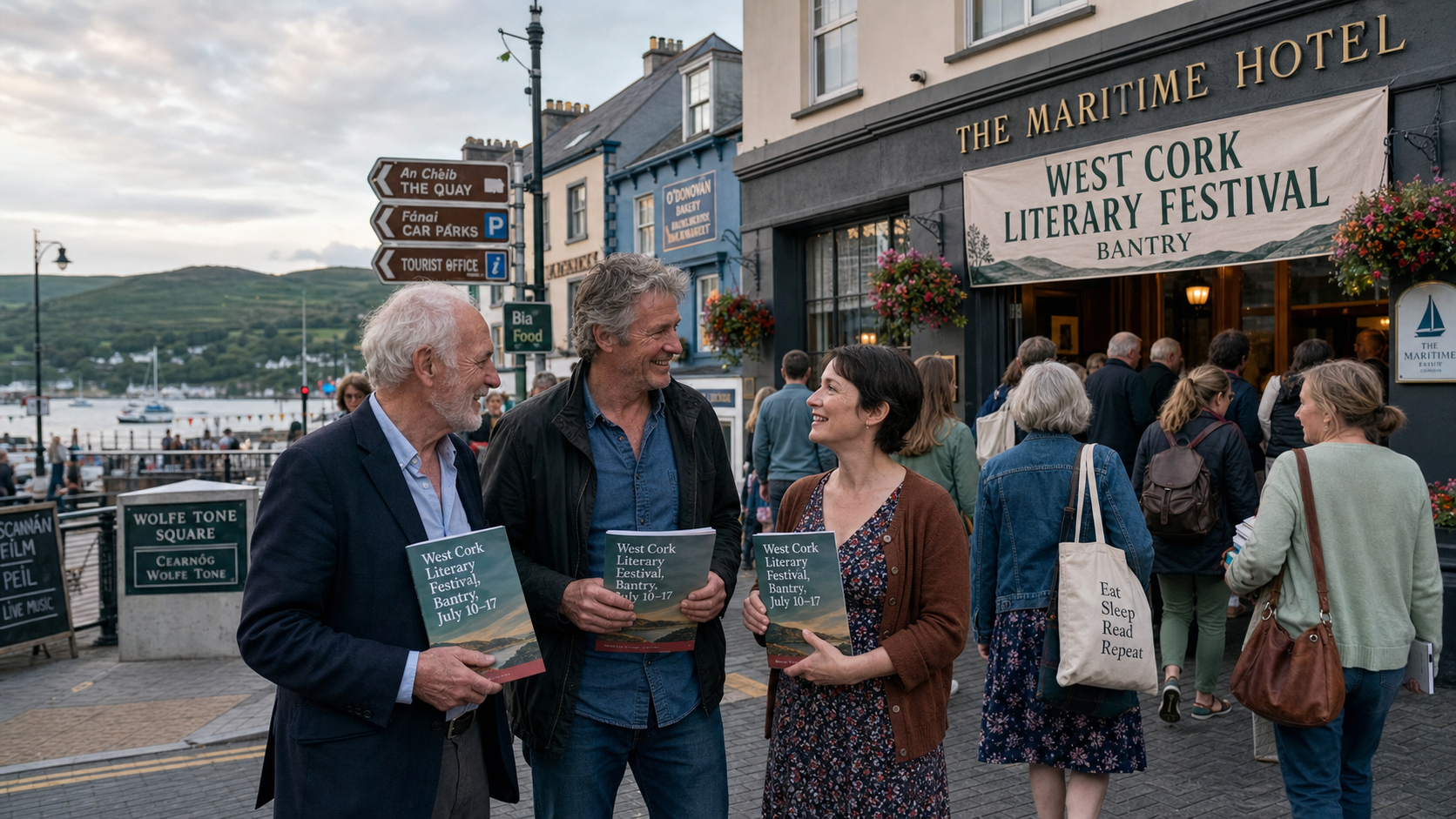
The West Cork Literary Festival is in full swing in the scenic harbour town of Bantry, with a programme that has drawn some of the most celebrated names in contemporary literature to the south-west of Ireland for a week of readings, conversations, and workshops that has established the festival as one of the most important events in the Irish literary calendar and as a genuine destination for book lovers from across the island and beyond.
Background
The West Cork Literary Festival was founded in 1999 and has grown steadily over the past quarter century to become one of Ireland's most respected and beloved literary events. Held annually in Bantry, a market town on the shores of Bantry Bay in County Cork, the festival draws on the extraordinary literary heritage of the west Cork region — a landscape that has inspired generations of writers, from Edna O'Brien and John Banville to contemporary voices like Sara Baume and Donal Ryan — while also reaching out to the wider world of international literature.
The festival's format combines public events — author readings, panel discussions, and in-conversation interviews — with a programme of writing workshops that provide aspiring writers with the opportunity to develop their craft under the guidance of established authors. This combination of celebration and education has been central to the festival's identity from its earliest days, and it has helped to build a loyal and engaged audience that returns year after year.
Bantry itself is an ideal setting for a literary festival. The town's natural beauty — surrounded by mountains, overlooking the bay, with the ruins of Bantry House providing a dramatic backdrop — creates an atmosphere that is conducive to reflection and creativity. The town's restaurants, pubs, and accommodation have developed a strong reputation for hospitality, and the festival has become an important part of the local economy, drawing visitors from across Ireland and from abroad during what is typically a busy tourist season.
Key Developments
The 2026 West Cork Literary Festival, running from July 10-17, has attracted a headline line-up that reflects the breadth and ambition of the event's programming. John Banville, the Dublin-born novelist who won the Booker Prize in 2005 for The Sea and who has continued to produce acclaimed work under both his own name and the pseudonym Benjamin Black, is one of the festival's most anticipated guests. Banville's appearance at the festival — in conversation with a fellow writer about his most recent novel and about his long career — is expected to be one of the highlights of the week.
Ian Rankin, the Scottish crime fiction writer best known for his Inspector Rebus series, is another major draw. Rankin has a strong following in Ireland, and his appearance at the West Cork Literary Festival reflects the event's commitment to celebrating the best of international crime fiction alongside literary fiction and poetry. Sara Baume, the Cork-born novelist and visual artist whose books — including Spill Simmer Falter Wither and A Line Made by Walking — have won widespread critical acclaim, is one of several Irish writers appearing at the festival this year.
The writing workshops, which run throughout the week, are fully subscribed, with participants from across Ireland and from several other countries taking part in sessions covering fiction, poetry, memoir, and creative non-fiction. Several of the workshop leaders are themselves published authors who have benefited from the festival's support at earlier stages of their careers, reflecting the festival's role in nurturing new literary talent.
Why It Matters
The West Cork Literary Festival matters because it demonstrates that literary culture in Ireland is not confined to Dublin or to the major urban centres. Bantry is a town of fewer than four thousand people, yet for one week each July it becomes a centre of literary life that attracts some of the most celebrated writers in the world. This is a testament to the organisational skill and vision of the festival's team, but it is also a reflection of the deep literary culture that exists in rural Ireland — a culture that has produced writers of international stature from every county and every background.
The festival also plays an important role in the economic and cultural life of west Cork. The influx of visitors during festival week generates significant revenue for local businesses and helps to sustain the hospitality and tourism infrastructure that is essential to the region's economy. More broadly, the festival's reputation as a world-class literary event enhances the profile of west Cork as a cultural destination and contributes to the sense of pride and identity that is so important to communities in rural Ireland.
Local Impact
In Bantry, the festival week is one of the most important events of the year. Hotels, guesthouses, and bed and breakfasts in the town and the surrounding area are fully booked, and restaurants and pubs are operating at capacity throughout the week. Local businesses have decorated their windows with literary themes, and the town has a festive atmosphere that is quite different from its normal character. The festival's outdoor events — including readings in the town square and on the pier — have been particularly popular during the current heatwave, with large crowds gathering to hear authors speak in the warm evening air.
What's Next
The West Cork Literary Festival continues until July 17, with several major events still to come, including a closing gala that will celebrate the week's highlights and announce the winners of the festival's writing competitions. The festival organisers have already begun planning for the 2027 edition, with early discussions underway about the programme and the headline guests. The festival's writing workshops have a waiting list for next year, reflecting the demand for high-quality creative writing education in a supportive and inspiring environment. Several of this year's workshop participants have indicated they are planning to return in 2027, either as participants or, in some cases, as workshop leaders.