Jerome Powell Steps Down as Fed Chair May 15, Stays on Board to Guard Independence as Warsh Takes Over
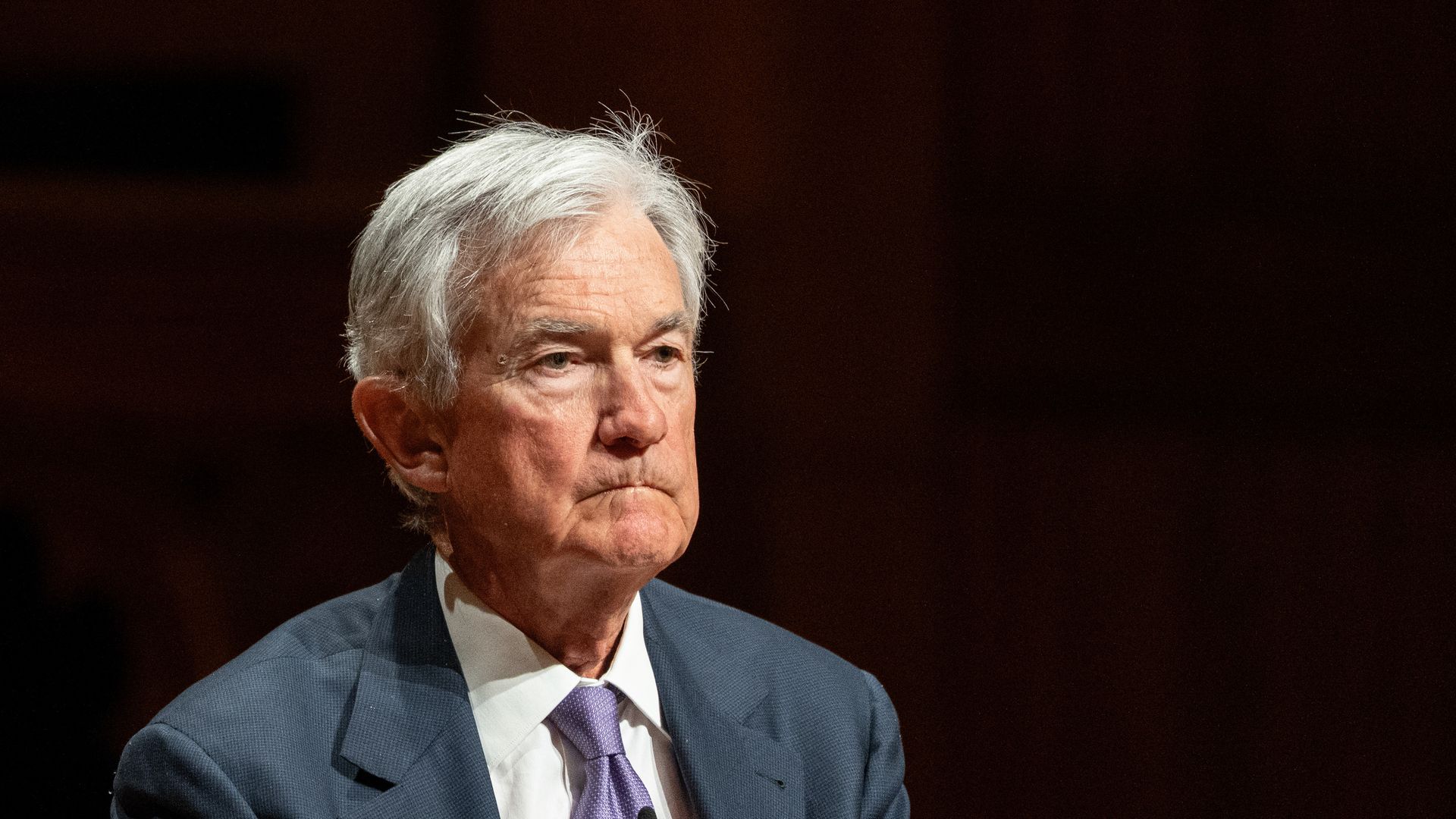
Jerome Powell will hand over the Federal Reserve chairmanship to Kevin Warsh on May 15, 2026, but in an extraordinary move, he announced he will remain on the Fed's Board of Governors — a decision he said was forced by what he described as unprecedented legal attacks from the Trump administration designed to compromise the central bank's independence. The FOMC's final meeting under Powell's leadership produced four dissenting votes, the most in 34 years, signaling deep internal fractures at the institution Warsh is inheriting.
Background
Jerome Powell has served as Federal Reserve Chair since February 2018, appointed by President Trump in his first term and reappointed by President Biden in 2022. His tenure spanned the COVID-19 pandemic, the fastest inflation surge since the 1980s, and an aggressive rate-hiking cycle that brought the federal funds rate from near zero to a peak of 5.25-5.5 percent before the current easing cycle began. Throughout his tenure, Powell repeatedly clashed with Trump, who publicly demanded rate cuts and at various points threatened to fire him — a legally contested action that the Supreme Court has not definitively resolved.
Kevin Warsh, Trump's nominee to succeed Powell, served on the Fed's Board of Governors from 2006 to 2011 and is viewed as hawkish on inflation. He has publicly advocated for a structural overhaul of the central bank and has been critical of what he calls the Fed's excessive deference to financial markets.
Key Developments
At the April 29 FOMC meeting, the committee voted to hold benchmark interest rates steady in the 3.5 to 3.75 percent range for the third consecutive meeting. The decision came with four dissenting votes — the most since 1992. Governor Stephen Miran dissented in favor of a rate cut, while Cleveland Fed President Beth Hammack, Minneapolis Fed President Neel Kashkari, and Dallas Fed President Lorie Logan dissented against the statement's easing bias, arguing that persistent inflation driven by energy costs and tariffs made it premature to signal future cuts.
Powell's announcement that he would remain on the board after stepping down as chair was without modern precedent. He stated that legal actions taken by the Trump administration had left him no choice but to stay, framing his continued presence as a bulwark against political interference in monetary policy. The Senate Banking Committee advanced Warsh's nomination 13-11 on a party-line vote, and full Senate confirmation is expected before May 15. The CME FedWatch tool shows an 87 percent probability that rates will remain unchanged through the end of 2026.
Why Americans Should Care
The Federal Reserve's interest rate decisions directly determine the cost of mortgages, car loans, credit card debt, and small business financing for every American household. With the 30-year fixed mortgage rate currently hovering near 7.1 percent, millions of prospective homebuyers in high-cost markets like California, New York, and the Pacific Northwest remain priced out of ownership. In the Midwest and Sun Belt, where housing markets had shown signs of cooling, the Fed's hold-steady posture means relief remains distant. Small business owners in states like Ohio, Michigan, and Pennsylvania — who rely on variable-rate credit lines — face continued pressure. The transition to Warsh, who has signaled a more hawkish stance, raises the prospect that rate cuts could be delayed further into 2027, extending the squeeze on borrowers across every income bracket.
Why It Matters
The Powell-to-Warsh transition is the most politically charged leadership change at the Federal Reserve since the Carter administration replaced Arthur Burns with Paul Volcker in 1979 — a move that ultimately produced the painful but necessary recession that broke the back of 1970s inflation. The parallel is instructive but imperfect: Volcker was given political cover to act aggressively; Warsh inherits a Fed already under political siege. The four dissenting votes at the April meeting reveal an institution divided not just on policy but on institutional identity. Internationally, the spectacle of a central bank chair citing legal attacks as the reason for staying on the board has rattled currency markets and raised questions among G7 finance ministers about the durability of Fed independence — a cornerstone of global financial stability since the 1950s. The European Central Bank and Bank of England have both issued statements reaffirming their own independence, implicitly distancing themselves from Washington's turbulence.
What's Next
Warsh's full Senate confirmation vote is expected the week of May 11. His first FOMC meeting as chair is scheduled for June 17-18, and markets will scrutinize his opening statement for signals on the rate path. Powell's continued presence on the board creates an unusual dynamic — a former chair with institutional knowledge and a stated mandate to protect independence sitting alongside the new chair he was replaced by. Legal scholars are already debating whether the Trump administration's actions against Powell constitute an unconstitutional interference with Fed independence, a question that could reach the Supreme Court.