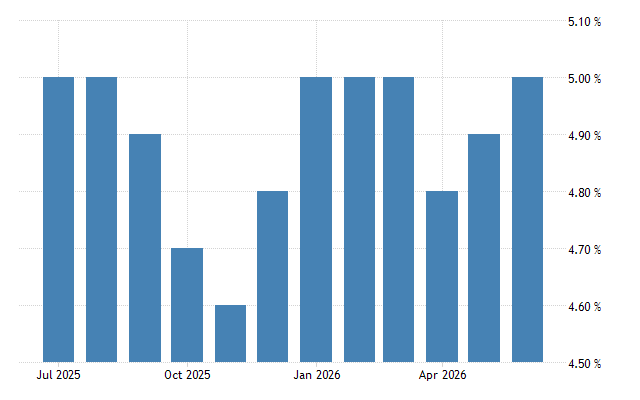
A Cooling Labour Market
Ireland's unemployment rate has risen to 5 per cent, according to the latest figures from the Central Statistics Office, as the technology sector continues to shed jobs in the face of rapid advances in artificial intelligence and a broader recalibration of the global tech industry. The increase, while modest in historical terms, represents a significant shift from the near-record low unemployment rates that Ireland enjoyed in the immediate post-pandemic period and has prompted concern among economists and policymakers about the outlook for the labour market.
The rise in unemployment is being driven primarily by redundancies in the technology sector, where a number of major multinational companies have announced significant job cuts in recent months. The redundancies reflect a combination of factors, including the impact of AI on the demand for certain types of technology workers, cost-cutting pressures in the global tech industry, and a broader reassessment of workforce requirements in the wake of the rapid expansion that characterised the sector during the pandemic years.
The AI Factor
Artificial intelligence is playing an increasingly significant role in the restructuring of the technology sector, with companies using AI tools to automate tasks that were previously performed by human workers. This is having a particular impact on roles in software development, data analysis, customer support, and content creation, where AI systems are now capable of performing many of the functions that previously required significant human input.
The impact of AI on employment is a complex and contested issue, with some economists arguing that the technology will ultimately create more jobs than it destroys by enabling new industries and increasing productivity. However, in the short term, the transition is causing significant disruption for workers in affected sectors, and there is a growing recognition that Ireland needs to invest in reskilling and upskilling programmes to help workers adapt to the changing labour market.
Government Response
The government has acknowledged the challenges posed by the rise in unemployment and has outlined a range of measures designed to support affected workers and to promote job creation in new and emerging sectors. These include increased funding for retraining programmes, enhanced supports for workers who have been made redundant, and a range of incentives for companies that are creating jobs in areas such as clean energy, life sciences, and advanced manufacturing.
The IDA Ireland, which is responsible for attracting foreign direct investment to Ireland, has reported a strong pipeline of investment projects that are expected to create thousands of new jobs in the coming months. However, there is a recognition that the jobs being created in new sectors may not always be accessible to workers who have been displaced from the technology sector, and that targeted support will be needed to help these workers make the transition.
The Broader Economic Context
Despite the rise in unemployment, Ireland's overall economic performance remains strong, with GDP growth continuing and the public finances in a healthy position. The government's budget surplus provides a degree of fiscal flexibility that allows for investment in measures to support affected workers and to promote economic resilience. However, economists have cautioned that the rise in unemployment is a warning sign that should not be ignored, and that proactive policy action will be needed to prevent a more significant deterioration in the labour market.
The coming months will be crucial in determining whether the rise in unemployment is a temporary blip or the beginning of a more sustained trend. The performance of the global technology sector, the pace of AI adoption, and the success of government measures to support affected workers will all be key factors in shaping the outlook. For the workers who have lost their jobs, the priority is finding new employment as quickly as possible, and the government and its agencies will need to work hard to ensure that the support they need is available.