Irish MEP Rallies Politicians to Attend Trial of Pro-Palestine Dubliner Detained in Germany Over Elbit Protest
Irish MEP Lynn Boylan has rallied a cross-party group of Irish politicians to attend the trial of Dubliner Daniel Tatlow-Devally, who has been held in pre-trial detention in Germany since September 2025 as part of the Ulm 5 group charged with causing 1 million euro in damage to an Israeli arms manufacturer's facility in protest at the Gaza conflict — a case that has raised serious concerns about conditions of detention and the fairness of the trial process.
Background
Daniel Tatlow-Devally is a Dubliner based in Berlin who was arrested in September 2025 alongside four other activists — collectively known as the Ulm 5 — following a protest at an Elbit Systems facility in Ulm, Germany. Elbit Systems is an Israeli defence company that manufactures weapons systems, including drones and surveillance technology, that have been used in Gaza. The activists allegedly trespassed on the site, destroyed equipment, and smashed windows, causing approximately 1 million euro in damage. They claimed responsibility for the action online, stating it was intended to highlight Germany's support for Israel and to disrupt the supply of weapons used in the conflict. The case has attracted significant attention in Ireland, where the Gaza conflict has generated intense public debate and where there is a strong tradition of solidarity with the Palestinian cause. Tatlow-Devally's detention — which has involved conditions that his supporters describe as effectively solitary confinement, with 23 hours a day in a 5x2 metre cell — has been the subject of concern from Irish politicians, human rights organisations, and members of the Irish community in Germany. The charges against the Ulm 5 include trespassing, destruction of property, and membership in a criminal organisation under section 129 of the German criminal code. The criminal organisation charge is the most serious and is the basis on which German authorities have maintained pre-trial detention, arguing that there is a risk of flight that cannot be mitigated by bail. The trial began in April 2026 and is expected to continue into 2027.
Key Developments
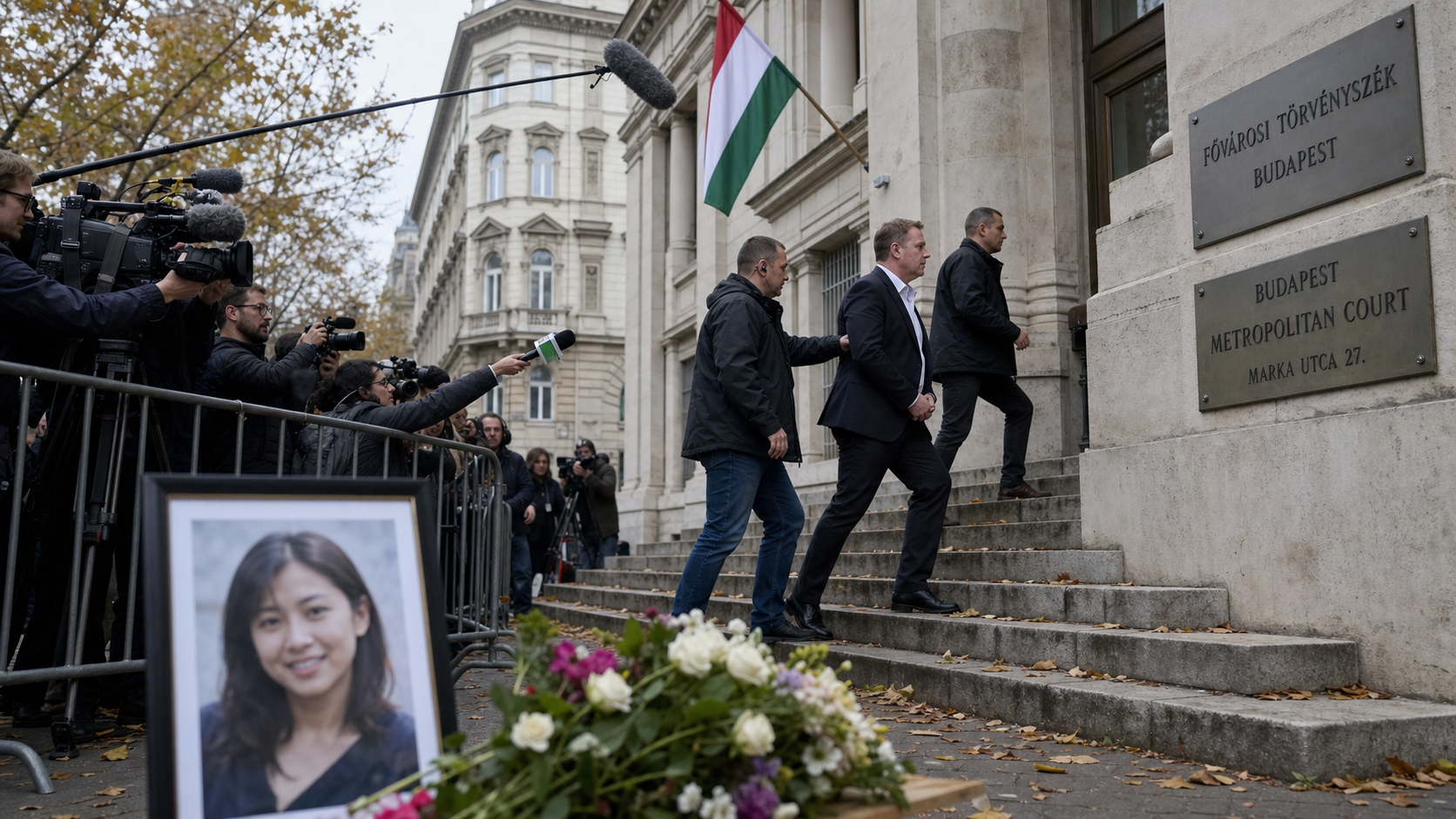
MEP Lynn Boylan, a Sinn Fein MEP for Ireland, has been one of the most vocal advocates for Tatlow-Devally and has played a central role in organising Irish political engagement with the case. In July 2026, she led a seven-member cross-party delegation of Irish politicians to Stuttgart to monitor the trial and advocate for the rights of the Irish defendant. The delegation included TDs Mairead Farrell, Richard Boyd Barrett, Ruth Coppinger, and Duncan Smith, as well as Fine Gael TD Barry Ward and Social Democrats Senator Patricia Stephenson. Members of the delegation visited Tatlow-Devally in prison and expressed shock at his living conditions and the limited visitation rights. They raised concerns about the use of a glass barrier in the courtroom, which lawyers argue hinders the defendants' ability to communicate with their legal teams, and about the lack of an official verbatim transcript or recording of the proceedings. The delegation urged the Irish government to send official observers to the trial and to raise the matter with German Chancellor Friedrich Merz during diplomatic visits. Boylan has continued to press the case in the European Parliament, raising it in committee hearings and in bilateral meetings with German MEPs.
Why It Matters
The Tatlow-Devally case raises important questions about the limits of political protest, the rights of the accused in pre-trial detention, and the consistency with which European states apply human rights standards to activists who challenge state and corporate power. The criminal organisation charge, which is typically used against organised crime groups, has been applied to a group of political activists — a use of the law that critics argue is disproportionate and that risks criminalising legitimate political dissent. The case also reflects the broader tension in European politics between the right to protest and the interests of the defence industry. Germany, as one of Israel's largest arms suppliers, has a particular stake in the outcome of the Ulm 5 trial, and critics have argued that the severity of the charges and the conditions of detention reflect political as well as legal considerations. For Ireland, the case is a reminder that the country's strong public sentiment on the Gaza conflict has real consequences for Irish citizens who act on that sentiment abroad.
Local Impact
In Dublin, where Tatlow-Devally grew up, the case has been followed closely by family, friends, and the broader activist community. His family have spoken publicly about the conditions of his detention and have called on the Irish government to do more to secure his release or at least to improve his conditions. The Irish community in Berlin, which is substantial, has organised solidarity events and has been in regular contact with Tatlow-Devally's legal team. The Department of Foreign Affairs has confirmed that the Irish embassy in Berlin is monitoring the case and is in contact with Tatlow-Devally's family and legal representatives.
What's Next
The trial of the Ulm 5 is expected to continue into 2027. MEP Boylan has confirmed that she will continue to monitor the case and to advocate for Tatlow-Devally's rights in the European Parliament. The Irish government has been asked to send official observers to the trial, and the Department of Foreign Affairs is considering the request. The Irish embassy in Berlin will continue to monitor the case and to provide consular support to Tatlow-Devally and his family. A further delegation of Irish politicians is expected to travel to Stuttgart to observe the trial in the coming months.