Irish Exporters Pursue Aggressive Global Expansion as 97% Target New Markets in Next 12 Months
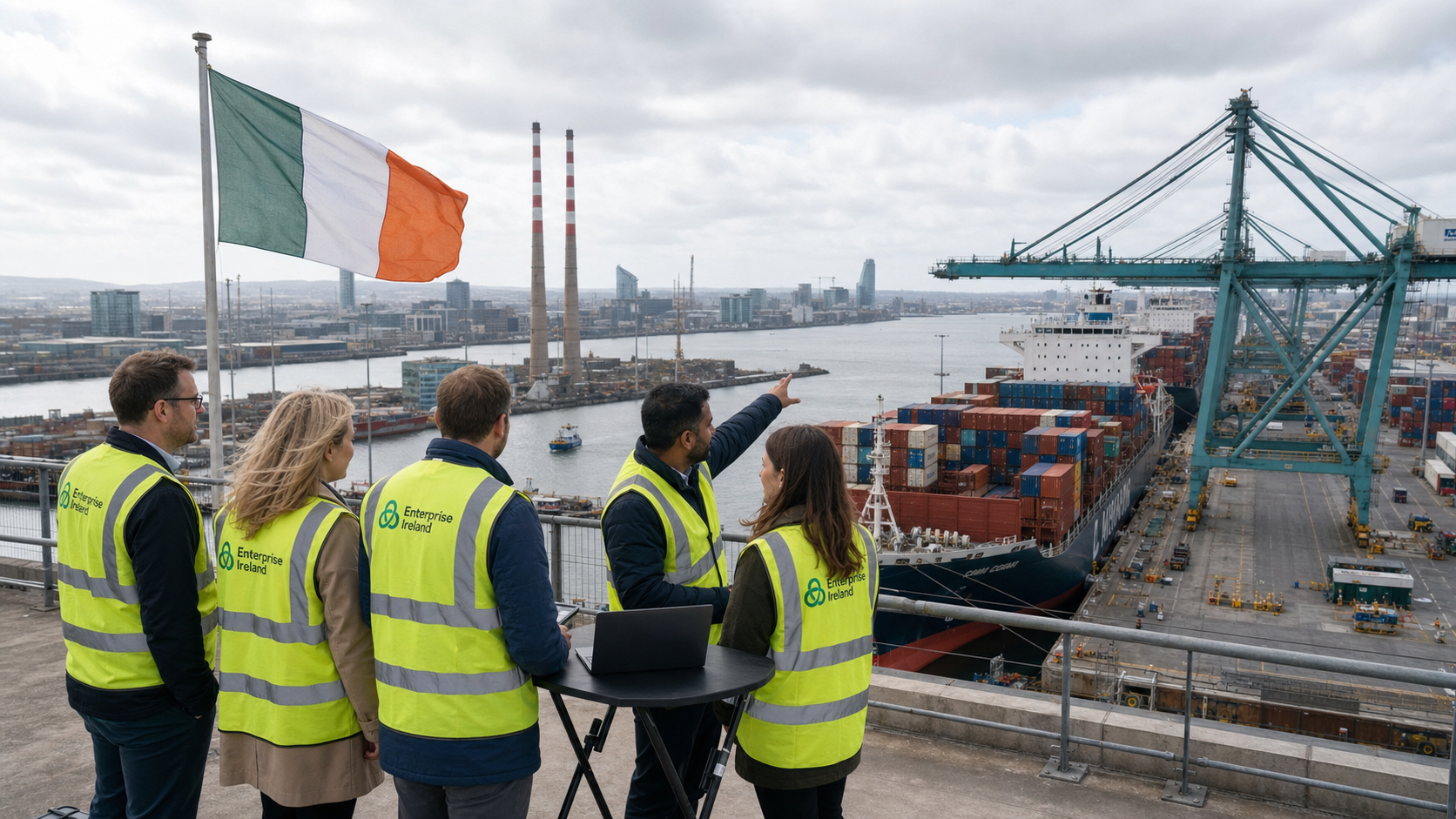
An overwhelming 97% of Irish exporters plan to enter new international markets within the next twelve months, according to a new Enterprise Ireland survey that reveals an Irish business community determined to diversify its global footprint, reduce dependence on traditional markets, and leverage digital transformation to scale operations efficiently — a picture of commercial ambition that stands in contrast to the domestic challenges of housing, infrastructure, and public service delivery that dominate the political agenda.
Background
Ireland's export-led economy has been one of the defining features of the country's economic model since the 1960s, when the shift from protectionism to foreign direct investment and export promotion began to transform the country's economic prospects. Today, Ireland is one of the most open economies in the world, with exports of goods and services accounting for more than 100% of GDP — a figure that reflects both the genuine scale of Irish export activity and the distorting effect of the multinational sector on national accounts.
Enterprise Ireland, the state agency responsible for supporting Irish-owned businesses in international markets, has been a central pillar of this export-led model. The agency provides financial support, market intelligence, and strategic guidance to Irish companies seeking to grow their international sales, and its annual surveys of exporter sentiment provide a valuable window into the health and ambitions of the Irish business community.
The geopolitical landscape has become increasingly complex in recent years, with trade tensions between the United States and China, the ongoing impact of Brexit on UK-Ireland trade, and the disruption caused by the war in Ukraine all creating new challenges and opportunities for Irish exporters. In this environment, the drive to diversify into new markets is both a strategic imperative and a practical response to the risks of over-dependence on any single market or trading relationship.
Key Developments
The Enterprise Ireland survey, published in the week of 24 June 2026, found that 97% of Irish exporters plan to enter new international markets within the next twelve months — a figure that reflects the extraordinary ambition and confidence of the Irish business community. The survey identified a range of target markets, including the United States, Germany, France, the Gulf states, and the Asia-Pacific region, with the specific priorities varying by sector and company size.
Digital transformation is identified as a key enabler of this international expansion. Nearly 90% of Irish exporters are integrating new digital tools into their operations, using them to improve efficiency, enhance customer service, and develop new products and services. Many companies are also using virtual expansion strategies — leveraging cloud infrastructure and digital platforms to establish a presence in new markets without the cost and complexity of physical offices or manufacturing facilities.
The sectors leading Ireland's high-value export growth include MedTech, semiconductors, and software — areas where Irish companies have developed genuine world-class expertise and where the barriers to international expansion are lower than in more capital-intensive industries. These sectors are also among the most resilient to geopolitical disruption, as their products and services are in demand across a wide range of markets and are less susceptible to tariff barriers than physical goods.
Why It Matters
The ambition of Irish exporters to expand into new international markets is a source of genuine economic strength for Ireland. Export growth drives employment, generates tax revenue, and creates the kind of high-value economic activity that supports the public services and infrastructure investment that Irish society needs. The fact that Irish companies are actively seeking to diversify their market exposure — rather than relying on a small number of established relationships — is a sign of commercial maturity and strategic sophistication.
The digital transformation dimension of the survey is particularly significant. Ireland has positioned itself as a hub for the global technology industry, and the integration of digital tools into the operations of Irish exporters reflects the broader influence of the tech sector on the Irish business community. Companies that can leverage digital capabilities to scale internationally without proportionate increases in cost have a significant competitive advantage in global markets.
The survey also has implications for Ireland's economic resilience. An export base that is diversified across multiple markets and sectors is better placed to withstand the kind of external shocks — trade disputes, geopolitical crises, market downturns — that have disrupted the global economy in recent years. The drive to enter new markets is, in part, a response to the lessons of the past decade about the risks of over-dependence on any single market or trading relationship.
Local Impact
The ambitions of Irish exporters have direct implications for employment and economic activity across Ireland. Enterprise Ireland-supported companies employ more than 220,000 people in Ireland, with significant concentrations in Dublin, Cork, Galway, and Limerick but also in smaller towns and rural areas where manufacturing and agri-food companies are major employers. The success of these companies in international markets is directly linked to the quality of employment and economic opportunity available in communities across the country.
The digital transformation of Irish exporters also has implications for the skills required in the Irish workforce. Companies that are integrating new digital tools into their operations need employees with the technical skills to use these tools effectively, creating demand for graduates in computer science, data analytics, and engineering. This demand is a driver of investment in STEM education at all levels of the Irish education system.
What's Next
Enterprise Ireland will use the survey findings to shape its support programmes for Irish exporters in the second half of 2026, with a particular focus on helping companies to identify and enter new markets in the Asia-Pacific region and the Gulf states. The agency is also developing new supports for companies seeking to leverage digital tools for international expansion, including a new digital export accelerator programme expected to launch in autumn 2026. The government's trade policy review, which is examining Ireland's approach to international trade in the post-Brexit, post-pandemic environment, is expected to draw on the survey's findings.