Irish Community in Nepal Fundraises as Flood Death Toll Passes 900 and Two Citizens Remain Unaccounted For
The death toll from the catastrophic flooding that has devastated Nepal and Tibet has surpassed 900, with rescue teams working through the night to reach hundreds of people believed to be trapped inside blocked hydropower project tunnels, as Ireland's Nepalese community launches an urgent fundraising campaign for victims and the Department of Foreign Affairs continues to work to account for two Irish citizens who were in the affected region when the disaster struck.
Background
The flooding that has struck Nepal and Tibet in recent days has been described by relief agencies as among the worst natural disasters to hit the Himalayan region in living memory. The disaster was triggered by a combination of exceptionally heavy monsoon rainfall and the failure of glacial lake outburst floods — a phenomenon that is becoming more frequent and more severe as climate change accelerates the melting of Himalayan glaciers. The resulting floods swept through river valleys with devastating force, destroying bridges, roads, and entire communities in their path.
Nepal is one of the world's most disaster-prone countries, situated in a seismically active zone and subject to extreme weather events that are being intensified by climate change. The country has limited resources for disaster response and recovery, and the scale of the current crisis has overwhelmed local and national emergency services. International aid organisations, including the Red Cross, Médecins Sans Frontières, and UNICEF, have mobilised significant resources in response to the disaster, but the logistical challenges of reaching affected communities in remote mountain areas are enormous.
Ireland has a small but active Nepalese community, concentrated primarily in Dublin and other major cities, many of whom have family members in the affected regions. The community has been following the disaster with anguish and has moved quickly to organise fundraising efforts to support relief operations on the ground.
Key Developments
As of Monday morning, the confirmed death toll from the flooding stands at more than 900, with the number expected to rise significantly as rescue teams reach areas that have been cut off by the destruction of roads and bridges. Hundreds of people are believed to be trapped inside tunnels at a hydropower project that was blocked by floodwaters, and rescue teams have been working around the clock to reach them. The scale of the missing persons crisis — with more than 2,400 people unaccounted for — suggests that the final death toll could be significantly higher than current figures indicate.
The Department of Foreign Affairs has confirmed that two Irish citizens were in the affected region when the disaster struck and that consular officials are working urgently to establish their whereabouts and welfare. The department has activated its emergency consular response protocols and is in contact with local authorities and international partners to assist in the search. It has asked any Irish citizens in Nepal who have not already done so to register with the department's Citizens Registration system and to contact the Irish Embassy in New Delhi, which has consular responsibility for Nepal.
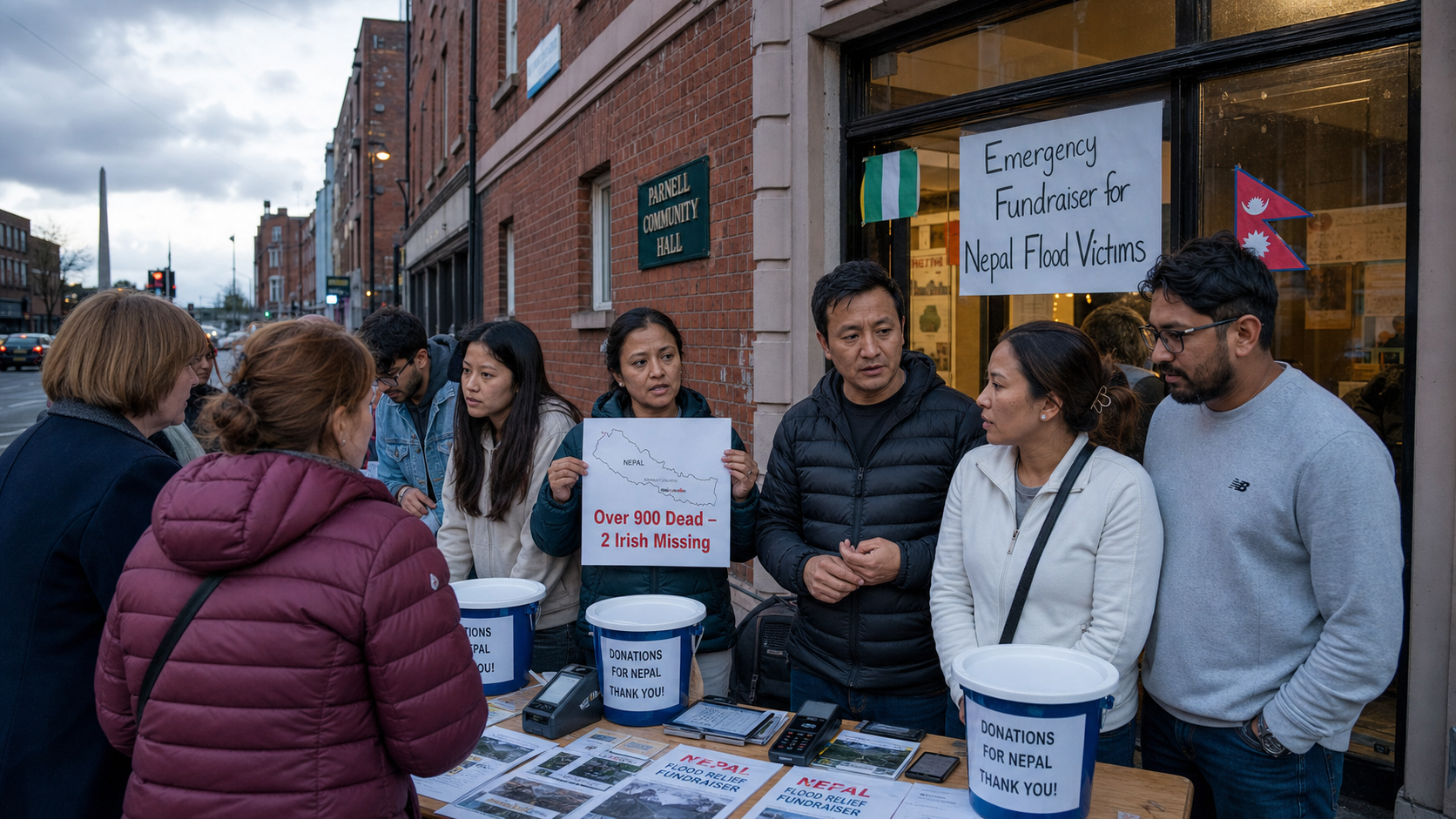
Ireland's Nepalese community has launched a fundraising campaign through the Irish Red Cross, which is coordinating international relief efforts in Nepal. Community leaders have appealed to the wider Irish public to contribute to the relief effort, noting that the scale of the disaster is beyond the capacity of the Nepalese government and local organisations to address without significant international support.
Why It Matters
The Nepal flooding is a stark illustration of the human cost of climate change. The Himalayan region is warming at approximately twice the global average rate, and the resulting acceleration of glacial melt is increasing the frequency and severity of glacial lake outburst floods — a phenomenon that was once rare but is now becoming a regular feature of the monsoon season. The communities most affected are among the world's poorest and most vulnerable, with limited capacity to adapt to the changing climate or to recover from the disasters it brings.
Ireland's response to the crisis — through the fundraising efforts of the Nepalese community, the consular support provided by the Department of Foreign Affairs, and the contributions of Irish aid organisations — reflects the country's tradition of solidarity with communities in crisis around the world. Irish Aid, the government's overseas development programme, has indicated that it is monitoring the situation closely and is prepared to provide additional support if requested by the Nepalese government or international relief agencies.
Local Impact
In Dublin, where the majority of Ireland's Nepalese community is based, the response to the disaster has been one of immediate and practical solidarity. Community organisations have set up collection points for donations and are working with the Irish Red Cross to ensure that funds reach the affected communities as quickly and efficiently as possible. Several Irish-Nepalese families have been unable to make contact with relatives in the affected regions, and the uncertainty about the fate of loved ones is causing enormous distress. The Department of Foreign Affairs has set up a dedicated helpline for Irish citizens with concerns about family members in Nepal.
What's Next
The immediate priority in Nepal is the rescue of those trapped in the hydropower tunnels and the provision of emergency shelter, food, and medical care to the tens of thousands of people who have been displaced by the flooding. The longer-term challenge will be the reconstruction of the infrastructure — roads, bridges, homes, and livelihoods — that has been destroyed. International aid organisations estimate that the recovery process will take years and will require billions of dollars in international support. Ireland's contribution to that effort, through both government aid and community fundraising, will be an important part of the international response.