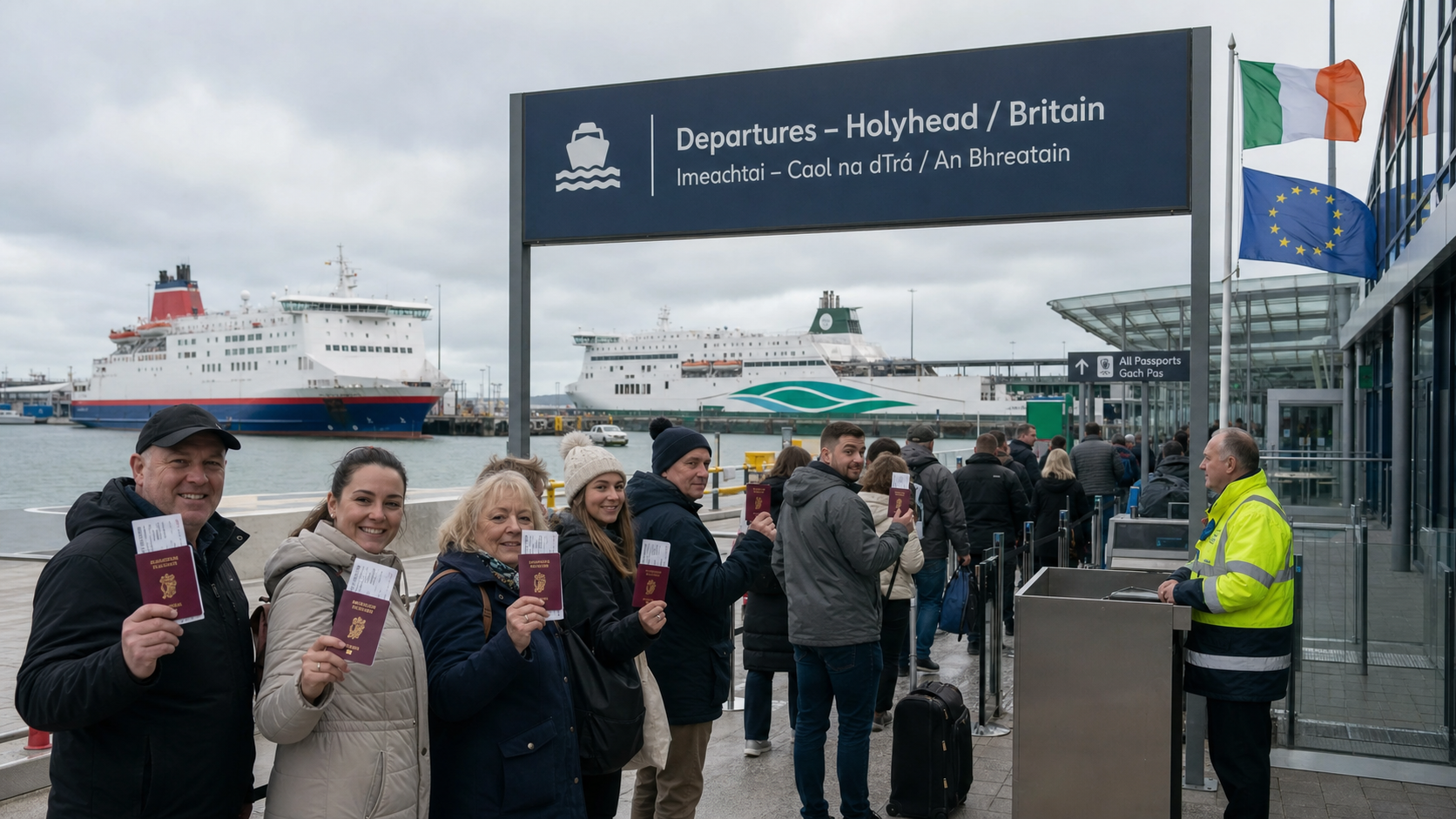
Irish Citizens Face New Passport Requirement for Ferry Travel to Britain from 28 September
Irish citizens travelling to Britain by ferry will be required to present a valid passport from 28 September 2026, as major operators including Stena Line and Irish Ferries implement new identification requirements that align with the policies already adopted by airlines including Aer Lingus and Ryanair. The change, which affects travel in both directions between the Republic of Ireland and Britain, ends the long-standing practice of accepting driver's licences and other forms of photo ID for ferry crossings and will require many regular travellers to ensure their passports are up to date before the deadline.
Background
The Common Travel Area, which has existed between Ireland and Britain since 1923, allows Irish and British citizens to travel freely between the two countries without the need for a passport or visa. Under the CTA, Irish citizens are not legally required to carry a passport when travelling to Britain, and British citizens are not legally required to carry a passport when travelling to Ireland. This arrangement has been a cornerstone of the relationship between the two countries and has been particularly important for the Irish diaspora in Britain and for the many people who travel regularly between the two countries for work, family, or leisure.
However, the practical reality of travel between Ireland and Britain has been changing in recent years. Airlines began requiring passports for travel between the two countries in early 2026, citing the need to comply with UK Border Force requirements for accurate passenger data and to manage the Electronic Travel Authorisation system that applies to non-British and non-Irish citizens. The ferry operators have been slower to implement the same requirements, but the announcement that Stena Line and Irish Ferries will require passports from 28 September brings the ferry sector into line with the airlines.
The change reflects the broader tightening of border management between Ireland and Britain that has followed Brexit, even though the CTA itself has been preserved. The UK government's introduction of the Electronic Travel Authorisation for non-British and non-Irish citizens has created a need for ferry operators to verify the nationality of all passengers, which in practice requires the presentation of a passport or equivalent document.
Key Developments
Stena Line and Irish Ferries have both confirmed that from 28 September 2026, all passengers travelling on their services between the Republic of Ireland and Britain will be required to present a valid passport to board. Irish Ferries has specified that an Irish passport card is also acceptable, but that other forms of photo ID — including driver's licences and national identity cards — will not be accepted. The operators have advised passengers to check that their passports are valid before booking travel after the deadline, and to allow additional time at check-in to present their documents.
The change will affect a significant number of regular travellers, including the many Irish people who commute to Britain for work, the large Irish community in Britain who travel home regularly to visit family, and the growing number of people who use the ferry as an alternative to flying for environmental or cost reasons. Many of these travellers have been accustomed to travelling with a driver's licence or other form of ID, and will need to ensure that their passports are up to date before the deadline.
The Passport Service has indicated that it is aware of the change and is prepared for an increase in passport applications in the weeks before the deadline. The service has been operating at high capacity in recent years, with demand for passports driven by the post-pandemic recovery in travel and by the surge in applications from people in Britain seeking Irish citizenship following Brexit. The service has advised anyone who needs to renew or apply for a passport before 28 September to do so as soon as possible to avoid delays.
Why It Matters
The new passport requirement matters for the Irish diaspora in Britain, which numbers approximately 500,000 people born in Ireland and several million more with Irish heritage. Many members of this community travel regularly between Britain and Ireland, and the requirement to carry a passport for ferry travel is a practical change that will affect their travel arrangements. For older members of the diaspora, who may not have renewed their passports in many years, the change may require a visit to the Passport Service or an Irish embassy or consulate to obtain a new document.
The change also matters in the context of the broader relationship between Ireland and Britain post-Brexit. The CTA has been preserved, but the practical experience of travelling between the two countries has become more complex, with additional documentation requirements and border checks that were not present before Brexit. The ferry passport requirement is the latest in a series of changes that have made travel between Ireland and Britain more bureaucratic, even as the legal framework of the CTA remains in place.
Local Impact
The change will be felt most acutely by communities in the border counties of the Republic — Donegal, Cavan, Monaghan, Louth, and Leitrim — where cross-border travel is a regular part of daily life and where many people travel to Britain via ferry from Dublin or Rosslare. In Dublin, the ferry terminals at the North Wall and at Dún Laoghaire will see changes to their check-in procedures from 28 September, with additional staff deployed to verify passenger documents. Irish Ferries and Stena Line have both indicated that they will provide information to passengers about the new requirements through their websites, booking confirmation emails, and at the terminals.
What's Next
The new passport requirement takes effect on 28 September 2026. The Passport Service has advised anyone who needs to renew or apply for a passport before that date to submit their application as soon as possible, noting that processing times can vary depending on demand. The service offers an urgent appointment system for people who need a passport within a short timeframe, and has indicated that it will prioritise applications from people who can demonstrate that they have imminent travel plans. The Department of Foreign Affairs has also advised Irish citizens in Britain who do not have a valid passport to contact their nearest Irish embassy or consulate for advice on how to obtain one.