Irish-Born Population in US Seeks Citizenship in Record Numbers as Trump Era Drives Foreign Birth Register Applications
Applications to Ireland's Foreign Birth Register from US citizens seeking Irish citizenship have reached record levels, with 18,910 applications recorded in 2025 — a trend that has continued into 2026 as Irish-Americans seek a European anchor amid political uncertainty in the United States, placing significant pressure on the Department of Foreign Affairs' processing capacity and raising questions about Ireland's ability to manage the surge in demand for citizenship through descent.
Background
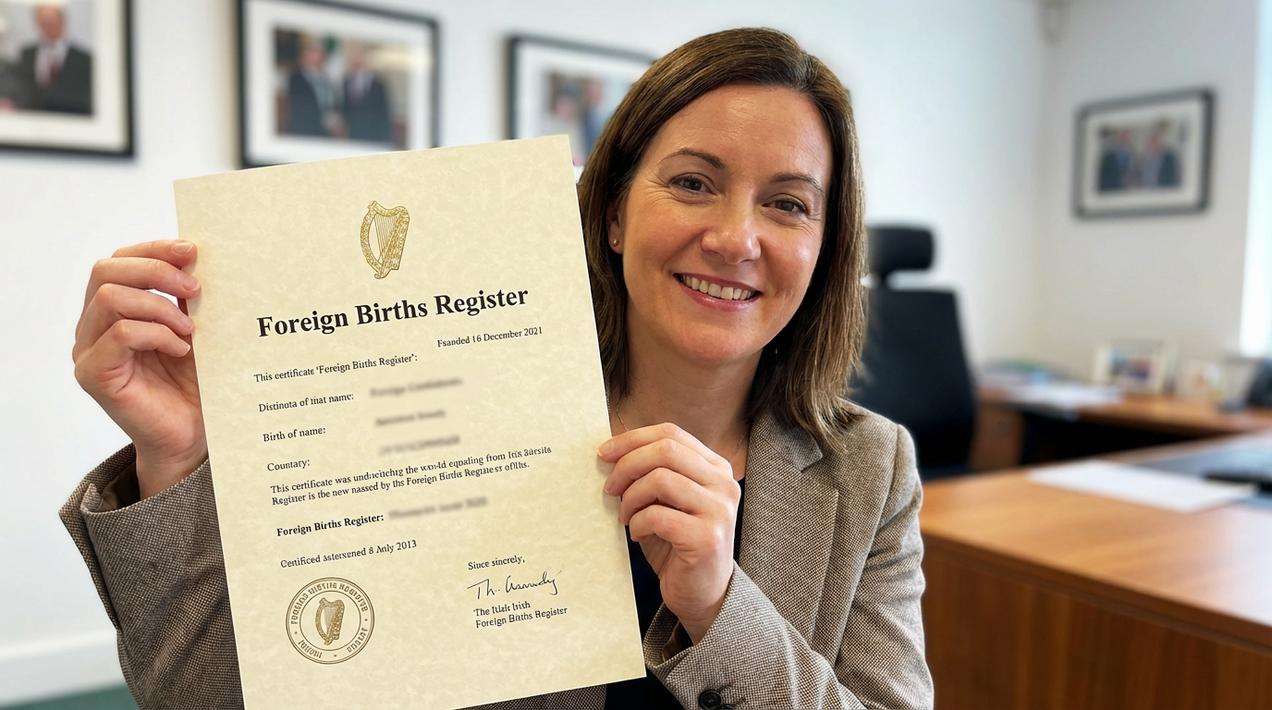
The Foreign Births Register is the mechanism through which individuals born outside Ireland can claim Irish citizenship through descent from an Irish-born grandparent or a parent who was an Irish citizen at the time of the applicant's birth. The register has existed in various forms since the foundation of the state, but it has never attracted the volume of applications that it is currently receiving — a surge that reflects both the political climate in the United States and the growing awareness among Irish-Americans of their entitlement to Irish citizenship.
The United States has historically been the largest source of Foreign Birth Register applications, reflecting the size and depth of the Irish-American community — estimated at 35 million people who claim Irish descent. The surge in applications that began during the first Trump administration in 2017 — when many Irish-Americans sought a European passport as a hedge against political uncertainty — has continued and intensified, with the return of Trump to the White House in 2025 providing a further impetus for applications.
Irish citizenship carries significant practical benefits for US citizens, including the right to live and work anywhere in the European Union, access to EU healthcare and education systems, and the security of a second passport from a country with strong diplomatic relationships across the world. For Irish-Americans who are concerned about the direction of US politics, these benefits have become increasingly attractive.
Key Developments
The 18,910 applications recorded in 2025 represent a new record for the Foreign Birth Register, surpassing the previous high of 15,000 applications set in 2021. The trend has continued into 2026, with the Department of Foreign Affairs reporting that applications in the first eight months of the year are running at a rate that suggests the 2025 record will be exceeded.
The surge in applications has placed significant pressure on the Department of Foreign Affairs' processing capacity. Average processing times, which stood at approximately nine to ten months in 2025, have been extended further as the volume of applications has grown, and the Department has been working to increase staffing and to streamline the application process to reduce the backlog.
The Department has also been dealing with an increase in the complexity of applications, as more applicants seek to claim citizenship through more distant ancestral connections — through great-grandparents rather than grandparents, for example — which requires more extensive documentation and more complex legal analysis. The Department has been working with the Irish Genealogical Society and other organisations to help applicants navigate the documentation requirements.
Why It Matters
The surge in Foreign Birth Register applications is significant for several reasons. It reflects the enduring strength of the connection between Ireland and its diaspora — a connection that, despite the passage of generations, remains powerful enough to motivate tens of thousands of people to go through the complex and time-consuming process of claiming Irish citizenship.
It also reflects the political climate in the United States, where a significant proportion of the Irish-American community has been motivated by concerns about the direction of US politics to seek the security of a second citizenship. This is not a new phenomenon — Irish-Americans have always maintained a strong sense of their Irish identity — but the scale of the current surge suggests that the political context is a significant driver of applications in a way that it has not been in previous decades.
For Ireland, the surge in applications is both a validation of the country's international appeal and a practical challenge. The Department of Foreign Affairs' processing capacity is finite, and the growing backlog of applications is a source of frustration for applicants who may wait a year or more for their citizenship to be confirmed. The government has been investing in additional processing capacity, but the scale of the surge means that waiting times are likely to remain extended for the foreseeable future.
Local Impact
The surge in Foreign Birth Register applications has a direct impact on the Department of Foreign Affairs' offices in Dublin, where the applications are processed, and on the Irish consulates in the United States, which provide information and support to applicants. The consulates in New York, Boston, Chicago, San Francisco, and Los Angeles have all reported significant increases in inquiries about the Foreign Birth Register, and have been working to provide clearer guidance to applicants about the documentation requirements and the processing timeline.
In Ireland, the surge in applications has also generated a growing industry of genealogical research services, legal advisers, and document authentication specialists who help applicants navigate the complex requirements of the Foreign Birth Register. This industry, while relatively small, is a tangible economic benefit of the diaspora's engagement with Ireland.
What's Next
The Department of Foreign Affairs has indicated that it is committed to reducing processing times for Foreign Birth Register applications, with a target of bringing average processing times back to nine months by the end of 2026. The Department is also reviewing the documentation requirements for applications to determine whether any simplifications can be made without compromising the integrity of the process. Minister Richmond has indicated that the Foreign Birth Register will be a priority area for investment under the Diaspora Strategy 2026-2030, with additional resources allocated to processing capacity and to the consular services that support applicants in the United States and elsewhere.